Most people assume the air inside their home is cleaner than the air outside. It feels like a reasonable assumption. The home is enclosed, away from traffic, exhaust, and outdoor pollution. But the truth is that indoor air quality is often worse than outdoor air quality, sometimes significantly so. The Environmental Protection Agency has noted that indoor air can be two to five times more polluted than outdoor air, and in some cases even more.
The reason is not that homes are particularly dirty places. It is that they are enclosed environments where pollutants accumulate without the natural ventilation that outdoor spaces have. Dust, mold spores, pet dander, volatile organic compounds from furniture and cleaning products, cooking residue, and particles from the HVAC system all build up in a sealed indoor environment and stay there until something actively removes them.
What makes this problem harder to manage is that poor indoor air quality does not always announce itself clearly. There is no alarm that goes off when particle levels cross a threshold. The signs tend to be subtle and easy to attribute to something else entirely: a cold that will not fully go away, morning congestion that clears up once you leave the house, headaches that seem to come and go without obvious cause, or eyes that water inside the home but not outdoors.
These are not random annoyances. They are often the body’s response to breathing compromised air day after day. Knowing the specific signs of poor indoor air quality and understanding what causes each one gives homeowners the information they need to take action before the problem affects health in a more serious way.
Physical Symptoms That Often Point to Indoor Air Problems
The body tends to react to poor air quality before the home shows any visible signs of a problem. Many people live with these symptoms for months or years without connecting them to the air inside their home, which is why understanding the pattern matters.
Persistent respiratory symptoms are among the most common indicators. This includes a cough that lingers long after a cold has passed, frequent throat clearing, mild wheezing, or a nose that is constantly congested without a clear viral cause. When these symptoms are worse in the morning after sleeping, or when they are noticeably better on days spent away from home, the indoor environment is almost certainly contributing. The bedroom is particularly significant because people spend six to nine hours breathing the air in that single room during sleep.
A bedroom with dusty carpets, dirty air vents, or an uncleaned mattress exposes the sleeping person to elevated levels of dust mite debris, mold spores, and fine particles for hours at a time, which the respiratory system responds to in exactly the ways described.
Frequent headaches that appear during time at home and fade when you leave are another pattern worth paying attention to. Elevated levels of carbon dioxide, which build up in poorly ventilated rooms, cause headaches and cognitive sluggishness. Volatile organic compounds from paints, adhesives, synthetic carpets, pressed wood furniture, and cleaning products also cause headaches at elevated concentrations. New furniture, recent painting, or a newly renovated space often has elevated VOC levels that dissipate over weeks, but in a home with poor ventilation, this process takes much longer and the occupants breathe those compounds throughout.
Fatigue that seems disproportionate to your activity level or sleep quality is another symptom associated with compromised indoor air. When the body is constantly working to filter out airborne irritants and managing low-level immune responses to allergens, it uses energy that would otherwise be available for other functions. People who live in homes with high allergen loads often feel more tired than they should and find it harder to concentrate without ever identifying indoor air quality as a contributing factor.
Skin irritation, including dryness, itchiness, and rashes that appear without a clear dietary or contact cause, can also be a response to airborne particles and low humidity in a home. Dust mite debris and mold spores are known skin irritants in addition to respiratory ones, and people with sensitive skin may notice reactions that correlate with time spent in specific rooms or parts of the home.
Eye irritation that occurs primarily indoors is another telling sign. Watery, itchy, or red eyes that improve when you go outside and return when you come back in point clearly to something in the indoor air. Airborne particles, pet dander, and mold spores are common triggers for this kind of eye response.
Environmental Signs Inside the Home That Signal Air Quality Issues
Beyond physical symptoms, there are things you can observe inside the home itself that indicate the air quality is compromised. These signs are worth knowing because they allow you to identify the problem before it reaches the level where it is causing noticeable health effects.
A musty or stale smell that persists even after cleaning and ventilating a room is one of the clearest environmental indicators of a problem. Musty odors are almost always caused by mold or mildew, and when the smell is present even after the visible surfaces have been cleaned, it usually means mold is growing in a location that is not visible. Behind walls near plumbing, inside wall cavities where moisture has seeped in, under flooring in areas with a slow leak, and inside air ducts are all common hidden locations where mold establishes itself and releases spores continuously into the air. The smell is the mold telling you it is there, even when you cannot see it.
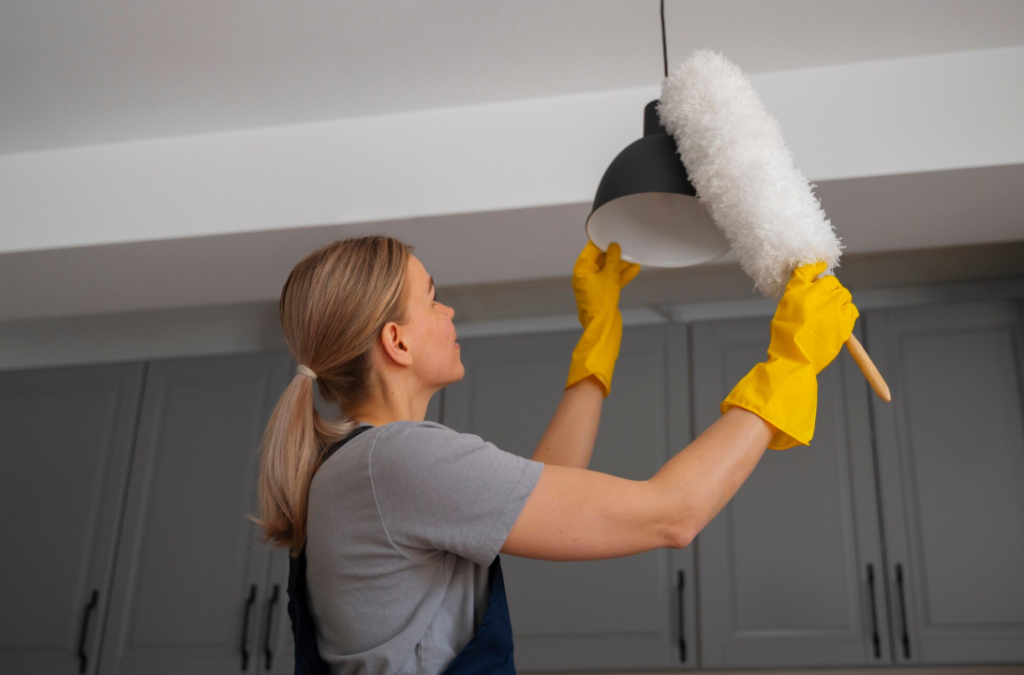
Dust that returns to surfaces very quickly after cleaning is another sign. If you dust a room thoroughly and find a visible layer has reformed within a day or two, the air in that space has a high particle load that is settling continuously. This happens most often in homes where the HVAC system is pushing dusty air through the vents from contaminated ductwork, or in spaces with poor filtration where fine particles circulate without being captured. The dust you see on surfaces represents only a fraction of what is suspended in the air at any given moment.
Condensation on windows and walls, especially in bathrooms and kitchens, is a reliable sign of excess indoor humidity. Humidity above fifty percent creates the conditions where mold and dust mites thrive. Persistent condensation means the home’s ventilation is not adequately removing moisture from the air, and mold growth is likely either already present or developing in the areas with the highest moisture concentration. The window frames and sills where condensation collects are among the first places to check for mold growth when this pattern is observed.
Visible mold growth anywhere in the home, even a small amount on grout or around a window frame, is a sign that conditions throughout the home are favorable for mold. Where visible mold appears, spores are being released into the air of that room and circulating to adjacent spaces through air movement and the HVAC system. Small visible mold patches often indicate larger hidden growth nearby, particularly if they appear in areas with ongoing moisture exposure.
Increased allergy and asthma symptoms that correlate with time spent at home, or that have worsened over time without a clear external explanation, are a strong collective indicator that indoor air quality has declined. When medication needs increase or when symptoms that were previously well-managed become harder to control, the home environment deserves examination.
Uneven temperatures between rooms, or rooms that never seem to feel comfortable regardless of thermostat settings, can indicate problems with the HVAC system that also affect air quality. A system that is not moving air properly through the home creates stagnant zones where particles accumulate and humidity levels differ from the rest of the house.
How Cleaning Addresses Poor Indoor Air Quality
Understanding the sources of indoor air quality problems makes it much easier to address them effectively. The most common contributors fall into several distinct categories, and cleaning plays a direct role in reducing or eliminating most of them.
Dust and particulate accumulation is the most widespread cause of diminished indoor air quality in homes. Dust in a home is not just inert material. It is a complex mixture of skin cells, textile fibers, pet dander, pollen, mold spores, and dust mite debris, all of which become airborne when disturbed and cause respiratory irritation when inhaled. Carpets are the single largest reservoir of particulate matter in most homes. They trap and hold everything that settles into them, and regular vacuuming with a standard vacuum only addresses the upper layer.
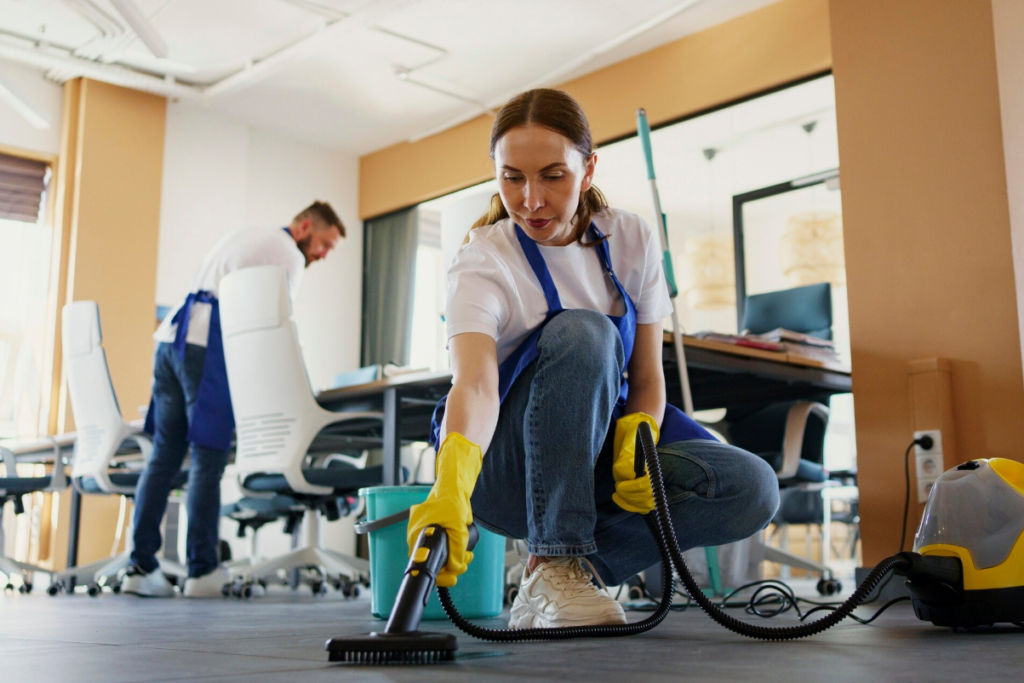
Professional carpet cleaning using hot water extraction removes what has accumulated in the deeper layers of the carpet fiber and the padding beneath, dramatically reducing the particulate reservoir that contributes to poor air quality in carpeted rooms. For homes with pets, carpet cleaning for pet stains and odors also removes the dander and biological residue that ordinary cleaning leaves behind.
Air ducts are the most overlooked source of indoor air quality problems in both residential and commercial spaces. The HVAC system moves air through every room in the home multiple times each day, and whatever has accumulated inside the ductwork travels with that air. Dust, mold spores, pet dander, and debris that build up inside duct walls over months and years get pushed into the living space continuously.
Professional duct cleaning removes this accumulated material from inside the system and produces an immediate and lasting improvement in the cleanliness of the air circulating through the home. Dryer vent cleaning, done alongside duct cleaning, addresses a separate but related system that can push lint particles and moisture back into the home when the vent is restricted or blocked.
Mold is one of the most health-significant contributors to poor indoor air quality, and it is one that cleaning alone can address when caught early but that may require professional remediation when it has spread significantly. Bathrooms, kitchens, laundry areas, and any space with recurring moisture are the most common locations. Professional kitchen and bathroom cleaning that includes grout, caulking, fixture bases, and under-sink areas removes early mold growth before it spreads and reduces the spore count in those high-moisture spaces. Sanitization and disinfecting services that use appropriate fungicidal products on bathroom surfaces keep mold from re-establishing itself between cleanings.
Window frames, sills, and tracks are a concentrated source of both mold and pollen that most homeowners underestimate. Moisture collects in window tracks, mold grows in the grooves, and pollen accumulates on sills and is released into the room every time the window is moved. Interior and exterior window cleaning that includes thorough attention to frames and tracks removes both the mold and the pollen concentration that worsens indoor air quality, particularly during high pollen seasons.
HVAC filters are the mechanical component most directly responsible for what stays in the air. A filter that is overdue for replacement captures less and less of what passes through it, allowing more particles to circulate through the home. Upgrading to a higher-rated filter and replacing it on schedule is one of the simplest maintenance steps available for improving indoor air quality between professional cleaning visits.
Heavenly Maids Cleaning Services in San Jose provides residential deep cleaning and recurring maid cleaning services throughout the Bay Area with specific attention to the sources of indoor air quality problems that surface cleaning alone does not reach. From professional carpet steam cleaning and air duct cleaning to detailed bathroom and kitchen sanitization, the approach addresses indoor air quality at the source rather than just the visible symptoms of it.
For Bay Area families dealing with symptoms that may be related to indoor air quality, the combination of professional deep cleaning, duct cleaning, and consistent recurring maintenance creates a measurable improvement in the air quality of the home. Detailed home cleaning services for busy families that include these elements give the home a genuinely healthier baseline that daily habits can maintain between professional visits. The air inside your home should support your health rather than quietly work against it, and understanding the signs that it is not performing that way is the first step toward changing it.