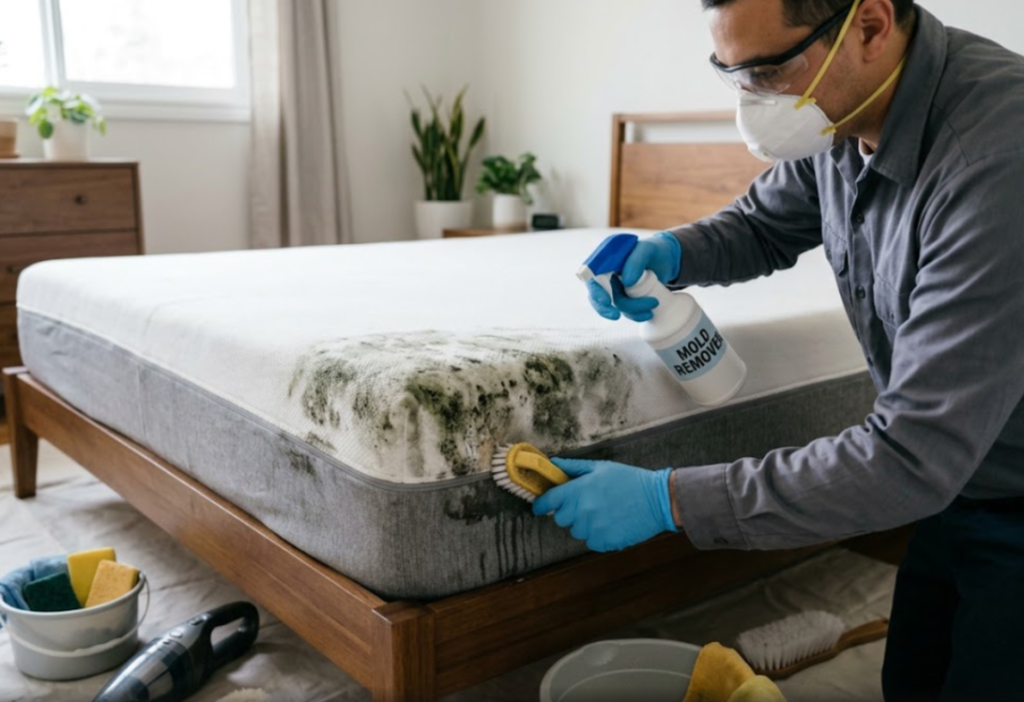
Finding mold on a mattress is one of those discoveries that stops people in their tracks. It is unsettling to realize that the surface where you have been sleeping, the place where your face rests for seven or eight hours every night, has been harboring a fungal growth. The reaction for most people is to strip the bed immediately and wonder whether the mattress can be saved or whether it needs to go straight to the curb.
The answer depends on how extensive the mold is, how deep it has penetrated, and whether the right removal steps are taken promptly and completely. In many cases, especially when caught early, mattress mold can be addressed effectively at home. In more serious cases, it requires a professional approach or replacement.
Understanding what causes mold to grow on a mattress, how to identify the extent of the problem, and which removal techniques actually work gives you the information needed to respond to this situation correctly rather than guessing or using methods that are ineffective or that make the problem worse. This is a topic worth knowing thoroughly because mattress mold is more common than most people realize, and the health consequences of sleeping on a moldy surface are real.
Why Mattresses Develop Mold and How to Recognize It
Mold needs three things to grow: moisture, organic material to feed on, and a temperature within the range that supports fungal life. A mattress provides all three in abundance. The human body releases significant moisture during sleep through perspiration and respiration. Even in a climate-controlled bedroom, a person sleeping on a mattress contributes roughly a liter of moisture to the sleep environment each night, and a large portion of that moisture is absorbed by the mattress surface and interior over time. If that moisture is not given the opportunity to evaporate and dissipate, it accumulates within the mattress material, creating a damp interior environment where mold spores, which are always present in indoor air, can germinate and grow.
Mattresses placed directly on the floor are far more susceptible to mold than those on a raised bed frame because the floor prevents air circulation under the mattress and creates a surface where moisture condenses. A mattress that sits on a floor collects the moisture from above from the sleeper and from below from condensation and floor-level humidity, making it a prime environment for mold development. Platform bed frames with solid tops rather than slatted bases can create a similar problem, particularly in rooms with higher humidity, because air cannot circulate beneath the mattress.
Memory foam mattresses are particularly vulnerable to mold because of their dense, non-breathable structure. Traditional innerspring mattresses have more internal airflow because the spring structure allows some movement of air through the interior. Memory foam has no such airflow, and moisture that enters the foam through the surface has nowhere to go except deeper into the material or to slowly evaporate from the top when given enough time and ventilation. In a bedroom with poor ventilation or consistently high humidity, this evaporation process is slow enough that moisture remains in the foam long enough for mold to establish itself.
Mold on a mattress does not always look dramatic in its early stages. The first signs are often a musty smell that is present when you pull back the bedding, even after the sheets have been freshly washed. This smell is produced by the volatile organic compounds that mold releases as a byproduct of its metabolic activity, and it tends to be noticeable before the visual signs of mold become obvious.
Visible mold typically appears as small clusters of dark spots, often black, green, or gray, on the mattress surface or around the edges and seams. In some cases the mold appears white or light pink, particularly in early growth stages or with certain mold species. The underside of the mattress is where the most extensive growth usually occurs because it receives the least light and air, so flipping the mattress during inspection is important for getting an accurate picture of the extent of the problem.
Mold that has progressed beyond surface spots to visible patches covering an area larger than roughly ten square inches, or mold that has clearly penetrated into the interior of the mattress, is generally beyond what home treatment can address effectively. At that stage, the mattress is likely releasing significant levels of spores into the room air during sleep and the health risk outweighs the cost of replacement. For surface-level mold caught relatively early, the removal process described below gives a genuine chance of restoring the mattress to a safe and usable condition.
Step-by-Step Techniques for Removing Mold From a Mattress
The first step before any cleaning begins is to take the mattress outside or into the most well-ventilated space available, ideally with direct sunlight exposure. Sunlight has a natural antifungal effect because ultraviolet radiation damages the DNA of mold cells and inhibits their ability to reproduce. Even an hour of direct sun exposure on the affected surface provides meaningful benefit and begins to dry the moisture that is supporting the mold growth. Working outside also prevents the disturbed mold spores from spreading through the indoor air of the bedroom during cleaning.
Before applying any cleaning agent, the surface should be vacuumed thoroughly using a vacuum with a HEPA filter. The purpose of this step is to remove as many surface mold spores as possible before the cleaning process begins. A HEPA filter is important here because standard vacuum filters allow fine particles including mold spores to pass through the exhaust air, which means vacuuming with a standard machine would simply redistribute the spores into the air around the mattress. After vacuuming, the vacuum bag or canister contents should be emptied immediately into a sealed plastic bag and disposed of outside.
Rubbing alcohol, specifically isopropyl alcohol at a seventy percent concentration, is one of the most effective and mattress-safe treatments for surface mold. It is antifungal, it evaporates quickly so it does not add significant moisture to the mattress, and it does not leave behind a residue that would attract new mold growth. It should be applied with a clean cloth, working in a gentle dabbing motion rather than scrubbing, which would push mold deeper into the mattress material and spread spores over a larger area. After application, the area should be allowed to dry completely in a ventilated environment before any further steps.
Hydrogen peroxide at a three percent concentration, which is the standard strength sold at pharmacies, is another highly effective option for mattress mold treatment. It has antifungal and antibacterial properties, it breaks down into water and oxygen after use leaving no harmful residue, and it has a mild bleaching effect that helps address the discoloration that mold leaves behind.
Hydrogen peroxide should be applied to the affected area using a spray bottle set to a fine mist, left to sit for ten to fifteen minutes to penetrate and react with the mold, and then blotted up with a clean dry cloth. It is important to avoid saturating the mattress with any liquid during this process. The goal is to treat the surface and a small amount of depth, not to soak the interior, because excess moisture is what caused the problem in the first place.
White vinegar is a third option that works well on mild surface mold and has the advantage of being completely non-toxic, which matters for a surface you sleep on. Full-strength undiluted white vinegar applied to the area and left for an hour before blotting clean kills a significant percentage of common mold species through its acidic chemistry. The smell of vinegar dissipates as the mattress dries and does not remain on the surface after complete drying.
After any of these treatments, the mattress needs to dry fully and completely before it is returned to use. This is not optional and it is not something that can be rushed. A mattress that is reassembled with bedding while still retaining any moisture from the treatment process will develop new mold growth in a matter of days because the conditions for mold have been restored. The mattress should be left in direct sunlight and open air for several hours if possible. If outdoor drying is not practical, the mattress should be positioned near an open window with a fan directing air across the treated surface for a full day before use.
Preventing Mattress Mold From Returning After Treatment
Successfully removing mold from a mattress is only half the solution. Without addressing the underlying conditions that allowed it to develop in the first place, the same problem will return within weeks or months. Prevention requires specific and consistent changes to how the mattress is used and maintained.
A mattress protector is the single most effective preventive tool available for any mattress. A waterproof but breathable mattress protector creates a physical barrier between the sleeper and the mattress surface, blocking the body moisture that would otherwise penetrate into the mattress material during sleep. The protector should be washed regularly in hot water, at a minimum every two to four weeks, to remove the accumulated moisture, skin cells, and organic material from its surface. A clean protector on a clean mattress creates a sleeping environment that is genuinely inhospitable to mold growth under normal conditions.
The mattress should be placed on a bed frame with slats rather than a solid platform, allowing air to circulate beneath the mattress and assist with moisture evaporation. The spacing between slats matters as well. Slats placed more than about three inches apart may allow the mattress to sag and reduce the overall airflow benefit. Many mattress manufacturers publish recommendations for the minimum slat spacing appropriate for their products, and following these recommendations protects both the structural integrity of the mattress and its resistance to moisture-related problems.
Rotating the mattress head-to-foot every three to six months distributes the areas of heaviest use and moisture exposure more evenly across the mattress surface. This prevents any single area from accumulating moisture at a much higher rate than the rest of the mattress, which is how localized mold patches develop even in mattresses that are otherwise well-maintained.
Room humidity plays a direct role in mattress mold risk. Bedrooms with consistent humidity levels above fifty percent provide a more favorable environment for growth throughout the room, including on and in the mattress. Running a dehumidifier in a high-humidity bedroom, particularly during warm and humid months, keeps the overall moisture level of the room at a level that discourages mold growth on all soft furnishings including the mattress. Opening bedroom windows on dry days and running ceiling fans to improve air circulation also reduces the ambient humidity that supports mold development.
Allowing the mattress to air out for a period each morning before making the bed is a simple and effective daily habit that most people do not practice. Pulling back the covers and leaving the mattress exposed to room air for fifteen to thirty minutes each morning allows the surface moisture from the night to evaporate rather than being trapped under bedding. In a well-ventilated bedroom, this habit alone makes a measurable difference in the moisture level of the upper layers of the mattress over time.
Heavenly Maids Cleaning Services in San Jose provides professional residential deep cleaning services throughout the Bay Area with the attention to bedroom environments and soft furnishing care that helps homeowners maintain genuinely healthy sleeping conditions. For households dealing with mold-related concerns in the bedroom or other living spaces, professional deep cleaning services that address the broader room environment, including the surfaces, furnishings, and conditions that contribute to moisture and mold, support the work that individual mattress treatment and prevention habits accomplish. A clean, dry, well-maintained bedroom is the foundation of healthy sleep, and it starts with understanding the conditions that allow problems like mattress mold to develop in the first place.