Mold is one of those problems that has a way of showing up when you least expect it and the process to remove mold is a nightmare. You notice a dark spot on the bathroom ceiling, a musty smell coming from under the sink, or discoloration along the grout between tiles. Sometimes it is small and easy to miss. Other times it has already spread across a wall or into a corner you rarely look at. Either way, finding mold in your home raises a lot of questions fast. Is it dangerous? Can you clean it yourself? What products are actually safe to use? And how do you keep it from coming back after you remove it?
These are fair questions, and the answers matter because mold is not just an eyesore. It affects air quality, triggers respiratory issues, and can cause real health problems for people who are exposed to it regularly, especially children, older adults, and anyone with asthma or allergies. The good news is that many types of household mold can be handled safely with the right approach. This guide walks through what works, what does not, and when it is time to bring in professional help.
How to Know If What You Are Seeing Is Actually Mold
Before cleaning anything, it helps to confirm that what you are dealing with is mold and not something else like mildew, soap scum, or simple dirt. Mold typically appears as fuzzy or slimy patches that are black, green, gray, or white. It often has a musty odor that gets stronger when you get closer to the area. Mildew is a surface fungus that is usually flat, powdery, and gray or white. It is easier to clean than mold and less likely to cause serious health problems. Both thrive in damp environments, but mold tends to penetrate deeper into surfaces while mildew stays on top.
A simple way to test what you are looking at is to apply a small amount of diluted bleach to the spot and wait a few minutes. If the discoloration lightens, it is likely mold or mildew. If it does not change, it is probably just dirt. That said, this test only helps with surface-level identification. If you suspect mold is growing inside walls, under flooring, or behind cabinetry, that is a situation that needs professional assessment rather than a DIY test.
One question people ask often is whether all mold is dangerous. Not every type of mold carries the same level of risk. Common household molds like Cladosporium and Penicillium can cause allergic reactions and respiratory irritation but are generally manageable with proper cleaning. Black mold, often referred to as Stachybotrys chartarum, produces mycotoxins that can be more harmful and requires careful handling. If you see extensive black mold growth covering a large area, or if anyone in the home has developed unexplained respiratory symptoms, headaches, or chronic fatigue, calling a professional is the right move before attempting any cleaning.
Safe Methods to Remove Mold at Home
For small areas of mold on non-porous surfaces like tile, glass, sealed countertops, and metal fixtures, there are several safe and effective cleaning options that do not require harsh chemicals.
White vinegar is one of the most reliable eco-friendly home cleaning solutions for mold. It is mildly acidic, which kills most types of mold on contact, and it does not release harmful fumes. Pour undiluted white vinegar into a spray bottle, apply it directly to the moldy surface, and let it sit for at least an hour before scrubbing with a stiff brush and wiping clean. The vinegar smell fades as it dries. This method works well for bathroom tile, sink areas, window sills, and other non-porous surfaces.
Hydrogen peroxide at a three percent concentration, which is the standard strength sold at pharmacies, is another safe option. It is antifungal, antibacterial, and breaks down into water and oxygen after use, leaving no harmful residue. Spray it directly onto the mold, let it sit for ten minutes, then scrub and wipe the area clean. Hydrogen peroxide works on tile, grout, bathroom fixtures, and sealed surfaces. It can lighten some materials, so test a small hidden area first if you are concerned about discoloration.
Baking soda is milder than vinegar or hydrogen peroxide but useful for lighter mold and for deodorizing areas that smell musty. Mix a quarter teaspoon of baking soda with water in a spray bottle, spray the affected area, scrub, and rinse. It is gentle enough for regular use and helps absorb moisture, which reduces the conditions that allow mold to return.
Here are some important steps to take before and during any mold removal at home:
Wear gloves, a mask rated N95 or higher, and eye protection before handling moldy surfaces
Open windows and run a fan to ventilate the space while you work
Place a plastic bag over any moldy material you are removing and seal it before carrying it through the house
Never dry brush mold because it releases spores into the air
Wash all clothing you wore during the cleaning immediately after finishing
Do not use a regular vacuum on mold since most vacuums spread spores rather than contain them
One area where people often underestimate the problem is the kitchen. Kitchen mold grows under the sink, around the base of the faucet, on grout between tiles, inside the refrigerator door seals, and behind the stove where moisture and food residue collect. Professional kitchen and bathroom cleaning that targets these specific areas removes mold before it spreads to adjacent surfaces or gets into the cabinetry.
Where Mold Hides and How to Find It Before It Spreads
The areas most people check for mold are the visible ones: shower walls, bathroom ceilings, and window sills. But mold often grows in places that get ignored until the problem is already large. Knowing where to look makes a real difference in catching it early.
Crawl spaces and basements are two of the most common places for mold growth in homes because they tend to hold moisture and have limited air circulation. Attics develop mold when roof ventilation is poor or when there is a slow leak that has gone undetected. Inside walls near plumbing is another hidden location where mold grows quietly for months or years before it becomes visible or triggers health symptoms. Air ducts are also a serious concern. When moisture gets into an HVAC system, mold can grow inside the ductwork and get pushed through the air of every room in the house every time the system runs.
This is why duct cleaning is not just about dust. It is also about catching and removing mold that has established itself inside the system. Professional air duct and dryer vent cleaning removes buildup that feeds mold growth and improves the overall air quality throughout the home. For anyone dealing with recurring musty smells that seem to come and go with the air conditioning or heating, the ducts are worth inspecting.
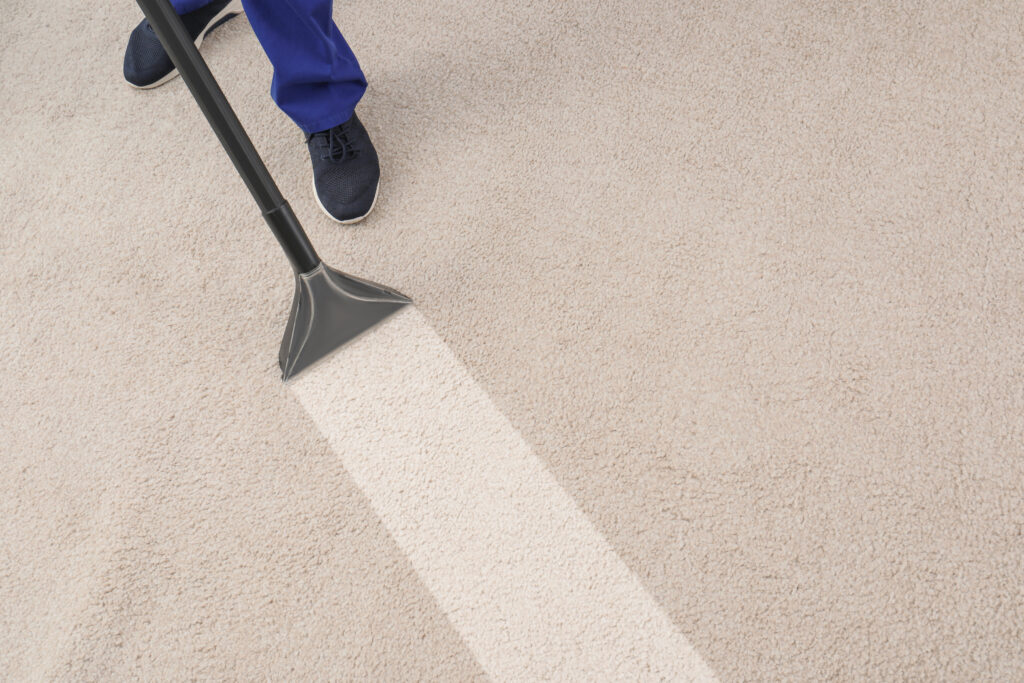
Carpet is another place mold grows without being obvious. If a carpet has gotten wet from a spill, flooding, or high humidity and was not dried thoroughly, mold can develop in the padding underneath long before it shows on the surface. Professional carpet cleaning using hot water extraction can help address mold in the early stages, but carpet that has been wet for an extended period may need replacement. Carpet cleaning for pet stains and odors is a related service that also reduces the organic material that mold feeds on when it gets into carpet fibers.
When to Call a Professional and How to Prevent Mold From Returning
There are situations where DIY cleaning is not enough and professional help is the only safe option. If the mold covers an area larger than ten square feet, if it is growing on porous materials like drywall or wood framing, if it keeps coming back after cleaning, or if there is any reason to suspect it is inside the walls or ceiling, calling a professional remediation service is the right call. Attempting to remove large or embedded mold without the proper equipment and containment methods can spread spores throughout the house and make the problem much worse.
After mold has been removed, whether by DIY methods or professionals, preventing it from coming back is the next priority. Mold needs moisture to survive, so controlling humidity is the most effective prevention tool available. Keep indoor humidity below fifty percent using a dehumidifier if needed. Fix any plumbing leaks promptly. Run the bathroom exhaust fan during and after showers for at least twenty minutes. Check under sinks regularly for slow drips. Clean window sills and frames after rain since moisture collects there easily.
Recurring cleaning services that include bathroom sanitization, kitchen cleaning, and window frame maintenance help keep moisture and organic buildup under control between deeper cleaning sessions. Heavenly Maids Cleaning Services in San Jose provides residential cleaning across the Bay Area with attention to the areas where mold is most likely to develop, from bathroom grout to kitchen surfaces to window sills and beyond.
For homeowners moving into a new property, move-in cleaning that includes a thorough check of bathrooms, under sinks, and other moisture-prone areas is worth scheduling before you bring your belongings in. Heavenly Maids Cleaning Services handles move-in and move-out cleaning with the kind of detail that catches problems early and gives every home a genuinely clean start. A clean, dry, well-ventilated home is the best defense against mold, and staying consistent with deep cleaning services is the most practical way to keep it that way.
Bringing a baby home changes everything, including how you think about cleaning methods. Suddenly the products you have been using for years feel less like household staples and more like question marks. Babies spend most of their time on the floor, put their hands in their mouths constantly, breathe in whatever is floating through the air, and have skin that absorbs things much faster than adult skin does.
Their immune systems are still developing, which means they are more vulnerable to the chemicals, fragrances, and residues that most conventional cleaning products leave behind. For new parents, figuring out how to keep a home genuinely clean without exposing a baby to harmful substances is one of the most common and most pressing concerns in those early months.
The good news is that a clean home and a safe home for a baby are not opposites. You do not have to choose between the two. What you do need is the right information about which methods and products are actually safe, which ones to avoid, and how professional house cleaning services can help you maintain a healthy environment without cutting corners on cleanliness.
Why Conventional Cleaning Products Can Be a Problem Around Babies
Most standard cleaning products contain ingredients that work well for removing dirt and killing germs but leave behind residues or release fumes that are not safe for small children. Ammonia, bleach, synthetic fragrances, phthalates, formaldehyde-releasing preservatives, and volatile organic compounds are found in a wide range of common products, from bathroom sprays to floor cleaners to laundry detergents. Adults can handle brief exposure to these chemicals without much noticeable effect, but babies are a different story.
Babies crawl on floors that have been mopped with chemical cleaners and then put their hands directly in their mouths. They breathe air in rooms that have been sprayed with synthetic fragrances and aerosol disinfectants. Their skin contacts surfaces that were wiped down with products that leave a chemical film. Over time, repeated low-level exposure to these substances has been linked to respiratory irritation, skin sensitivities, and disruption of the developing hormonal and immune systems. This is not about being overly cautious. It is about understanding that a product safe for an adult is not automatically safe for a newborn.
The first step toward a safer home is switching to eco-friendly cleaning solutions that do not contain the most problematic ingredients. Plant-based cleaners, fragrance-free detergents, and products certified by recognized safety organizations are widely available now and work well for everyday house cleaning. White vinegar, baking soda, and castile soap are simple, effective, and genuinely non-toxic options for many cleaning tasks around a home with a baby.
The Safest Cleaning Methods Room by Room
Different areas of the home carry different risks for babies, and the cleaning approach for each one should reflect that. Floors are the highest priority because babies spend so much time on them. Hard floors should be mopped with a fragrance-free, plant-based cleaner diluted in warm water rather than with concentrated chemical floor cleaners. After mopping, allow the floor to dry completely before letting a baby back on the surface. Residue from cleaning products is most concentrated when wet, and a dry floor is always safer than a damp one.
Carpets deserve special attention in a home with a baby. Carpet fibers trap dust mites, pet dander, bacteria, mold spores, and chemical residues from shoes tracked in from outside. Regular vacuuming with a HEPA filter vacuum helps manage surface debris, but it does not get deep enough to remove what has worked its way into the lower layers of the carpet. Professional carpet cleaning using hot water extraction removes these deeper particles without leaving behind chemical residue. For homes with babies, professional-grade carpet cleaning done with non-toxic, baby-safe solutions is one of the most effective things you can do to improve the air quality and cleanliness of the spaces where your baby spends the most time.
Bathrooms need to be sanitized regularly, but strong bleach-based sprays linger in the air and on surfaces. Hydrogen peroxide-based cleaners are a safer alternative for sanitizing toilet seats, sinks, and tubs. They break down into water and oxygen after use, leaving no harmful residue. For grout and tile, a paste of baking soda and water with a stiff brush does a good job without any chemical risk.
The kitchen requires frequent cleaning because food residue attracts bacteria quickly. Dish soap that is fragrance-free and free of dyes is safer for washing anything a baby might contact, including bottles, pacifiers, and feeding utensils. Countertop sprays made with plant-based surfactants clean effectively without leaving behind the synthetic residue that many commercial kitchen sprays do.
Here are some specific practices that make a real difference in a baby-safe cleaning routine:
Use fragrance-free, dye-free laundry detergent for all baby clothing, bedding, and cloth items
Rinse surfaces after cleaning to remove any product residue before a baby touches them
Avoid aerosol sprays near the baby’s sleeping or play areas since they linger in the air for hours
Ventilate rooms well after cleaning by opening windows to let fresh air replace any fumes
Store all cleaning products in locked cabinets well out of reach
Wash your hands after handling cleaning products before picking up the baby
Avoid using scented plug-in air fresheners, which release synthetic chemicals continuously into the air
Air Quality and Hidden Hazards That New Parents Often Miss
Surface cleaning is only part of keeping a home safe for a baby. Indoor air quality matters just as much, and it is something most people do not address directly. Air ducts that have not been cleaned in years circulate dust, mold spores, pet dander, and other particles throughout the home every time the HVAC system runs. In a home where a baby is sleeping and breathing that air for most of the day and night, duct cleaning is not something to put off. Having air ducts professionally cleaned removes the accumulated buildup that feeds directly into the air your baby breathes.
Dryer vent cleaning is another overlooked factor. A clogged dryer vent pushes lint particles and moisture back into the home, contributing to both air quality issues and mold risk in the laundry area. Combined air duct and dryer vent cleaning makes a measurable difference in how clean the air inside a home actually is, especially in smaller spaces where air circulation is limited.
Windows also play a role in baby home safety. Dirty windows have mold and moisture buildup around frames and sills, especially in older homes. Interior and exterior window cleaning removes this growth and also allows more natural light into the home. Natural light has a positive effect on a baby’s sleep cycle and reduces the need for artificial lighting that can affect circadian rhythms.
For new parents who have recently moved into a new home, move-in cleaning done with baby-safe products is something worth prioritizing. You do not know what cleaning products the previous residents used or what residues remain on floors, counters, and inside cabinets. A thorough move-in and move-out cleaning service using eco-friendly home cleaning solutions gives you a genuinely clean starting point rather than a surface-level wipe-down of someone else’s residue.
How Professional Cleaning Services Help Families With Babies
Keeping a home clean with a newborn is physically and mentally exhausting. Sleep deprivation, recovery, and the demands of a new baby leave very little time or energy for the kind of detailed cleaning that a home with a baby actually needs. This is where professional house cleaning services become genuinely useful, not as a luxury but as a practical tool for keeping the home safe when you do not have the capacity to do it all yourself.
The key is finding cleaning services that use baby-safe, eco-friendly products and methods. Heavenly Maids Cleaning Services in San Jose works with families across the Bay Area to provide detailed home cleaning services that are safe for babies, young children, and anyone with sensitivities to harsh chemicals. From premium residential deep cleaning to recurring maid cleaning services, the approach is built around getting a home thoroughly clean without compromising the safety of the people living in it.
Residential deep cleaning services that cover carpets, air ducts, windows, and all living surfaces give new parents a clean baseline that is much harder to achieve with a newborn in the house. Recurring cleaning services keep that baseline maintained week to week so the home never slips back into a state that requires a major reset.
For families in San Jose and across the Bay Area, having affordable cleaning services nearby that understand the specific needs of homes with babies is genuinely valuable. Heavenly Maids Cleaning Services brings that understanding to every visit, using methods and products that protect the health of everyone in the home, especially the smallest and most vulnerable members of the family.
A clean home for a baby is not about perfection. It is about removing the real hazards, keeping the air clean, using safe products on the surfaces they touch, and staying consistent with the habits that make a difference over time. With the right approach, you can have a home that is both properly clean and genuinely safe for your baby to grow up in.
Your couch sees a lot of life. Pets curl up on it, kids eat snacks on it, guests sit on it for hours, and at the end of a long day, you sink into it yourself. Over time, all of that daily use leaves behind more than just visible stains. Dust mites, pet dander, bacteria, food particles, and odors work their way deep into the fabric where regular vacuuming cannot reach.
Most people wipe down their counters, mop their floors, and schedule carpet cleaning, but upholstered furniture often gets overlooked until the smell or the staining becomes impossible to ignore. The truth is that upholstery cleaning is just as important as any other part of keeping a home or office clean, and most people do not know what the service actually includes until they book one for the first time.
If you have been curious about what upholstery cleaning professionals actually do, how the process works, and whether it is worth it for your furniture, this covers everything you need to know.
What Upholstery Cleaning Actually Involves
Professional upholstery cleaning is not a single method applied to every piece of furniture the same way. A good cleaning service starts by identifying the type of fabric on each piece before any cleaning begins. Different materials require different approaches. Microfiber, velvet, leather, cotton, linen, and synthetic blends all respond differently to moisture, heat, and cleaning agents. Using the wrong method on the wrong fabric can cause shrinking, fading, water rings, or permanent damage. This is one of the main reasons why professional upholstery cleaning professionals get better results than DIY attempts with rental machines or store-bought sprays.
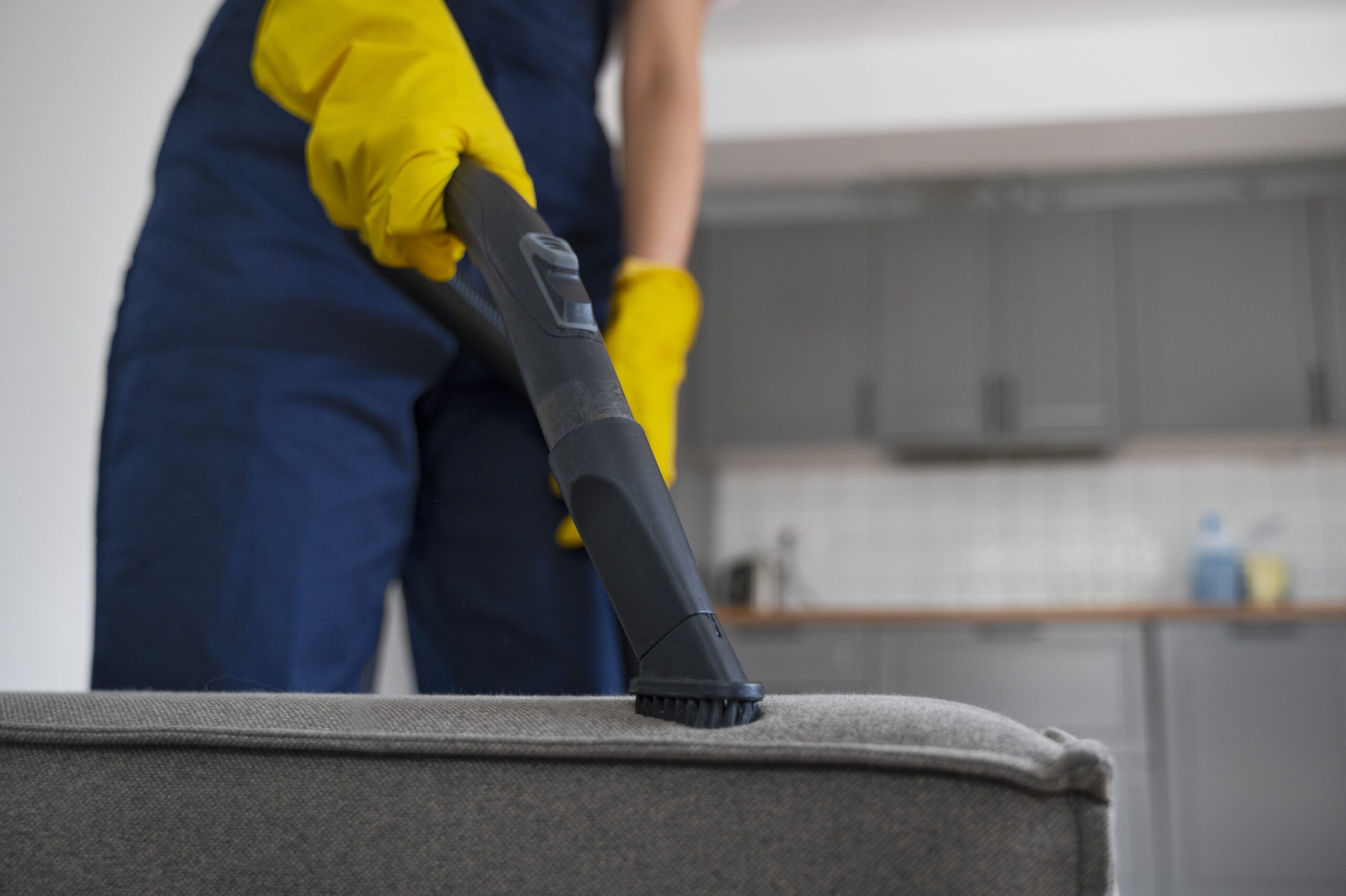
Once the fabric type is identified, the process typically begins with a dry vacuuming step that removes loose debris, pet hair, and surface dust from all cushions, crevices, armrests, and the back and sides of the piece. This step is more thorough than what most people do at home because professionals use tools designed to reach deep into seams and tight corners where debris collects and sits undisturbed for months.
After the initial vacuuming, a pre-treatment solution is applied to stained or heavily soiled areas. This loosens the bond between the fabric and the dirt, making it easier to extract during the cleaning phase. For pieces with pet stains or odors, an enzyme-based treatment is often used because it breaks down the organic matter causing the smell at a molecular level rather than just masking it on the surface.
The main cleaning method used by most upholstery cleaning professionals is hot water extraction, which is sometimes called steam cleaning. This process injects a controlled amount of hot water and cleaning solution into the fabric and immediately extracts it along with the loosened dirt, bacteria, allergens, and residue. The result is a deep clean that pulls out what dry methods leave behind. For delicate fabrics that cannot handle moisture, dry cleaning methods using low-moisture compounds are used instead.
After the main cleaning, a post-treatment conditioner is sometimes applied to certain fabrics to restore softness and protect the fibers. The piece is then left to dry, which typically takes a few hours depending on the fabric type, the humidity in the room, and how much moisture was used during cleaning.
What Types of Furniture Can Be Cleaned
One of the most common questions people have is whether their specific piece of furniture can be professionally cleaned. The short answer is that most upholstered furniture can be cleaned professionally, and the variety of items that fall under upholstery cleaning is wider than most people expect.
Sofas and sectionals are the most common items people have cleaned, but the service also covers loveseat cushions, accent chairs, ottomans, dining chairs with fabric seats, office chairs, headboards, window seat cushions, and even car interiors in some cases. For businesses, upholstery cleaning for couches and sofas in waiting rooms, lobbies, and conference rooms is part of maintaining a professional appearance and healthy environment. Commercial cleaning companies in the Bay Area that offer office cleaning services often include upholstery care as part of a deeper maintenance plan for office furniture that sees heavy use from employees and clients every day.
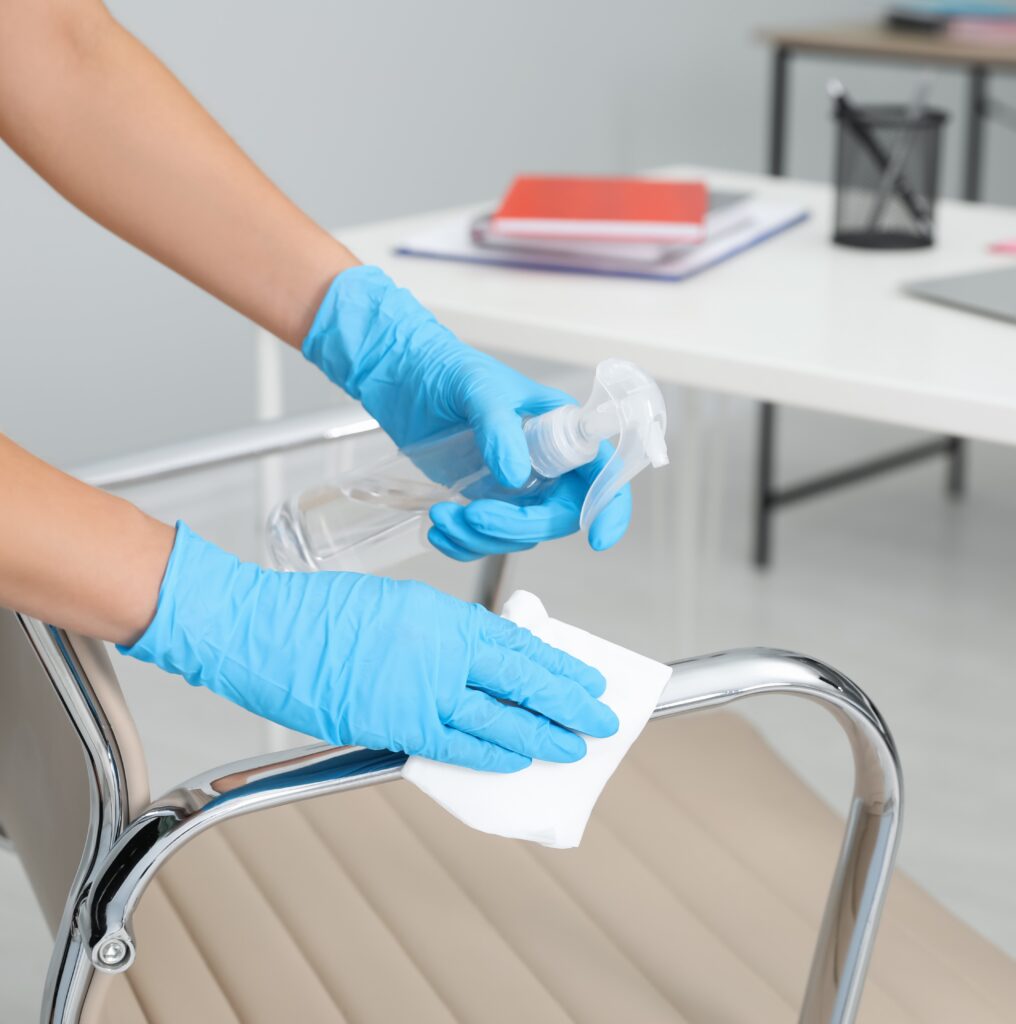
Woman cleaning armchair with antiseptic in office, closeup
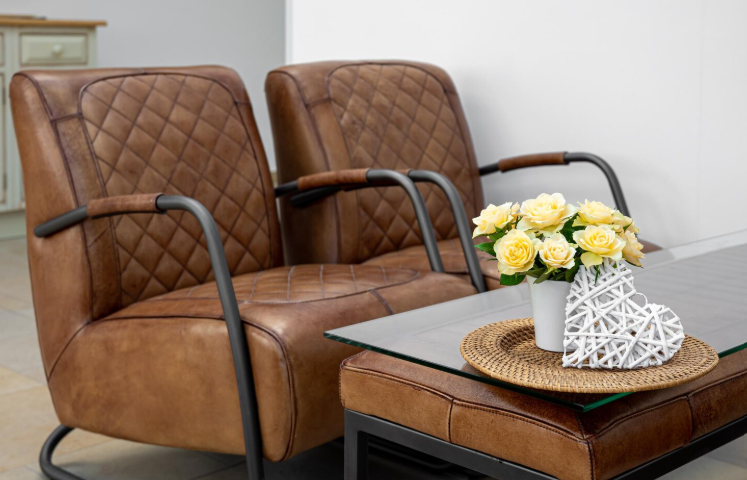
Leather furniture can also be professionally cleaned and conditioned. Leather requires a completely different process than fabric, using pH-balanced cleaners and conditioners that clean without drying out or cracking the material. Many people assume leather just needs a wipe-down, but it accumulates body oils, dust, and surface grime that regular wiping spreads around rather than removes.
How Often Should Upholstery Be Cleaned
The right frequency depends on how much the furniture is used and what it is exposed to. For most households without pets or young children, professional upholstery cleaning once a year is a reasonable standard. For homes with pets, the recommendation goes up to every six months because pet dander and odor accumulate much faster in fabric fibers.
Households with allergy sufferers, asthma, or other respiratory sensitivities benefit from more frequent cleaning because upholstered furniture is one of the biggest reservoirs of allergens in a home. Dust mites in particular thrive in fabric furniture, and hot water extraction is one of the most effective ways to reduce their numbers.
Here are some signs that your furniture needs professional cleaning sooner rather than later:
The fabric has a persistent odor that does not go away after airing out the room
There are visible stains that have not responded to spot cleaning at home
You or someone in your household has been experiencing more allergy symptoms indoors
Pet hair is embedded in the fabric rather than sitting on the surface
The cushions look flat, dull, or dingy even after vacuuming
The furniture has not been professionally cleaned in more than a year
If you are moving into a new home, upholstery cleaning is worth scheduling alongside your move-in cleaning. You have no way of knowing what the previous owners left behind in the fabric of any furniture that stays with the property. Move-in and move-out cleaning services that include deep cleaning of upholstered pieces give you a genuinely fresh start rather than just a surface-level reset.
How Upholstery Cleaning Connects to Overall Home and Office Health
Upholstery cleaning does not exist in isolation. It is one part of a bigger picture when it comes to maintaining a genuinely clean indoor environment. The same allergens and bacteria that collect in furniture cushions also settle into carpets, circulate through air ducts, and coat window sills and blinds. Addressing one without the others limits how clean your space can actually get.
Professional carpet cleaning and upholstery cleaning go hand in hand because both trap the same types of particles. If your carpets have been deep cleaned but your couch has not, the couch is still releasing allergens and odors into the room. The same logic applies to duct cleaning. Air ducts that push dusty air through a room will re-deposit particles onto freshly cleaned furniture within days. For homeowners who want to genuinely improve their indoor air quality, combining upholstery cleaning with carpet steam cleaning and air duct cleaning gives results that last much longer than any single service done alone.
Heavenly Maids Cleaning Services in San Jose takes this whole-home approach seriously. Rather than treating each service as a separate transaction, the goal is to bring every part of a home or office up to the same standard of cleanliness. Residential cleaning, deep cleaning services, window cleaning, carpet steam cleaning, air duct and dryer vent cleaning, and pressure washing all work together to create a space that is clean from the floors to the ceiling and from the inside out.
For homeowners in San Jose and across the Bay Area who want detailed home cleaning services for busy families, combining upholstery cleaning with recurring maid services keeps the home at a high standard between deeper seasonal cleanings. For businesses, high-end commercial janitorial services that include furniture care reflect well on the company and contribute to a healthier workspace for everyone inside it.
Small Tips That Help Your Upholstery Stay Cleaner Longer
Professional cleaning resets the condition of your furniture, but a few habits between appointments make a real difference in how quickly it gets dirty again.
Vacuum upholstered furniture at least once a week, paying attention to seams and cushion edges where debris collects
Rotate and flip cushions regularly so wear and soil are distributed evenly rather than concentrated in one spot
Treat spills immediately by blotting, never rubbing, with a clean dry cloth to pull liquid out before it sets
Keep a fabric protector spray on hand for pieces that see heavy use, and reapply it after each professional cleaning
Wash removable cushion covers according to the care label rather than waiting for visible soil to build up
Keep pets off furniture with designated blankets or covers that can be laundered regularly
These steps will not replace professional cleaning, but they extend the time between appointments and keep your furniture looking and smelling better day to day.
Upholstery cleaning is one of those services that most people wish they had scheduled sooner once they see the results. Clean furniture changes how a room feels, improves the air you breathe in that space, and extends the life of pieces that would otherwise wear out faster from trapped grime. Whether it is a single couch in a living room or a full set of office chairs in a commercial space, Heavenly Maids Cleaning Services handles the work with care and the kind of attention to detail that makes a real difference in the finished result.
Most offices get wiped down and vacuumed on a regular basis. Trash gets emptied, surfaces get a quick wipe, and bathrooms get checked. That kind of routine upkeep is useful, but it is not the same as a deep clean. There is a layer of buildup that everyday janitorial services simply do not reach, and over time that buildup affects the health of the people working in the space, the condition of the furniture and flooring, and even how the office feels to anyone walking through the door.
If you manage or own a business and you have been wondering whether your current cleaning schedule is actually enough, the short answer is that most offices are not being deep cleaned as often as they should be.
Understanding the difference between routine office cleaning and a true deep clean, and knowing how often each type of service is needed, can help you make smarter decisions about your workspace and the people in it.
What Counts as a Deep Clean and Why It Matters for Offices
Regular office cleaning handles the visible stuff. It keeps things looking presentable on a daily or weekly basis. Deep cleaning goes further. It covers the things that build up over weeks and months without anyone noticing until the problem is already noticeable. Carpet fibers, air vents, window tracks, upholstered chairs, baseboards, light switches, door handles, the space under and behind furniture, and the insides of breakroom appliances all fall into the category of areas that need periodic deep attention.
In a commercial setting, the stakes are higher than in a home because more people are sharing the space. Germs, allergens, and dust accumulate faster in offices with heavy foot traffic. Common areas like conference rooms, lobbies, kitchens, and shared bathrooms are touched by many people throughout the day. Without sanitization and disinfecting services that go beyond surface wiping, bacteria and viruses can persist on high-contact surfaces for hours or even days. Studies have consistently shown that desks, keyboards, and phones in shared offices carry significantly more bacteria than most people realize.
Commercial cleaning services for offices that include deep cleaning are not a luxury for large corporations. They are a practical necessity for businesses of any size, including small offices and co-working spaces. The cost of employees missing work due to illness is almost always higher than the cost of keeping the workspace properly cleaned.
Carpet cleaning is one of the most telling examples of why deep cleaning matters in an office. Office carpets absorb everything: dust, food crumbs, spilled drinks, tracked-in dirt, and airborne particles that settle over time. A vacuum picks up surface debris, but the particles embedded deeper in the fibers stay put until a professional carpet cleaning service uses hot water extraction or steam to pull them out. Carpets that go without professional-grade carpet cleaning for extended periods not only look worn and stained, they actively hold onto allergens and odors that affect the air quality of the entire office.
The same is true for air ducts. Duct cleaning in an office environment removes the dust, mold spores, and debris that collect in HVAC systems and get pushed through the air every time the system runs. In a space where people spend eight or more hours a day, the quality of the air they are breathing has a direct impact on how they feel and how well they work.
How Often Should an Office Be Deep Cleaned?
The honest answer is that it depends on the size of the office, how many people use it, and what kind of work happens there. But there are general guidelines that work well for most commercial spaces.
For a small office with fewer than ten employees and moderate foot traffic, a thorough deep clean every three to four months is a reasonable baseline. This covers carpet steam cleaning, detailed bathroom sanitization, breakroom appliance cleaning, window washing, and a full wipe-down of all surfaces including areas that do not get touched during routine cleaning.
For medium to large offices, open floor plans with shared desks, or any space that sees clients or customers regularly, monthly deep cleaning is a better standard. High-traffic environments collect grime faster, and the impression your office makes on visitors matters. Dirty windows, stained carpets, and dusty vents are things people notice even when they do not say anything.
Medical offices, childcare facilities, food service areas, and any space where hygiene is directly tied to safety should be deep cleaned even more frequently, sometimes weekly. Commercial cleaning companies in the Bay Area that specialize in office janitorial services for small businesses understand how to scale cleaning frequency to the specific needs of each workspace.
Here are some factors that should push you toward more frequent deep cleaning:
Your office has a kitchen or breakroom that gets used daily by multiple people
Employees or clients have mentioned allergy symptoms or frequent illness
The carpet has visible staining or a persistent odor even after vacuuming
The HVAC system has not had a duct cleaning in over two years
The office has not had a professional window cleaning in more than six months
You have recently had construction, renovation, or any work done inside the space
The office has pets, high humidity, or poor ventilation
After any renovation or construction project, a post-renovation deep clean is not optional. Dust from drywall, sawdust, and construction debris settles into every surface, every vent, and every corner of the space. This material is a respiratory irritant and needs to be properly removed before employees return to work in the space.
When commercial cleaning services for offices perform a proper deep clean, the scope goes well beyond what most people picture. It is not just a more thorough version of the weekly clean. It is a different level of service entirely.
A professional deep cleaning for an office typically includes carpet steam cleaning and spot treatment for stains, interior and exterior window cleaning, full bathroom sanitization including grout scrubbing and fixture polishing, breakroom cleaning that covers the inside of the refrigerator, microwave, and other appliances, baseboard and vent cleaning, upholstery cleaning for couches and office chairs, detailed cleaning of all workstations including monitors and keyboards, and floor cleaning and polishing for hard floor surfaces.
High-end commercial janitorial services also include air duct and dryer vent cleaning, which has a direct effect on indoor air quality. In a sealed office environment, stale and particle-heavy air from a neglected HVAC system creates an environment where people feel sluggish, have headaches more often, and get sick at higher rates. Addressing the air system is part of a complete deep cleaning approach for any serious commercial space.
San Jose janitorial services that offer this full range of work, from carpet cleaning to duct cleaning to window washing, are worth seeking out because coordinating all of these services through one provider is simpler and more consistent than managing multiple vendors. Heavenly Maids Cleaning Services in San Jose provides commercial cleaning across the Bay Area with this kind of full-service approach, handling both the surface-level work and the deeper maintenance that keeps offices in genuinely good condition.
Practical Tips for Keeping Your Office Cleaner Between Deep Cleans
A professional deep clean sets a high baseline, but what happens between appointments matters too. There are simple habits that help offices stay cleaner for longer and reduce the buildup that makes deep cleaning harder.
Place doormats at all entrances to reduce the amount of dirt tracked onto carpet and hard floors
Keep disinfecting wipes at shared workstations and encourage employees to wipe down their space at the end of each day
Empty trash bins daily, especially in the kitchen, to prevent odors and pest activity
Run the HVAC system with clean filters and replace them on schedule
Keep the breakroom refrigerator organized and cleaned out weekly to prevent food odors and bacteria growth
Spot-clean carpet spills immediately rather than letting them set
Schedule window cleaning at least twice a year or more often if your office faces a busy street or construction
These small steps reduce the rate at which grime and bacteria accumulate, which means your deep cleaning appointments go further and the results last longer.
Keeping Offices Clean Is an Ongoing Commitment
Routine cleaning keeps an office functional. Deep cleaning keeps it healthy. The two work together, and neither one replaces the other. For businesses in San Jose and across the Bay Area, getting on a regular schedule that combines daily or weekly janitorial services with periodic deep cleaning is the most practical way to maintain a workspace that employees feel good in and clients take seriously.
Heavenly Maids Cleaning Services handles office cleaning San Jose businesses rely on, from recurring maintenance visits to full commercial deep cleaning packages. Whether your office needs a one-time reset or an ongoing cleaning plan, the condition of your workspace has a real effect on the people inside it and the impression your business makes. Investing in proper cleaning is one of the simplest and most effective ways to take care of both.