Bringing a baby home changes everything, including how you think about cleaning methods. Suddenly the products you have been using for years feel less like household staples and more like question marks. Babies spend most of their time on the floor, put their hands in their mouths constantly, breathe in whatever is floating through the air, and have skin that absorbs things much faster than adult skin does.
Their immune systems are still developing, which means they are more vulnerable to the chemicals, fragrances, and residues that most conventional cleaning products leave behind. For new parents, figuring out how to keep a home genuinely clean without exposing a baby to harmful substances is one of the most common and most pressing concerns in those early months.
The good news is that a clean home and a safe home for a baby are not opposites. You do not have to choose between the two. What you do need is the right information about which methods and products are actually safe, which ones to avoid, and how professional house cleaning services can help you maintain a healthy environment without cutting corners on cleanliness.
Why Conventional Cleaning Products Can Be a Problem Around Babies
Most standard cleaning products contain ingredients that work well for removing dirt and killing germs but leave behind residues or release fumes that are not safe for small children. Ammonia, bleach, synthetic fragrances, phthalates, formaldehyde-releasing preservatives, and volatile organic compounds are found in a wide range of common products, from bathroom sprays to floor cleaners to laundry detergents. Adults can handle brief exposure to these chemicals without much noticeable effect, but babies are a different story.
Babies crawl on floors that have been mopped with chemical cleaners and then put their hands directly in their mouths. They breathe air in rooms that have been sprayed with synthetic fragrances and aerosol disinfectants. Their skin contacts surfaces that were wiped down with products that leave a chemical film. Over time, repeated low-level exposure to these substances has been linked to respiratory irritation, skin sensitivities, and disruption of the developing hormonal and immune systems. This is not about being overly cautious. It is about understanding that a product safe for an adult is not automatically safe for a newborn.
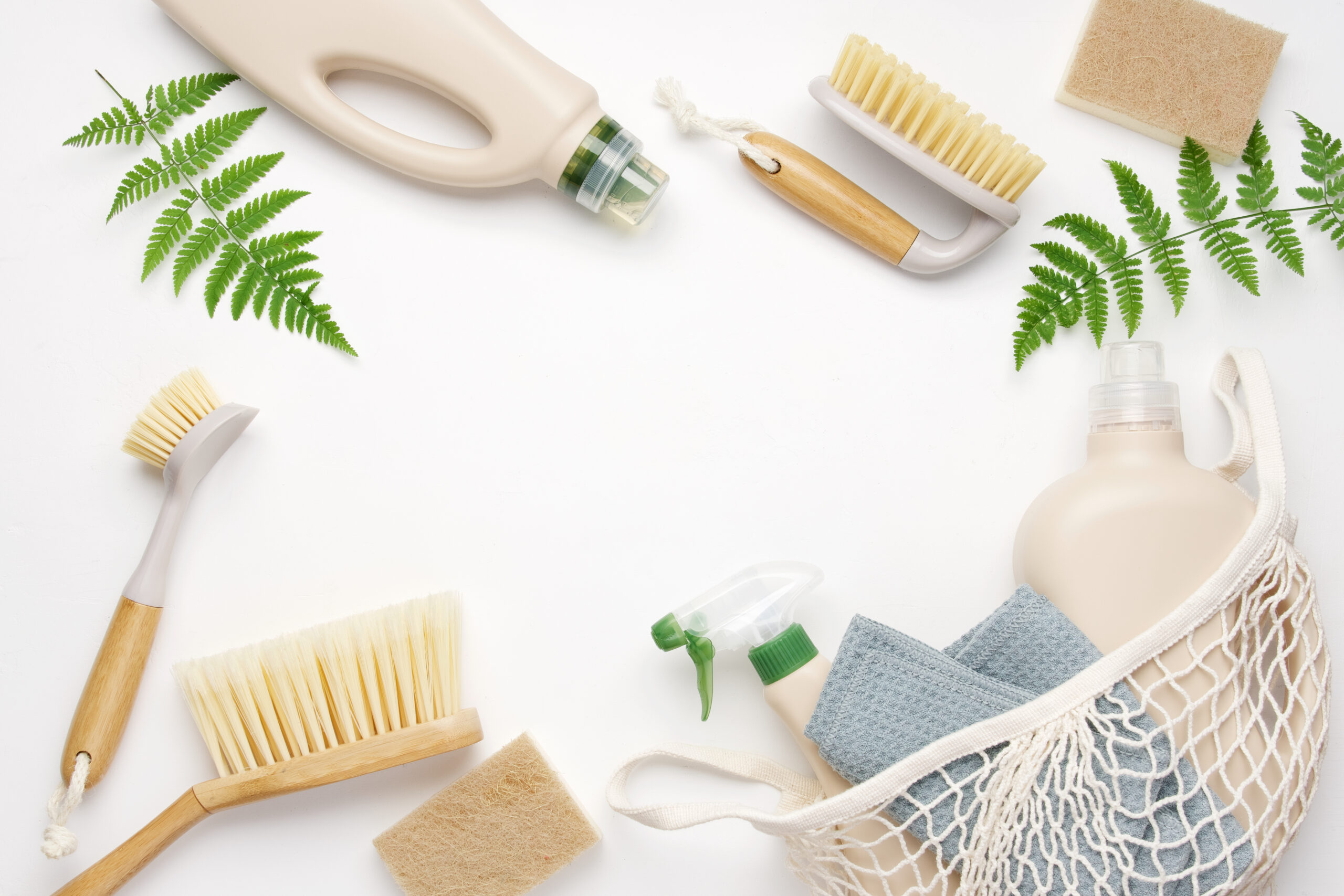
The first step toward a safer home is switching to eco-friendly cleaning solutions that do not contain the most problematic ingredients. Plant-based cleaners, fragrance-free detergents, and products certified by recognized safety organizations are widely available now and work well for everyday house cleaning. White vinegar, baking soda, and castile soap are simple, effective, and genuinely non-toxic options for many cleaning tasks around a home with a baby.
The Safest Cleaning Methods Room by Room
Different areas of the home carry different risks for babies, and the cleaning approach for each one should reflect that. Floors are the highest priority because babies spend so much time on them. Hard floors should be mopped with a fragrance-free, plant-based cleaner diluted in warm water rather than with concentrated chemical floor cleaners. After mopping, allow the floor to dry completely before letting a baby back on the surface. Residue from cleaning products is most concentrated when wet, and a dry floor is always safer than a damp one.
Carpets deserve special attention in a home with a baby. Carpet fibers trap dust mites, pet dander, bacteria, mold spores, and chemical residues from shoes tracked in from outside. Regular vacuuming with a HEPA filter vacuum helps manage surface debris, but it does not get deep enough to remove what has worked its way into the lower layers of the carpet. Professional carpet cleaning using hot water extraction removes these deeper particles without leaving behind chemical residue. For homes with babies, professional-grade carpet cleaning done with non-toxic, baby-safe solutions is one of the most effective things you can do to improve the air quality and cleanliness of the spaces where your baby spends the most time.
Bathrooms need to be sanitized regularly, but strong bleach-based sprays linger in the air and on surfaces. Hydrogen peroxide-based cleaners are a safer alternative for sanitizing toilet seats, sinks, and tubs. They break down into water and oxygen after use, leaving no harmful residue. For grout and tile, a paste of baking soda and water with a stiff brush does a good job without any chemical risk.
The kitchen requires frequent cleaning because food residue attracts bacteria quickly. Dish soap that is fragrance-free and free of dyes is safer for washing anything a baby might contact, including bottles, pacifiers, and feeding utensils. Countertop sprays made with plant-based surfactants clean effectively without leaving behind the synthetic residue that many commercial kitchen sprays do.
Here are some specific practices that make a real difference in a baby-safe cleaning routine:
Use fragrance-free, dye-free laundry detergent for all baby clothing, bedding, and cloth items
Rinse surfaces after cleaning to remove any product residue before a baby touches them
Avoid aerosol sprays near the baby’s sleeping or play areas since they linger in the air for hours
Ventilate rooms well after cleaning by opening windows to let fresh air replace any fumes
Store all cleaning products in locked cabinets well out of reach
Wash your hands after handling cleaning products before picking up the baby
Avoid using scented plug-in air fresheners, which release synthetic chemicals continuously into the air
Air Quality and Hidden Hazards That New Parents Often Miss
Surface cleaning is only part of keeping a home safe for a baby. Indoor air quality matters just as much, and it is something most people do not address directly. Air ducts that have not been cleaned in years circulate dust, mold spores, pet dander, and other particles throughout the home every time the HVAC system runs. In a home where a baby is sleeping and breathing that air for most of the day and night, duct cleaning is not something to put off. Having air ducts professionally cleaned removes the accumulated buildup that feeds directly into the air your baby breathes.
Dryer vent cleaning is another overlooked factor. A clogged dryer vent pushes lint particles and moisture back into the home, contributing to both air quality issues and mold risk in the laundry area. Combined air duct and dryer vent cleaning makes a measurable difference in how clean the air inside a home actually is, especially in smaller spaces where air circulation is limited.
Windows also play a role in baby home safety. Dirty windows have mold and moisture buildup around frames and sills, especially in older homes. Interior and exterior window cleaning removes this growth and also allows more natural light into the home. Natural light has a positive effect on a baby’s sleep cycle and reduces the need for artificial lighting that can affect circadian rhythms.
For new parents who have recently moved into a new home, move-in cleaning done with baby-safe products is something worth prioritizing. You do not know what cleaning products the previous residents used or what residues remain on floors, counters, and inside cabinets. A thorough move-in and move-out cleaning service using eco-friendly home cleaning solutions gives you a genuinely clean starting point rather than a surface-level wipe-down of someone else’s residue.
How Professional Cleaning Services Help Families With Babies
Keeping a home clean with a newborn is physically and mentally exhausting. Sleep deprivation, recovery, and the demands of a new baby leave very little time or energy for the kind of detailed cleaning that a home with a baby actually needs. This is where professional house cleaning services become genuinely useful, not as a luxury but as a practical tool for keeping the home safe when you do not have the capacity to do it all yourself.
The key is finding cleaning services that use baby-safe, eco-friendly products and methods. Heavenly Maids Cleaning Services in San Jose works with families across the Bay Area to provide detailed home cleaning services that are safe for babies, young children, and anyone with sensitivities to harsh chemicals. From premium residential deep cleaning to recurring maid cleaning services, the approach is built around getting a home thoroughly clean without compromising the safety of the people living in it.
Residential deep cleaning services that cover carpets, air ducts, windows, and all living surfaces give new parents a clean baseline that is much harder to achieve with a newborn in the house. Recurring cleaning services keep that baseline maintained week to week so the home never slips back into a state that requires a major reset.
For families in San Jose and across the Bay Area, having affordable cleaning services nearby that understand the specific needs of homes with babies is genuinely valuable. Heavenly Maids Cleaning Services brings that understanding to every visit, using methods and products that protect the health of everyone in the home, especially the smallest and most vulnerable members of the family.
A clean home for a baby is not about perfection. It is about removing the real hazards, keeping the air clean, using safe products on the surfaces they touch, and staying consistent with the habits that make a difference over time. With the right approach, you can have a home that is both properly clean and genuinely safe for your baby to grow up in.