Running a small business means wearing many hats. One day you are the sales team, the next you are the bookkeeper, and somewhere in between you are the person who notices the trash is overflowing. In the early days, it feels natural to handle the cleaning yourself or to ask a team member to wipe down the counters before closing. It saves money, and the space is small enough that it seems manageable. The question is when that approach stops working. Knowing the right moment to bring in professional help can protect your time, your reputation, and your team’s health.
There is no single date on the calendar that tells you it is time. Instead, there are signs, milestones, and situations that show a business has outgrown do-it-yourself cleaning. Some are obvious, like a growing staff or a steady stream of customers. Others are quieter, like a faint odor you have stopped noticing or a carpet that never looks quite right after vacuuming. This guide walks through the clearest signals, explains what commercial cleaning actually covers, and offers practical tips for choosing a service that fits a smaller budget and a busy schedule.
Clear Signs It Is Time to Hire Professionals
The first sign is simply time. Every hour that you or your employees spend scrubbing a restroom or mopping a floor is an hour taken away from the work that earns money. Many owners never calculate this cost. If a manager who earns a good salary spends three hours a week on cleaning tasks, the true price of that cleaning is far higher than it looks. Professional janitorial services often cost less than the value of the time they free up, especially once you count supplies, equipment, and the hassle of keeping everything stocked.
Headcount is the second sign. A space used by two people behaves very differently from one used by fifteen. More people means more restroom visits, more dishes in the break room, more trash, more fingerprints on glass, and more germs passed from desk to desk. A general rule is that once a business reaches around five to ten regular occupants, or sees a steady flow of customers or clients, the volume of cleaning is too large for casual upkeep. At that point, a reliable schedule matters more than good intentions.
Customer traffic is a third sign, and it changes the stakes. Clients and visitors form opinions within seconds of walking in. A streaked entry door, a dusty reception counter, or a restroom with a stale smell can quietly lower trust in everything else you offer. For businesses such as salons, studios, clinics, retail shops, and professional offices, the condition of the space is part of the product. Customers rarely complain about a dirty space. They simply do not return.
Health concerns also point toward professional help. Frequent sick days, complaints about allergies, or a visible buildup of dust can signal that surface cleaning is not enough. Shared spaces such as break rooms, restrooms, and conference tables need regular disinfecting, not just a quick wipe. Sanitization and disinfecting services use proper products and contact times to reduce germs on the surfaces people touch most. During cold and flu season, or after an illness moves through the team, a deeper level of care can help keep absences down.
Another sign is the state of the floors. Hard floors that look dull, carpets that hold stains or smell stale, and entry mats packed with dirt all show that routine cleaning is falling behind. Floor cleaning and polishing services restore shine and protect finishes, while professional-grade carpet cleaning lifts embedded soil that a standard vacuum leaves behind. Neglected floors wear out faster, so regular care often costs less than early replacement.
Finally, notice whether cleaning has become inconsistent. If the schedule depends on whoever has a spare minute, tasks will slip, and slipping tasks become visible problems. Owners often realize it is time to hire help when the same chores keep falling through the cracks or when employees begin to resent being asked to clean. Handing the work to trained people removes that tension and lets everyone return to their real jobs.
What Commercial Cleaning Includes and How Often You Need It
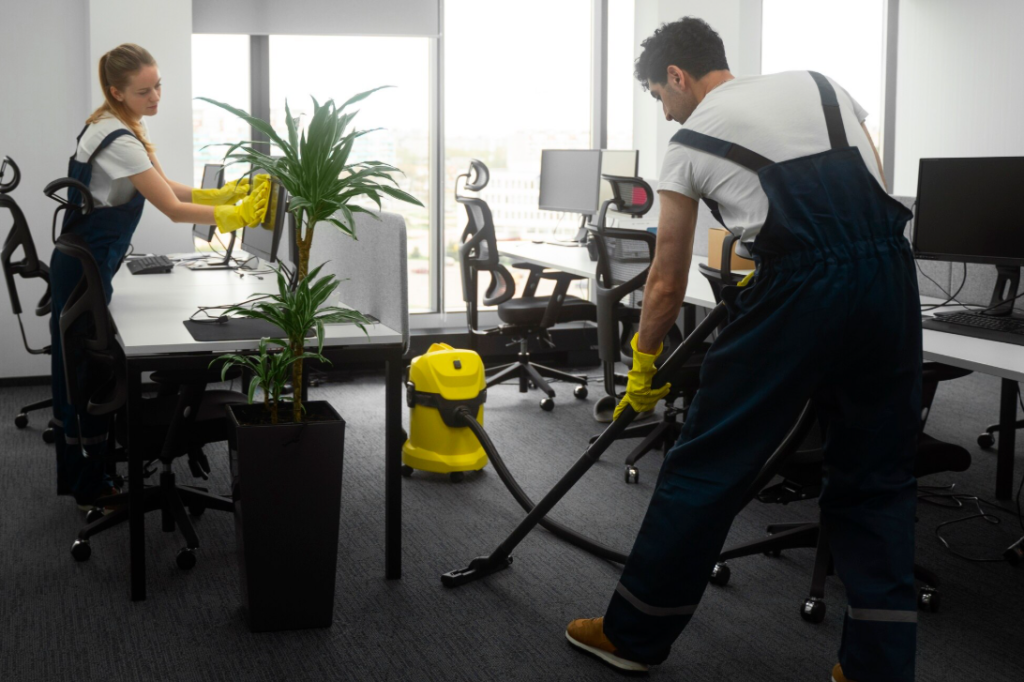
Commercial cleaning is different from the house cleaning most people know. The tools, products, and routines are built for shared spaces, higher traffic, and stricter standards. A typical office cleaning plan covers trash removal, vacuuming, mopping, restroom cleaning, break room cleaning, dusting, and disinfecting high-touch surfaces such as door handles, light switches, phones, and keyboards. Glass doors and partitions are cleaned to keep the space looking sharp, and entryways receive special attention because they set the tone for every visit.
How often you need service depends on the type of business and the number of people using the space. A small office with a handful of employees and few visitors may do well with cleaning two or three times a week. A busy retail store, salon, or restaurant front area may need daily service. Spaces that host the public, such as gyms, studios, and waiting rooms, often require both daily cleaning and a deeper weekly routine. Restrooms and break rooms are the areas that change the schedule most, since they are used constantly and judged quickly.
Beyond the regular routine, many small businesses benefit from periodic deep cleaning services. These visits cover the tasks that daily cleaning cannot fit in, such as washing baseboards, cleaning inside appliances, scrubbing grout, cleaning vents and light fixtures, and deep cleaning carpets or hard floors. Most small offices do well with a deeper clean every quarter. Businesses with heavy traffic, food service, or health related work may prefer a monthly deep clean. Seasonal timing also matters. Many owners schedule a deeper session before busy seasons, after the holidays, or before an important client event.
Window and exterior care are easy to overlook. Interior and exterior window cleaning brightens the space and improves how the business looks from the street, which matters for any shop that depends on walk-in traffic. Commercial building maintenance and cleaning can also include pressure washing walkways, entrances, and parking areas, and gutter cleaning to keep water flowing away from the building. A clean exterior tells customers that the business is cared for before they step through the door. For a small business that rents space, it is worth checking the lease to see which exterior tasks belong to the tenant and which belong to the landlord.
Some situations call for professional help right away, no matter how small the business is. A renovation or buildout leaves behind fine dust that coats every surface, and standard cleaning cannot remove it safely. Moving into a new space or leaving an old one calls for a thorough reset, which is why many owners schedule a move in move out cleaning at the start or end of a lease. Water leaks, pest problems, and unusual odors also call for expert attention. If you plan to host an event, an open house, or an inspection, a professional clean beforehand removes the stress of last-minute scrubbing.
Cost is always a concern for a small business, and it helps to think of commercial cleaning as a predictable expense rather than a surprise one. Most providers price by square footage, frequency, and the tasks included, so you can match the service to your budget. Starting with a smaller plan and adding services as the business grows is common and perfectly reasonable. Many companies also offer flexible terms, so you can adjust the schedule if business slows down or speeds up.
Choosing the Right Provider and Getting Good Value
Once you decide to hire, the next step is choosing a company that fits your needs. Begin by listing what you want done and how often. A clear list makes quotes easier to compare and prevents misunderstandings later. Ask whether the company works with small offices and storefronts, since some firms focus mainly on large buildings and may not offer the flexibility a smaller business needs. Companies that specialize in office janitorial services for small businesses understand tight budgets, small teams, and the need for personal attention.
Ask about insurance, background checks, and training. Cleaners often work after hours when no one else is around, so trust matters. A reliable company screens its employees, carries liability coverage, and can explain how it handles keys, alarm codes, and confidential materials. Ask how the company communicates, who your point of contact will be, and what happens if something is missed. A good provider welcomes questions and has a clear process for fixing problems quickly.
Look at products and methods as well. Many small businesses now prefer eco-friendly cleaning services that avoid harsh fumes, especially in tight spaces with limited airflow. Ask what products the team uses on desks, glass, floors, and restrooms, and whether they can adjust for allergies or sensitivities. Ask who supplies paper goods and soap, and whether those are included or billed separately.
Scheduling matters too. Many small businesses prefer service after closing, early in the morning, or on weekends so that customers and staff are never disrupted. A dependable team arrives on time, works efficiently, and leaves the space ready for the day ahead. Consistency is worth more than a slightly lower price, because a familiar team learns the layout, remembers special requests, and notices small problems early.
Heavenly Maids Cleaning Services serves local businesses across the Bay Area, and it is a good example of how a flexible, detail focused team can support a growing company. Heavenly Maids Cleaning Services offers recurring service plans, deeper seasonal cleaning, and specialty work such as window cleaning and carpet care, which means a business can start small and add services over time without switching providers. That kind of steady relationship saves effort and keeps standards consistent as the business grows.
A few simple tips can help you get more from any cleaning plan. Keep clutter off desks and counters so cleaners can reach every surface. Leave clear notes about areas that need extra attention. Provide a short walk-through on the first day so the team understands your priorities. Place doormats at entrances to reduce the dirt that comes inside. Review the service after the first month and adjust the plan so you pay only for what you truly need. Encourage employees to throw away their own trash and wipe their own spills, since small habits keep the space tidy between visits.
A small business does not need commercial cleaning on the first day it opens, but it does need a plan for when the time comes. When cleaning starts to take time away from the work that grows the business, when more people use the space, when customers notice the details, or when health and appearance begin to slip, the moment has arrived. Hiring professionals frees your hours, protects your team, and shows customers that you take pride in what you do. Choose a provider that fits your size and budget, set clear expectations, and enjoy a workplace that always looks ready for business.