If you have noticed that your shower does not hit as hard as it used to, or that the kitchen faucet takes longer to fill a pot than it did a year ago, there is a good chance mineral buildup is at least part of the reason. Water pressure issues frustrate homeowners because the cause is not always obvious. The pipes look fine from the outside. There are no visible leaks. The water bill has not changed. But something has clearly shifted, and the culprit is often hiding inside the pipes, fixtures, and appliances themselves in the form of limescale and mineral deposits that accumulate gradually and silently over months and years.
Understanding how mineral buildup develops, which parts of a home it affects most, and what can be done about it gives homeowners a practical advantage in maintaining their plumbing and keeping their home performing the way it should. This is not a problem limited to old homes or poorly maintained ones. Any home supplied by hard water, which describes a very large portion of homes across California including much of the Silicon Valley and Bay Area region, is susceptible to this issue from the first day it is connected to the water supply.
What Mineral Buildup Actually Is and How It Forms
The water that comes through household pipes is not pure H2O. It carries dissolved minerals picked up as it moves through rock and soil before reaching the water treatment system and eventually the home. Calcium and magnesium are the two most common minerals in hard water, and when water that contains these minerals is heated or evaporates, it leaves the minerals behind as a solid deposit. This deposit is what most people call limescale, hard water stains, or mineral buildup, and it is physically hard, white to yellowish in color, and bonds tightly to whatever surface it forms on.
The rate at which buildup accumulates depends on how hard the water is, measured in grains per gallon or milligrams per liter of dissolved minerals. Water hardness varies by region and even by neighborhood depending on the water source. The Silicon Valley area draws water from multiple sources, and hardness levels can vary, but many Bay Area residents deal with moderately to significantly hard water that leaves visible deposits on fixtures, glass shower doors, and faucet aerators over time.
Heat accelerates mineral deposition dramatically. This is why the worst buildup in a home tends to appear in the water heater, the dishwasher, the washing machine, kettles, and showerheads, all of which involve heating water as part of their normal operation. Inside a water heater, mineral deposits can accumulate as a thick layer on the heating element and tank floor over years of use, reducing heating efficiency and shortening the life of the unit. Inside pipes, the buildup forms on the interior walls and gradually narrows the diameter through which water can flow.
How Mineral Deposits Reduce Water Pressure Step by Step
The connection between mineral buildup and reduced water pressure is a direct one, though it develops slowly enough that many homeowners do not notice the change until it has progressed significantly. Water flows through pipes under pressure, and the amount of pressure at any fixture depends on several factors including the diameter of the pipe, the distance from the supply line, and the absence of obstructions. Mineral deposits act as an obstruction that narrows the pipe diameter from the inside.
Even a thin layer of limescale on the interior wall of a pipe reduces the effective opening through which water can pass. As the layer thickens over time, the restriction becomes more pronounced. The pressure drop becomes noticeable first at fixtures at the end of the supply run, farthest from where the main line enters the home, because they are already working against the greatest distance. Eventually, even fixtures closer to the main supply feel the effect.
Showerheads are one of the most telling indicators of mineral buildup in a home because their small nozzle holes are among the first to become restricted. When individual nozzles clog with mineral deposits, water sprays unevenly, some holes stop producing flow entirely, and the overall pressure drops noticeably. Removing a showerhead and soaking it overnight in white vinegar dissolves most mineral deposits and restores flow through the nozzle holes. This is one of the simplest and most immediately satisfying home maintenance tasks available, and the improvement in water pressure after cleaning a heavily scaled showerhead is often dramatic.
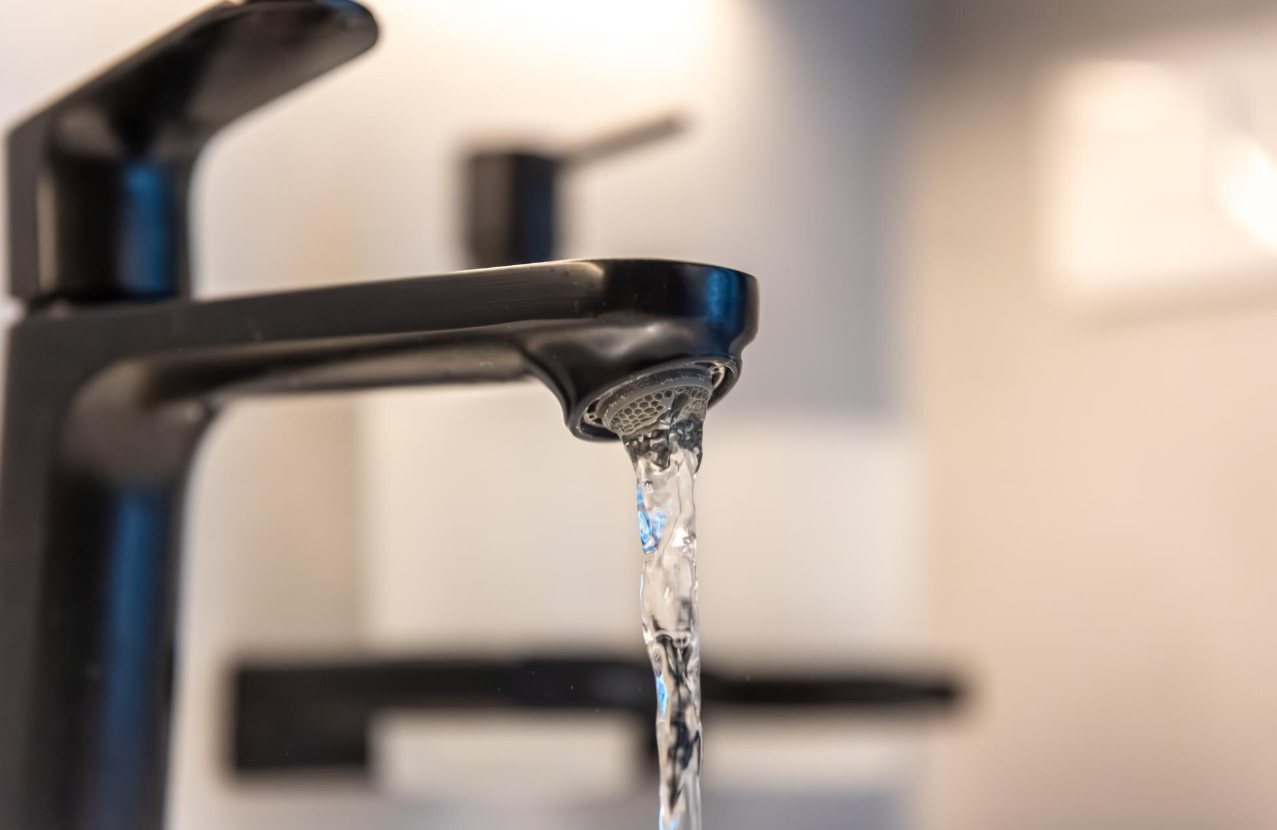
Faucet aerators, the small screens at the tip of faucets, experience the same kind of clogging. These screens mix air into the water stream and regulate flow, but when mineral deposits clog the mesh, flow drops and pressure at that fixture suffers. Aerators can be unscrewed, soaked in vinegar, and rinsed clean in a few minutes. Doing this quarterly in a hard water area keeps faucet performance consistent.
Here are the most common places in a home where mineral buildup reduces water pressure and performance:
Showerhead nozzles that become partially or fully blocked, causing uneven spray and lower pressure
Faucet aerators clogged with calcium deposits that restrict flow at individual fixtures
Interior pipe walls in older homes where buildup has accumulated over many years of hard water use
Water heater inlet and outlet connections where deposits narrow the flow path into and out of the tank
Dishwasher spray arms with small holes that clog with minerals and reduce cleaning performance
Washing machine inlet filters that collect deposits and reduce water intake during fill cycles
Ice maker water lines in refrigerators that narrow with scale and slow ice production
The water heater deserves special attention because its condition affects pressure and performance throughout the home. When mineral sediment accumulates on the floor of a tank-style water heater, the layer insulates the heating element from the water, forcing it to work longer and harder to reach temperature. This reduces efficiency and raises energy costs. When enough sediment accumulates, it can partially block the outlet pipe at the bottom of the tank, reducing hot water pressure specifically, which explains why some homeowners notice pressure differences between hot and cold water at their fixtures.
Cleaning Mineral Buildup
The approach to removing mineral deposits depends on where they are and how severe the buildup has become. For surface-level deposits on fixtures, tiles, shower doors, and faucets, white vinegar is the most accessible and safest removal agent available. Its mild acidity dissolves calcium and magnesium deposits without damaging most surfaces. For visible hard water stains on glass shower doors, a paste of baking soda and vinegar applied and left to sit for thirty minutes before scrubbing removes most staining without scratching the glass. Soaking a cloth in white vinegar and wrapping it around a faucet base or around a showerhead for an hour loosens deposits that wiping alone cannot remove.
For tile and grout in bathrooms and kitchens where mineral deposits combine with soap scum to create a hard, discolored crust, a more thorough approach is needed. Professional kitchen and bathroom cleaning that targets grout, tile faces, and fixture bases uses appropriate products and tools that remove this composite buildup without damaging the surface. This level of cleaning also gets behind fixtures and around the base of faucets where mineral deposits and mildew grow together in areas that casual cleaning misses.
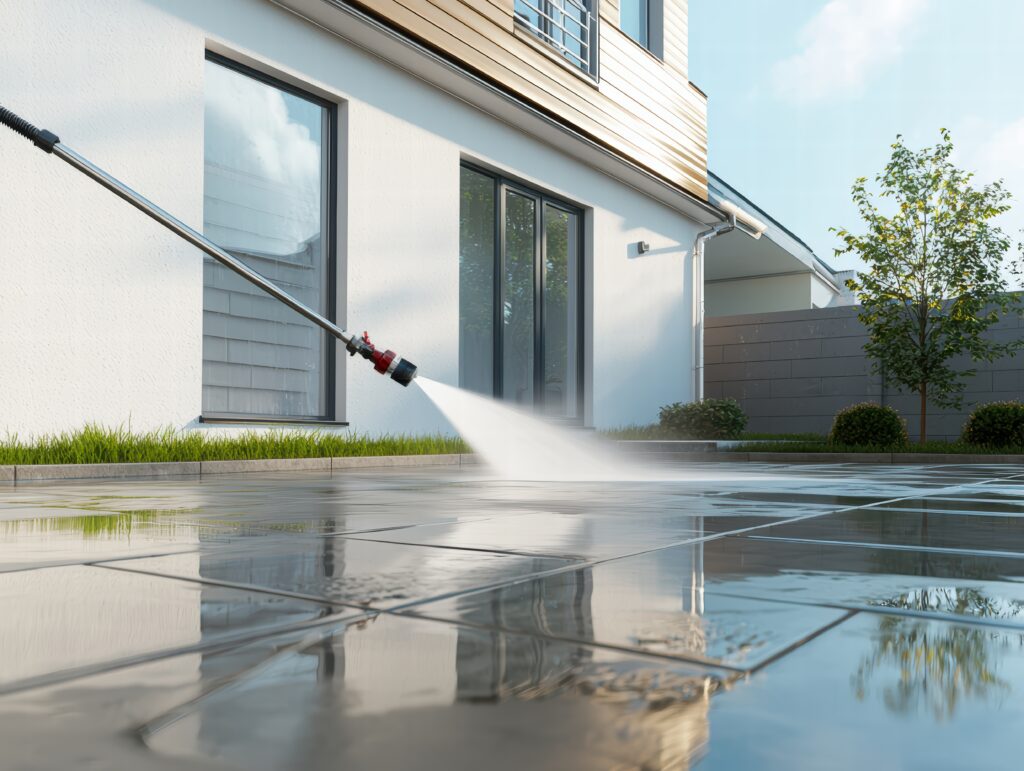
Pressure washing is one of the most effective ways to address mineral and biological buildup on exterior surfaces. Hard water used in irrigation leaves white mineral deposits on driveways, walkways, and exterior walls over time. Power washing services for driveways and patios remove these deposits along with algae, mold, and grime using appropriate pressure and cleaning agents for each surface type. Advanced pressure washing and exterior care restores surfaces to a condition that not only looks better but also removes the mineral and biological growth that causes surfaces to deteriorate faster over time.
For the plumbing system itself, annual flushing of the water heater removes sediment before it accumulates to the level where it affects performance. Many plumbing professionals recommend flushing the tank by connecting a hose to the drain valve and running water out until it runs clear, which removes the loose sediment at the bottom of the tank. Installing a whole-home water softener is the most effective long-term solution for hard water in the Bay Area, as it removes the calcium and magnesium from the water before it enters the home’s plumbing system, preventing new deposits from forming throughout the entire house.
Heavenly Maids Cleaning Services in Silicon Valley provides residential cleaning and deep cleaning services across the Bay Area that address the visible effects of hard water throughout the home. From professional kitchen and bathroom cleaning that removes fixture buildup and hard water staining to window washing services that eliminate mineral deposits from glass, the work connects directly to how the home functions and how well it is maintained over time. Recurring maid cleaning services that include consistent attention to mineral-prone surfaces keep buildup from reaching the level where it becomes a problem, which is always easier and less costly than addressing it after it has had months or years to accumulate.
Hard water and mineral buildup are facts of life in many Bay Area homes, but they do not have to mean compromised water pressure, stained fixtures, and etched glass. With the right maintenance schedule, appropriate cleaning methods for each surface, and professional support when the buildup has gone too far for home remedies to handle alone, a home’s plumbing and surfaces can stay in genuinely good condition for the long term.