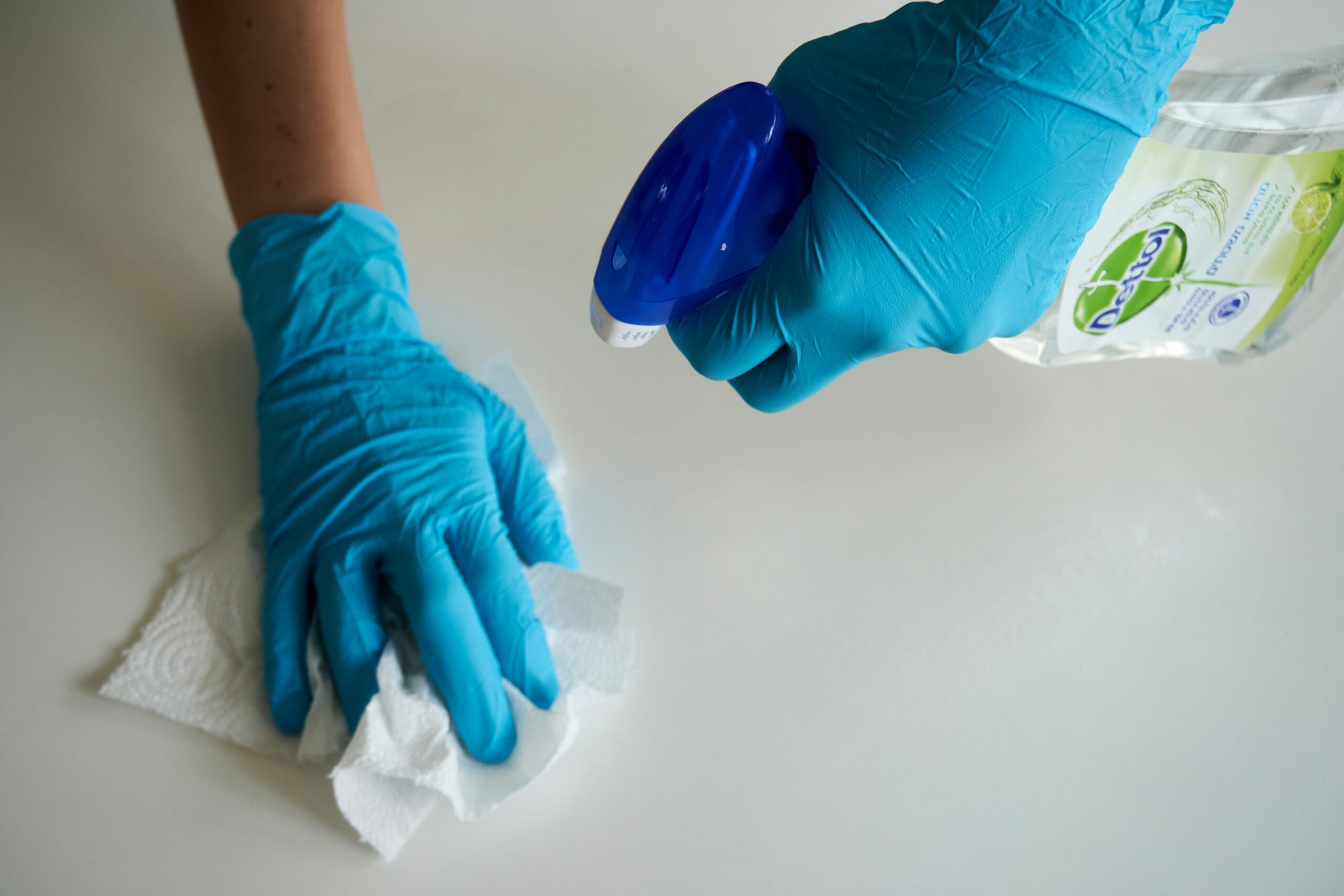
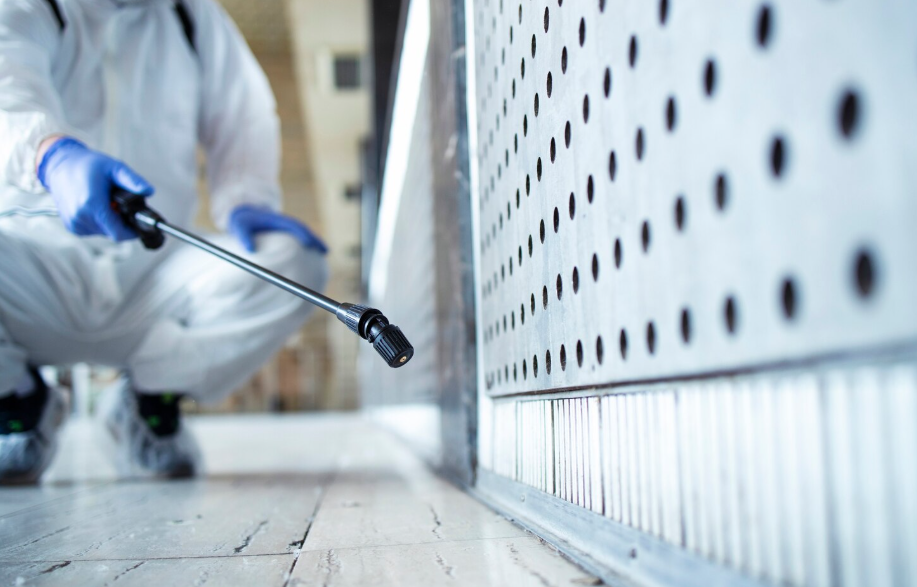
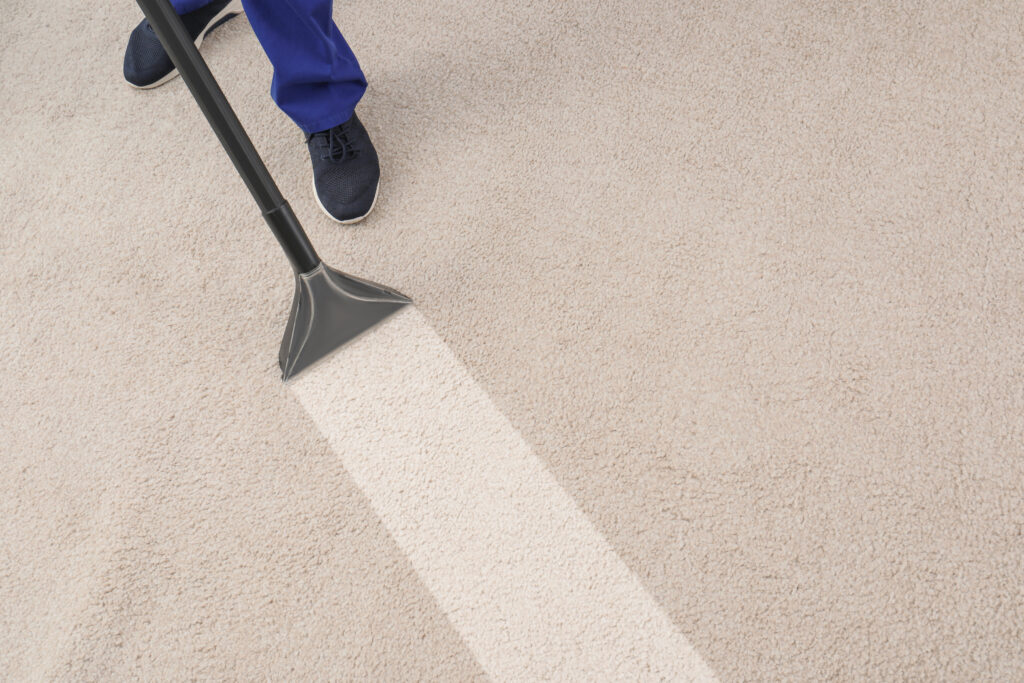
Most people know that a clean home feels better than a messy one. But the relationship between the state of your living space and the state of your mind goes much deeper than personal preference. Research in environmental psychology has consistently found that the cleanliness and organization of the spaces we occupy have a direct and measurable effect on stress levels, focus, sleep quality, and overall emotional wellbeing. This is not about being a perfectionist or keeping an immaculate house at all times. It is about understanding that your environment shapes how you feel, often in ways you do not consciously notice until something changes.
If you have ever felt an unexpected sense of calm after cleaning a cluttered room, or noticed that a messy kitchen makes you feel more anxious and irritable than you expected, you have already experienced this connection firsthand. The link between cleanliness and mental health is real, it is backed by science, and it has practical implications for how you approach house cleaning and the spaces you spend the most time in every day.
How a Cluttered and Dirty Home Affects Your Brain
The human brain processes its environment constantly, even when you are not paying attention. Visual clutter, meaning the accumulation of objects, mess, and disorganization in your field of view, competes for your attention and creates a low-level cognitive load that runs in the background all day. Researchers at Princeton University found that physical clutter in the environment reduces the brain’s ability to focus and increases stress hormones. The more visual noise there is in a space, the harder your brain works just to filter it out.
Dirt and grime add another layer to this. A home that smells musty, has grimy surfaces, or has visible buildup in corners and on floors sends subtle signals to the brain that things are out of control. This contributes to feelings of helplessness and low-grade anxiety that many people carry without being able to identify the source. It is not dramatic distress. It is a persistent background tension that drains energy and makes it harder to relax, even at home where you are supposed to feel most at ease.
Sleep is one of the areas most affected by the cleanliness of a home. Studies have found that people who describe their bedrooms as cluttered or in need of cleaning have more difficulty falling asleep and report lower quality sleep overall. Clean bedding, clear floors, and a room free of dust and allergens all contribute to an environment where the brain can fully wind down. Dust mites and airborne particles from dirty carpets and uncleaned air ducts also trigger nighttime congestion and respiratory irritation that interrupts sleep cycles without the sleeper always understanding why they feel unrested in the morning.
The kitchen and bathroom are two rooms where dirt has a particularly strong psychological effect. These are functional spaces that people use multiple times every day. When they are dirty, every use is accompanied by a small but real sense of discomfort. Professional kitchen and bathroom cleaning that brings these spaces to a genuinely clean state resets the experience of using them and removes a source of daily low-level stress that most people do not realize they are carrying.
The Mental Load of Cleaning and Why It Matters
One aspect of the cleanliness and mental health connection that does not get talked about enough is the mental load that an uncleaned home places on the people responsible for maintaining it. Mental load refers to the cognitive and emotional work of tracking what needs to be done, planning when to do it, and carrying the awareness of unfinished tasks in the back of your mind. For many adults, especially parents and people who work full time, this load is constant and exhausting.
An uncleaned home adds to this load in visible ways. Every time you walk past a room that needs deep cleaning, a window that needs washing, or a carpet that has been overdue for professional carpet cleaning, your brain registers an uncompleted task. Over time, the accumulation of these unfinished items creates a sense of being perpetually behind that erodes confidence and increases anxiety. The irony is that the more overwhelmed someone feels, the harder it becomes to start cleaning, which keeps the cycle going.
Getting help from professional house cleaning services breaks this cycle in a direct and immediate way. When a home is professionally cleaned from top to bottom, the mental load associated with those unfinished tasks disappears. People consistently report feeling lighter, more in control, and less anxious after a thorough home clean, not just because the space looks better but because a significant source of mental pressure has been removed. Recurring maid cleaning services maintain this effect over time, preventing the buildup from returning and keeping the mental load consistently lower.
Here are some of the most common ways a dirty or cluttered home affects mental health:
Increased cortisol levels, which is the body’s primary stress hormone, linked to environments with clutter and visual disorder
Difficulty concentrating and completing tasks when the surrounding space is messy or dirty
Feelings of embarrassment or shame about the home that lead to social withdrawal and avoiding having people over
Reduced motivation and energy that makes other daily tasks feel harder than they should
Disrupted sleep from allergens, airborne particles, and the psychological discomfort of an unclean sleeping environment
A persistent sense of being behind or overwhelmed that affects mood throughout the day
Clean Spaces, Better Focus, and Productivity at Work
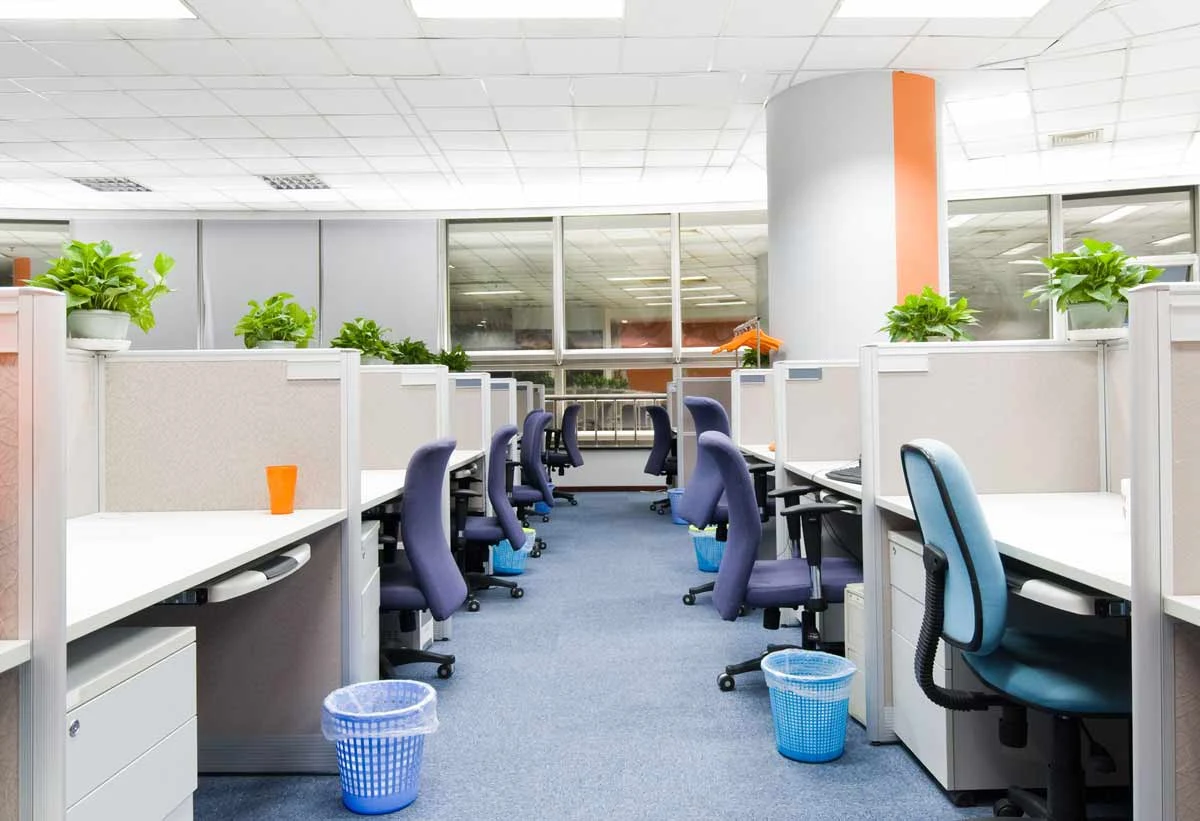
The mental health benefits of cleanliness extend beyond the home. Office environments have a significant effect on how employees think, feel, and perform. A dirty or disorganized workspace creates the same kind of cognitive load that a cluttered home does. Employees in offices that are not properly maintained report higher stress levels, lower job satisfaction, and more frequent illness. The connection between a clean office and employee wellbeing is well established and taken seriously by businesses that understand how the physical environment affects performance.
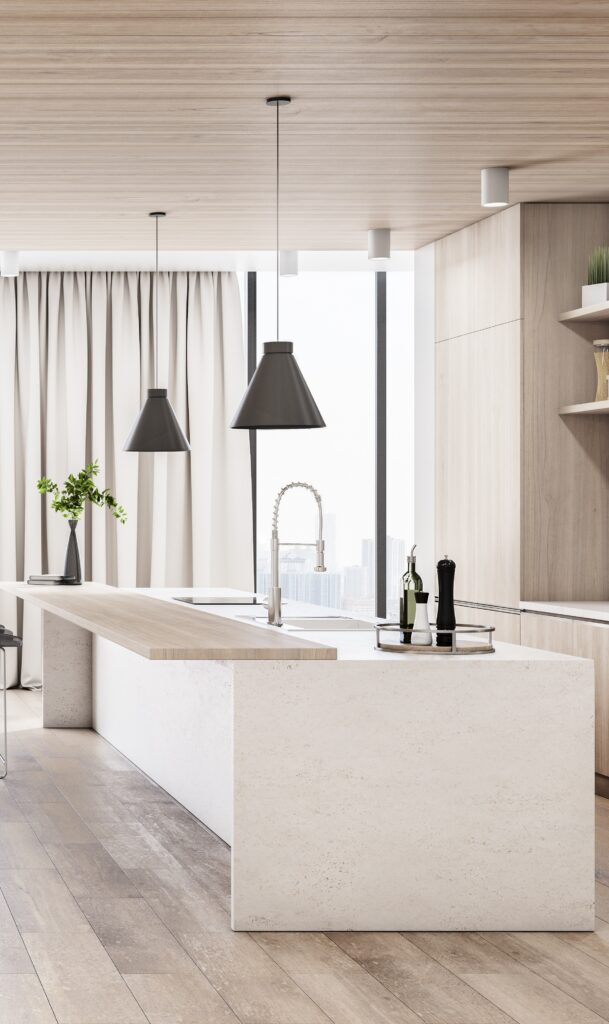
Modern wood and concrete kitchen interior with empty mock up place on wall, island, appliances and window with city view and daylight. 3D Rendering
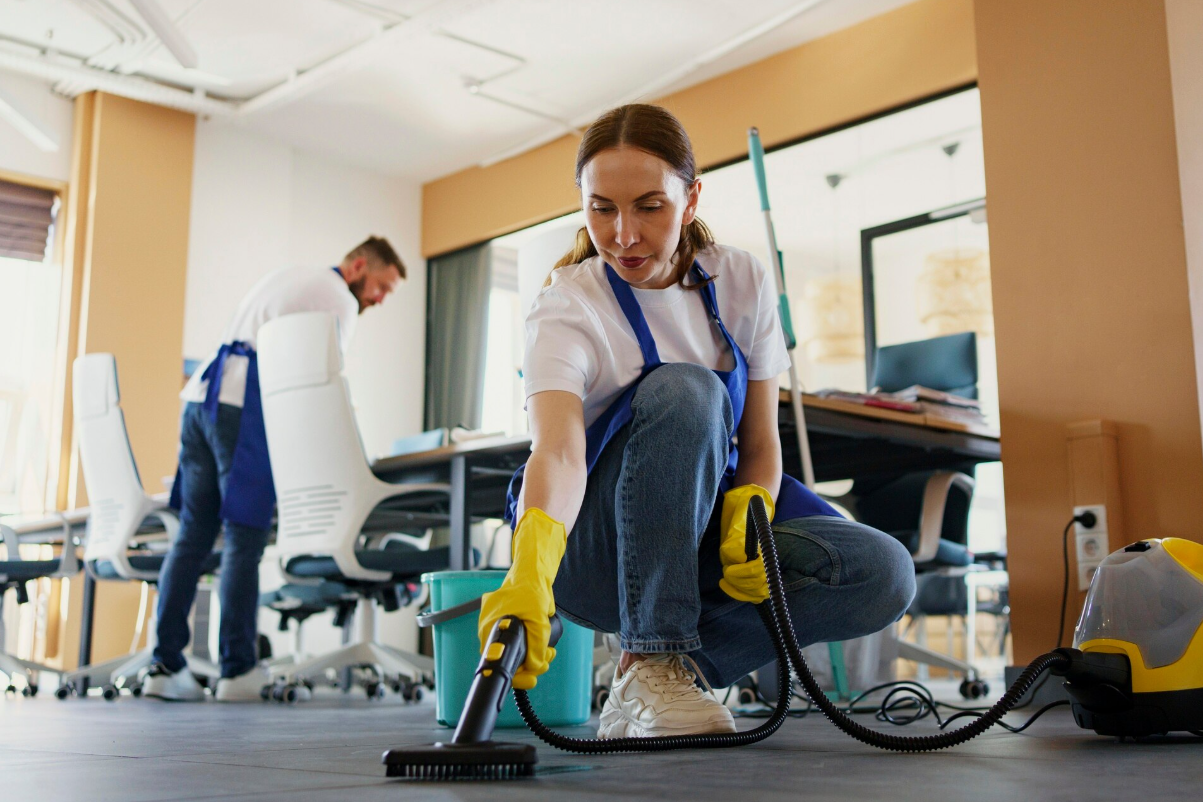
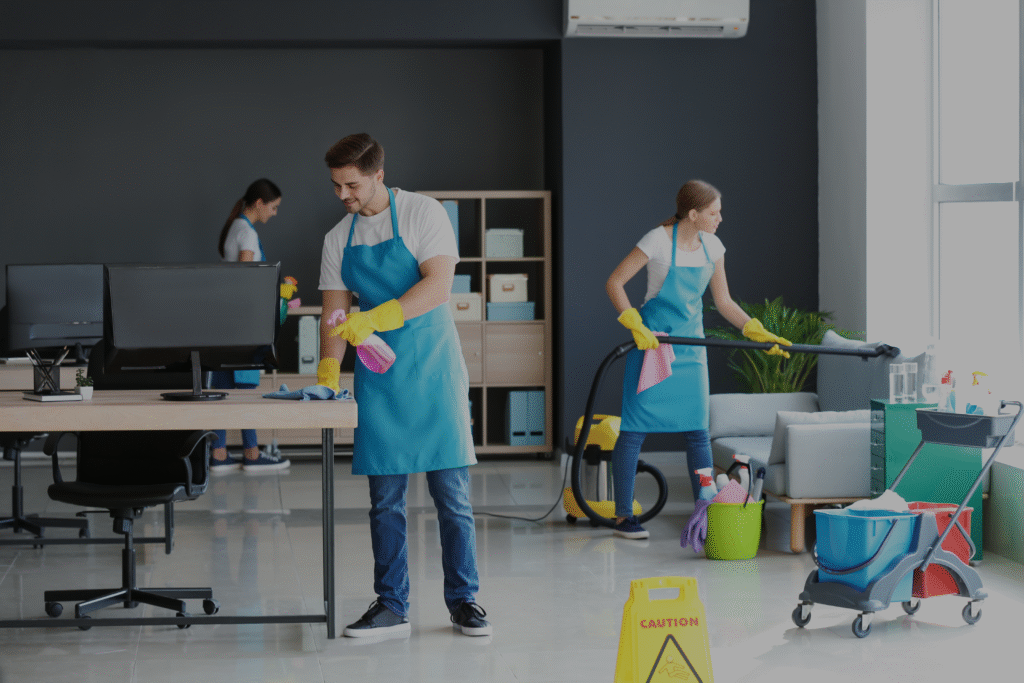
Commercial cleaning services for offices that go beyond basic janitorial work make a real difference in how a workspace feels to the people who spend their days in it. Deep cleaning services that cover carpets, air ducts, windows, and all surfaces remove the accumulated grime and allergens that affect both physical health and mental clarity. San Jose janitorial services that provide high-end commercial janitorial services understand that a clean office is not just about appearances. It is about creating an environment where people can do their best work without the low-level distraction of a dirty or poorly maintained space.
Window cleaning plays a surprisingly important role in workplace mental health. Natural light has a well-documented positive effect on mood, energy, and focus. Dirty windows block a meaningful amount of natural light from entering a space and create a dingy, closed-in feeling that contributes to low energy. Interior and exterior window cleaning restores the brightness of a space in a way that both looks and feels better for everyone inside.
For businesses in San Jose and across the Bay Area, Heavenly Maids Cleaning Services provides commercial cleaning Bay Area companies rely on to keep their offices clean, healthy, and conducive to the kind of focused work that matters.
Small Cleaning Habits That Protect Your Mental Health Over Time
You do not need a perfectly clean home every day to protect your mental health. What matters more is consistency and removing the biggest sources of visual clutter and accumulated dirt before they become overwhelming. A few targeted habits make a real difference in how your home feels from day to day.
Make your bed every morning because it is a simple act that signals order to the brain and sets a productive tone for the day
Do a ten-minute reset each evening by clearing flat surfaces, putting dishes away, and picking up items from the floor
Keep one room in your home consistently clean as a retreat space where you can go to feel calm and focused
Schedule professional deep cleaning services seasonally to reset the home and remove the buildup that daily habits cannot reach
Address carpet cleaning at least once a year because dirty carpets affect air quality and create a persistent sense of staleness that is hard to identify but easy to feel
Clean windows regularly to maximize the natural light in your home, which directly supports mood and energy levels
Heavenly Maids Cleaning Services in San Jose helps families and individuals across the Bay Area maintain homes that support their mental health, not just their physical one. From premium residential deep cleaning to affordable maid services in the Bay Area for busy households, the work is done with the understanding that a genuinely clean home is one of the simplest and most effective investments a person can make in how they feel every day.
A clean home is not a luxury. It is a foundation. When the space around you is clean, organized, and well-maintained, everything else, your focus, your rest, your relationships, and your sense of being in control of your life, gets a little easier. That is the real connection between cleanliness and mental health, and it is one worth taking seriously.
There has been a real shift in how people think about cleaning over the past several years. More homeowners are reading ingredient labels, questioning what goes into the products they use every day, and looking for ways to keep their homes clean without filling them with chemicals that linger on surfaces, stay in the air, and end up rinsed into the water supply. The demand for eco-friendly cleaning services has grown because people are realizing that a clean home and a chemically saturated home are not the same thing, and they would rather have one without the other.
But eco-friendly cleaning is one of those phrases that gets used so often it has started to lose meaning. Products get labeled green or natural without much to back it up. Cleaning companies advertise non-toxic services without being specific about what that actually means in practice. If you want to make genuinely better choices for your home, your family, and the environment, it helps to understand what truly non-toxic cleaning looks like, which ingredients and methods to avoid, and how professional eco-friendly home cleaning solutions compare to the conventional approach most people grew up with.
What Makes a Cleaning Product or Method Truly Non-Toxic
The term non-toxic does not have a strict legal definition in the cleaning industry, which is part of why it appears on so many products that still contain questionable ingredients. A product can be labeled natural and still contain synthetic fragrances, preservatives that release formaldehyde, or surfactants that are harmful to aquatic life. Reading past the marketing language and looking at the actual ingredients is the only way to know what you are bringing into your home.
The ingredients that show up most often in conventional cleaning products and carry the most concern are ammonia, chlorine bleach, phthalates, triclosan, sodium lauryl sulfate in high concentrations, and synthetic musks used in fragrances. These compounds contribute to indoor air pollution, can irritate the skin and respiratory system with repeated exposure, and some have been linked to hormonal disruption in long-term studies. In homes with babies, young children, pets, or anyone with asthma or chemical sensitivities, the case for avoiding them is especially strong.
Genuinely non-toxic cleaning relies on ingredients with well-understood safety profiles. Plant-based surfactants derived from coconut or corn clean effectively without the residue concerns of petroleum-based surfactants. Citric acid descales and disinfects without the fume risk of bleach. Hydrogen peroxide at three percent concentration sanitizes surfaces and breaks down into water and oxygen after use. White vinegar kills most household bacteria and mold on contact and leaves no harmful residue once dry. Baking soda deodorizes and acts as a mild abrasive for scrubbing without scratching. These are not weak alternatives to commercial cleaners. Used correctly, they are effective, affordable, and safe for the people and animals living in the home.
For professional cleaning services, using eco-friendly home cleaning solutions also means choosing products that are biodegradable, free from synthetic fragrances, and produced without ingredients that cause downstream environmental harm when they enter the water supply. House cleaning San Jose families rely on should meet this standard, especially as awareness of environmental impact continues to grow throughout the Bay Area.
Room by Room: How Non-Toxic Cleaning Works in Practice
Understanding which non-toxic products work best in each area of the home makes it easier to build a cleaning routine that is both safe and effective.
In the kitchen, the main cleaning challenges are grease, bacteria from food contact surfaces, and odors. A solution of warm water and a plant-based dish soap handles most everyday surface cleaning on counters, stovetops, and cabinet faces. For cutting boards and food prep surfaces that need true sanitization, a spray of undiluted white vinegar followed by a spray of three percent hydrogen peroxide and left to air dry is one of the most effective non-toxic disinfecting combinations available.
These two applied separately, not mixed together, create a sanitizing effect that research has shown to be more effective than either used alone. Baking soda with a small amount of dish soap makes a paste that cleans inside the oven and removes burned-on grease without toxic fumes.
Bathrooms need stronger sanitizing power because of the bacteria that collect around toilets, in grout lines, and on faucet handles. Hydrogen peroxide handles most bathroom sanitization effectively. For grout, a paste of baking soda and water applied with a stiff brush removes mold and staining without bleach. A few drops of tea tree oil added to a spray bottle of water adds antifungal properties that are helpful in damp areas prone to mold. Professional kitchen and bathroom cleaning done with these methods achieves real sanitization without filling an enclosed space with bleach fumes.
Floors across the home respond well to a diluted solution of castile soap in warm water for hard surfaces. This cleans without leaving the sticky residue that many conventional floor cleaners leave behind, which actually attracts more dirt over time. Floor cleaning and polishing services that use plant-based products leave surfaces genuinely cleaner between visits.
Carpets present a different challenge because deep cleaning requires more than surface-level products. Steam cleaning using hot water extraction with a non-toxic cleaning solution is the standard approach for professional-grade carpet cleaning that is also safe for children and pets. The heat itself does much of the sanitizing work by killing dust mites, bacteria, and mold spores without requiring harsh chemical additives. For homes with pets, non-toxic carpet cleaning for pet stains and odors uses enzyme-based solutions derived from plant and bacterial cultures that break down the organic matter causing the odor rather than covering it with synthetic fragrance.
Here are some simple non-toxic cleaning swaps that work well in any home:
Replace aerosol air fresheners with a spray bottle of water mixed with a few drops of essential oil or simply open windows for ventilation
Use fragrance-free, plant-based laundry detergent instead of conventional detergent with synthetic fragrances and optical brighteners
Clean windows with a solution of equal parts water and white vinegar for streak-free results without ammonia
Deodorize garbage disposals and drains with baking soda followed by white vinegar rather than chemical drain products
Use a HEPA filter vacuum to capture fine particles rather than redistributing them back into the air
Switch to microfiber cloths which pick up bacteria and dust mechanically without requiring chemical sprays on many surfaces
Eco-Friendly Cleaning for Offices and Commercial Spaces
Non-toxic cleaning is not just a concern for homes. Commercial spaces, including offices, medical facilities, and retail environments, benefit from switching to safer products for many of the same reasons. Employees spend eight or more hours a day breathing the air in their workplace and touching surfaces that have been cleaned with whatever products the janitorial service uses. Offices cleaned with conventional commercial cleaning products can have indoor air quality issues from accumulated residue and fumes that affect how people feel and how well they work.
High-end commercial janitorial services that use eco-friendly products address this without compromising on cleanliness. Plant-based degreasers, hydrogen peroxide-based sanitizers, and fragrance-free floor cleaners work just as effectively in commercial spaces as they do in homes. For offices in San Jose and throughout the Bay Area, commercial cleaning companies that prioritize non-toxic methods are meeting the growing demand from businesses that take the health of their employees seriously.
Office cleaning San Jose businesses count on should include sanitization and disinfecting services that use products safe for people who occupy the space every day. This is particularly important in shared kitchens, bathrooms, and high-touch areas like door handles, light switches, and shared equipment.
Heavenly Maids Cleaning Services in San Jose provides cleaning services across the Bay Area with an approach that takes product safety seriously alongside cleaning results. From premium residential deep cleaning to commercial building maintenance and cleaning, the work is done with methods that respect the health of the people inside the space and the environment outside of it.
Why Eco-Friendly Cleaning Is the Smarter Long-Term Choice
Switching to non-toxic cleaning products and professional services that use them is not just about avoiding harm. It is about making choices that hold up well over time for your health, your home, and your wallet.
Many conventional cleaning products leave behind residues that build up on surfaces with repeated use. These residues attract dust, dull finishes, and can discolor grout and tile over time. Eco-friendly home cleaning solutions tend to leave surfaces cleaner in the long run because they rinse away completely without sticky buildup. Floors cleaned regularly with plant-based products stay cleaner between visits. Carpets treated with non-toxic methods do not collect the chemical residue that can make carpet fibers stiff and dull.
For homeowners planning a move, move-in and move-out cleaning done with non-toxic products means the next occupants are not walking into a space coated in chemical residue from aggressive cleaning products. Move-out cleaning specialists for renters who use eco-friendly methods also tend to leave surfaces in better condition, which matters when a security deposit is involved.
Recurring maid cleaning services that use safe, plant-based products are also better for the long-term condition of surfaces throughout the home. Countertops, hardwood floors, and tile hold up better when they are not repeatedly exposed to harsh chemical cleaners that can etch, dull, or degrade finishes over time.
Heavenly Maids Cleaning Services brings this mindset to every job, from detailed home cleaning services for busy families to affordable maid services in the Bay Area for households looking for consistency without compromise. Eco-friendly cleaning done right is not a lesser version of cleaning. It is a smarter one, and the homes and offices that benefit from it are cleaner, healthier, and better maintained because of it.
Most people clean their homes regularly. They vacuum, wipe counters, scrub the bathroom, and take out the trash. It feels like enough, and on the surface, it often looks like enough. But there is a difference between a home that looks clean and a home that actually is clean at a level that supports your health. Dust mites live deep in mattresses and upholstered furniture.
Mold grows behind bathroom tiles and under sinks. Bacteria multiply on kitchen surfaces that were wiped but not properly sanitized. Air ducts push accumulated dust and allergens through every room every time the heat or air conditioning runs. These are not problems you can see easily, and they are not problems a quick weekly clean resolves.
Professional cleaning addresses the layers of a home that routine upkeep misses. It is not about doing the same tasks more thoroughly. It is about doing different tasks entirely, ones that require equipment, products, and techniques that most households simply do not have access to. For families in San Jose and across the Bay Area, understanding what professional house cleaning services actually do and how they contribute to a healthier living environment is the first step toward making a real improvement in the condition of the home you spend most of your time in.
What Professional Cleaning Does That Regular Cleaning Cannot
There is a ceiling on what you can accomplish with a mop, a spray bottle, and a standard vacuum. That ceiling is not a criticism of how clean you keep your home. It is just the reality of what consumer cleaning tools and products are designed to do. Professional cleaning services use commercial-grade equipment and professional products that penetrate, extract, and sanitize at a level that household tools cannot match.
Carpet cleaning is one of the clearest examples. A regular vacuum removes surface debris from carpet fibers, but the dust mites, bacteria, pet dander, and allergens that have worked their way into the deeper layers of the carpet stay put no matter how often you vacuum. Professional-grade carpet cleaning uses hot water extraction, sometimes called steam cleaning, to inject hot water and a cleaning solution deep into the carpet and immediately pull it back out along with everything it loosened.
The result is a carpet that is genuinely cleaner at every level, not just on top. For homes with pets, carpet cleaning for pet stains and odors removes the organic matter causing the smell rather than masking it, which is the only approach that actually works long term.
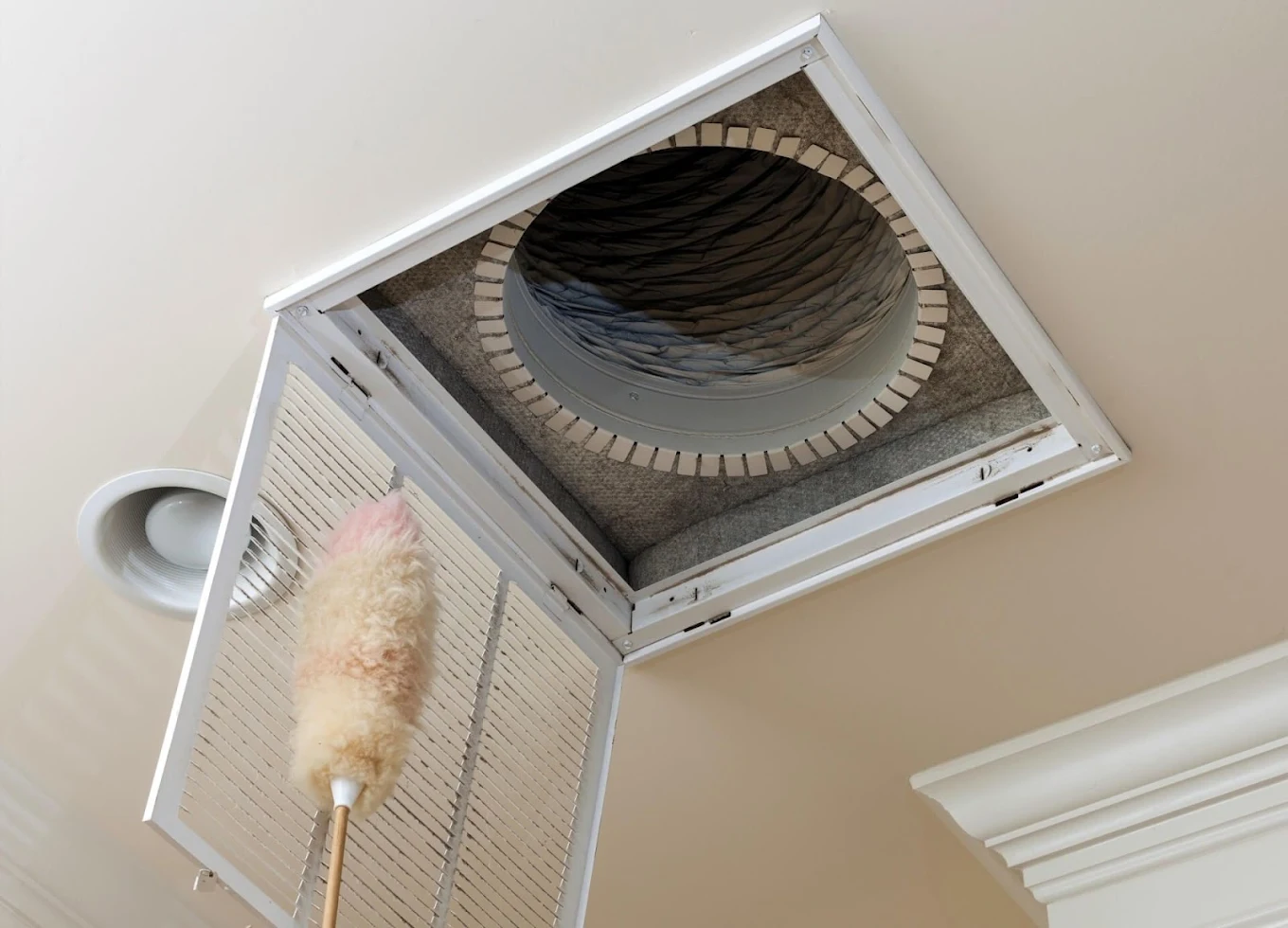
Air duct cleaning is another service that makes a measurable difference in home health and one that most homeowners never think about until something prompts them to. The average home accumulates dust, pet dander, mold spores, and other particles inside its ductwork over months and years. Every time the HVAC system runs, those particles get pushed through the air of every room in the house. People with allergies, asthma, or other respiratory sensitivities often feel the effects of this without connecting them to their air ducts. Professional duct cleaning removes the accumulated buildup from inside the system and improves the quality of the air circulating through the home in a way that changing a filter simply cannot.
Window cleaning is something many homeowners do occasionally, but professional interior and exterior window cleaning goes beyond what most people accomplish with a squeegee and a spray bottle. Clean windows allow significantly more natural light into a home, which has a real effect on mood and energy levels. Professionally cleaned windows also remove mold and moisture buildup from frames and sills, which is a common but overlooked source of indoor mold problems. For two-story homes, professional window washing services make cleaning possible without the safety risks that come with ladders and reaching difficult angles.
The Areas of Your Home That Need the Most Attention
Some parts of a home accumulate health hazards faster than others, and knowing where to focus deep cleaning efforts helps you prioritize what matters most.
Kitchens are one of the highest-risk areas in any home. Food residue, grease buildup, and moisture create ideal conditions for bacteria and mold. Professional kitchen and bathroom cleaning covers the spaces that get skipped in routine cleaning, including behind and under appliances, inside the oven and refrigerator, the grout between backsplash tiles, and the area around the base of the faucet where mold frequently starts. A deep-cleaned kitchen is not just cleaner to look at. It is genuinely safer for food preparation and for the health of everyone eating in the home.
Bathrooms accumulate bacteria and mold at a fast rate because of constant moisture. Grout lines, caulking around the tub, the area behind the toilet, shower door tracks, and the underside of the toilet rim are all places that harbor bacteria and mold even in bathrooms that look clean on a casual inspection. Sanitization and disinfecting services that target these specific areas use products and tools that kill what surface wiping leaves behind.
Carpets, upholstered furniture, and bedding are the three biggest reservoirs of allergens in most homes. Dust mites, pet dander, and mold spores settle into soft surfaces and stay there. Addressing all three regularly, through professional carpet steam cleaning, upholstery cleaning for couches and sofas, and regular washing of bedding at high temperatures, makes a significant cumulative difference in indoor allergen levels.
Here are the areas of a home that benefit most from periodic professional attention:
Kitchen appliances, behind the stove, and under the refrigerator where grease and debris collect
Bathroom grout, caulking, and shower tracks where mold takes hold quickly
Carpets and area rugs, especially in high-traffic areas or homes with pets
Air ducts and dryer vents that accumulate dust, lint, and sometimes mold over years
Windows and window frames where moisture and mold build up unnoticed
Baseboards, ceiling fans, and light fixtures where dust collects and drops back into the air
How Exterior Cleaning Connects to Indoor Home Health
The condition of the outside of your home affects what happens inside it more than most people realize. Gutters clogged with leaves and debris cause water to back up and seep into walls, fascia boards, and foundations. That moisture works its way indoors, creating the damp conditions where mold and bacteria grow. Gutter cleaning and maintenance services prevent this chain of events before it starts, protecting the structural integrity of the home and keeping moisture out of places it should not be.
Pressure washing the exterior of a home removes algae, mold, and built-up grime from siding, driveways, walkways, and patios. These growths do not just affect the appearance of the home. Algae and mold on siding hold moisture against the surface, which speeds up deterioration and can contribute to moisture problems in the walls beneath. Advanced pressure washing and exterior care is part of a complete approach to home health that treats the outside of the home with the same seriousness as the inside. Power washing services for driveways and patios also remove slippery organic growth that creates a safety hazard, especially in wet weather.
For homeowners who have recently had work done on their property, after-renovation cleaning is one of the most important professional services available. Construction and renovation work leaves behind fine dust from drywall, sawdust, and other materials that settles into every surface, every vent, and every crack in the space. This dust is a respiratory irritant and needs to be properly removed before the home is comfortable and safe to live in again. Standard cleaning does not remove post-construction dust effectively. Professional deep cleaning services with the right equipment do.
Building a Cleaning Routine That Actually Protects Your Health
The most effective approach to home health combines regular professional cleaning with consistent daily habits. Neither one alone is as effective as both together. A professional deep clean resets the baseline and removes what has built up over time. Regular upkeep between appointments maintains that baseline and slows the rate at which things accumulate again.
Recurring maid cleaning services are one of the most practical ways to stay on top of home cleanliness without letting things slip between major cleaning sessions. Weekly or biweekly visits from professional home cleaners maintain a level of cleanliness that is genuinely difficult to sustain through personal effort alone, especially for busy families, working professionals, and households with young children or pets.
For families across the Bay Area looking for detailed home cleaning services that go beyond surface-level results, Heavenly Maids Cleaning Services in San Jose provides residential cleaning, deep cleaning, carpet steam cleaning, window washing, air duct and dryer vent cleaning, and exterior services including pressure washing and gutter cleaning. The range of services available through one provider makes it easier to coordinate a complete cleaning plan rather than managing multiple vendors for different parts of the home.
Move-in and move-out cleaning is another area where professional services make a real difference. Whether you are moving into a new home or preparing a property for new tenants, professional house cleaning services that cover every surface, every vent, and every corner give you a clean start that casual cleaning cannot provide.
Heavenly Maids Cleaning Services brings this level of care to homes and offices throughout San Jose and the broader Bay Area. A healthier home is not the result of cleaning harder with the same tools. It comes from cleaning smarter, reaching the right areas with the right methods, and keeping up with the kind of maintenance that protects your home and the people in it over the long term. That is what professional cleaning is for, and that is the difference it makes when it is done right.
Mold is one of those problems that has a way of showing up when you least expect it and the process to remove mold is a nightmare. You notice a dark spot on the bathroom ceiling, a musty smell coming from under the sink, or discoloration along the grout between tiles. Sometimes it is small and easy to miss. Other times it has already spread across a wall or into a corner you rarely look at. Either way, finding mold in your home raises a lot of questions fast. Is it dangerous? Can you clean it yourself? What products are actually safe to use? And how do you keep it from coming back after you remove it?
These are fair questions, and the answers matter because mold is not just an eyesore. It affects air quality, triggers respiratory issues, and can cause real health problems for people who are exposed to it regularly, especially children, older adults, and anyone with asthma or allergies. The good news is that many types of household mold can be handled safely with the right approach. This guide walks through what works, what does not, and when it is time to bring in professional help.
How to Know If What You Are Seeing Is Actually Mold
Before cleaning anything, it helps to confirm that what you are dealing with is mold and not something else like mildew, soap scum, or simple dirt. Mold typically appears as fuzzy or slimy patches that are black, green, gray, or white. It often has a musty odor that gets stronger when you get closer to the area. Mildew is a surface fungus that is usually flat, powdery, and gray or white. It is easier to clean than mold and less likely to cause serious health problems. Both thrive in damp environments, but mold tends to penetrate deeper into surfaces while mildew stays on top.
A simple way to test what you are looking at is to apply a small amount of diluted bleach to the spot and wait a few minutes. If the discoloration lightens, it is likely mold or mildew. If it does not change, it is probably just dirt. That said, this test only helps with surface-level identification. If you suspect mold is growing inside walls, under flooring, or behind cabinetry, that is a situation that needs professional assessment rather than a DIY test.
One question people ask often is whether all mold is dangerous. Not every type of mold carries the same level of risk. Common household molds like Cladosporium and Penicillium can cause allergic reactions and respiratory irritation but are generally manageable with proper cleaning. Black mold, often referred to as Stachybotrys chartarum, produces mycotoxins that can be more harmful and requires careful handling. If you see extensive black mold growth covering a large area, or if anyone in the home has developed unexplained respiratory symptoms, headaches, or chronic fatigue, calling a professional is the right move before attempting any cleaning.
Safe Methods to Remove Mold at Home
For small areas of mold on non-porous surfaces like tile, glass, sealed countertops, and metal fixtures, there are several safe and effective cleaning options that do not require harsh chemicals.
White vinegar is one of the most reliable eco-friendly home cleaning solutions for mold. It is mildly acidic, which kills most types of mold on contact, and it does not release harmful fumes. Pour undiluted white vinegar into a spray bottle, apply it directly to the moldy surface, and let it sit for at least an hour before scrubbing with a stiff brush and wiping clean. The vinegar smell fades as it dries. This method works well for bathroom tile, sink areas, window sills, and other non-porous surfaces.
Hydrogen peroxide at a three percent concentration, which is the standard strength sold at pharmacies, is another safe option. It is antifungal, antibacterial, and breaks down into water and oxygen after use, leaving no harmful residue. Spray it directly onto the mold, let it sit for ten minutes, then scrub and wipe the area clean. Hydrogen peroxide works on tile, grout, bathroom fixtures, and sealed surfaces. It can lighten some materials, so test a small hidden area first if you are concerned about discoloration.
Baking soda is milder than vinegar or hydrogen peroxide but useful for lighter mold and for deodorizing areas that smell musty. Mix a quarter teaspoon of baking soda with water in a spray bottle, spray the affected area, scrub, and rinse. It is gentle enough for regular use and helps absorb moisture, which reduces the conditions that allow mold to return.
Here are some important steps to take before and during any mold removal at home:
Wear gloves, a mask rated N95 or higher, and eye protection before handling moldy surfaces
Open windows and run a fan to ventilate the space while you work
Place a plastic bag over any moldy material you are removing and seal it before carrying it through the house
Never dry brush mold because it releases spores into the air
Wash all clothing you wore during the cleaning immediately after finishing
Do not use a regular vacuum on mold since most vacuums spread spores rather than contain them
One area where people often underestimate the problem is the kitchen. Kitchen mold grows under the sink, around the base of the faucet, on grout between tiles, inside the refrigerator door seals, and behind the stove where moisture and food residue collect. Professional kitchen and bathroom cleaning that targets these specific areas removes mold before it spreads to adjacent surfaces or gets into the cabinetry.
Where Mold Hides and How to Find It Before It Spreads
The areas most people check for mold are the visible ones: shower walls, bathroom ceilings, and window sills. But mold often grows in places that get ignored until the problem is already large. Knowing where to look makes a real difference in catching it early.
Crawl spaces and basements are two of the most common places for mold growth in homes because they tend to hold moisture and have limited air circulation. Attics develop mold when roof ventilation is poor or when there is a slow leak that has gone undetected. Inside walls near plumbing is another hidden location where mold grows quietly for months or years before it becomes visible or triggers health symptoms. Air ducts are also a serious concern. When moisture gets into an HVAC system, mold can grow inside the ductwork and get pushed through the air of every room in the house every time the system runs.
This is why duct cleaning is not just about dust. It is also about catching and removing mold that has established itself inside the system. Professional air duct and dryer vent cleaning removes buildup that feeds mold growth and improves the overall air quality throughout the home. For anyone dealing with recurring musty smells that seem to come and go with the air conditioning or heating, the ducts are worth inspecting.
Carpet is another place mold grows without being obvious. If a carpet has gotten wet from a spill, flooding, or high humidity and was not dried thoroughly, mold can develop in the padding underneath long before it shows on the surface. Professional carpet cleaning using hot water extraction can help address mold in the early stages, but carpet that has been wet for an extended period may need replacement. Carpet cleaning for pet stains and odors is a related service that also reduces the organic material that mold feeds on when it gets into carpet fibers.
When to Call a Professional and How to Prevent Mold From Returning
There are situations where DIY cleaning is not enough and professional help is the only safe option. If the mold covers an area larger than ten square feet, if it is growing on porous materials like drywall or wood framing, if it keeps coming back after cleaning, or if there is any reason to suspect it is inside the walls or ceiling, calling a professional remediation service is the right call. Attempting to remove large or embedded mold without the proper equipment and containment methods can spread spores throughout the house and make the problem much worse.
After mold has been removed, whether by DIY methods or professionals, preventing it from coming back is the next priority. Mold needs moisture to survive, so controlling humidity is the most effective prevention tool available. Keep indoor humidity below fifty percent using a dehumidifier if needed. Fix any plumbing leaks promptly. Run the bathroom exhaust fan during and after showers for at least twenty minutes. Check under sinks regularly for slow drips. Clean window sills and frames after rain since moisture collects there easily.
Recurring cleaning services that include bathroom sanitization, kitchen cleaning, and window frame maintenance help keep moisture and organic buildup under control between deeper cleaning sessions. Heavenly Maids Cleaning Services in San Jose provides residential cleaning across the Bay Area with attention to the areas where mold is most likely to develop, from bathroom grout to kitchen surfaces to window sills and beyond.
For homeowners moving into a new property, move-in cleaning that includes a thorough check of bathrooms, under sinks, and other moisture-prone areas is worth scheduling before you bring your belongings in. Heavenly Maids Cleaning Services handles move-in and move-out cleaning with the kind of detail that catches problems early and gives every home a genuinely clean start. A clean, dry, well-ventilated home is the best defense against mold, and staying consistent with deep cleaning services is the most practical way to keep it that way.
Bringing a baby home changes everything, including how you think about cleaning methods. Suddenly the products you have been using for years feel less like household staples and more like question marks. Babies spend most of their time on the floor, put their hands in their mouths constantly, breathe in whatever is floating through the air, and have skin that absorbs things much faster than adult skin does.
Their immune systems are still developing, which means they are more vulnerable to the chemicals, fragrances, and residues that most conventional cleaning products leave behind. For new parents, figuring out how to keep a home genuinely clean without exposing a baby to harmful substances is one of the most common and most pressing concerns in those early months.
The good news is that a clean home and a safe home for a baby are not opposites. You do not have to choose between the two. What you do need is the right information about which methods and products are actually safe, which ones to avoid, and how professional house cleaning services can help you maintain a healthy environment without cutting corners on cleanliness.
Why Conventional Cleaning Products Can Be a Problem Around Babies
Most standard cleaning products contain ingredients that work well for removing dirt and killing germs but leave behind residues or release fumes that are not safe for small children. Ammonia, bleach, synthetic fragrances, phthalates, formaldehyde-releasing preservatives, and volatile organic compounds are found in a wide range of common products, from bathroom sprays to floor cleaners to laundry detergents. Adults can handle brief exposure to these chemicals without much noticeable effect, but babies are a different story.
Babies crawl on floors that have been mopped with chemical cleaners and then put their hands directly in their mouths. They breathe air in rooms that have been sprayed with synthetic fragrances and aerosol disinfectants. Their skin contacts surfaces that were wiped down with products that leave a chemical film. Over time, repeated low-level exposure to these substances has been linked to respiratory irritation, skin sensitivities, and disruption of the developing hormonal and immune systems. This is not about being overly cautious. It is about understanding that a product safe for an adult is not automatically safe for a newborn.
The first step toward a safer home is switching to eco-friendly cleaning solutions that do not contain the most problematic ingredients. Plant-based cleaners, fragrance-free detergents, and products certified by recognized safety organizations are widely available now and work well for everyday house cleaning. White vinegar, baking soda, and castile soap are simple, effective, and genuinely non-toxic options for many cleaning tasks around a home with a baby.
The Safest Cleaning Methods Room by Room
Different areas of the home carry different risks for babies, and the cleaning approach for each one should reflect that. Floors are the highest priority because babies spend so much time on them. Hard floors should be mopped with a fragrance-free, plant-based cleaner diluted in warm water rather than with concentrated chemical floor cleaners. After mopping, allow the floor to dry completely before letting a baby back on the surface. Residue from cleaning products is most concentrated when wet, and a dry floor is always safer than a damp one.
Carpets deserve special attention in a home with a baby. Carpet fibers trap dust mites, pet dander, bacteria, mold spores, and chemical residues from shoes tracked in from outside. Regular vacuuming with a HEPA filter vacuum helps manage surface debris, but it does not get deep enough to remove what has worked its way into the lower layers of the carpet. Professional carpet cleaning using hot water extraction removes these deeper particles without leaving behind chemical residue. For homes with babies, professional-grade carpet cleaning done with non-toxic, baby-safe solutions is one of the most effective things you can do to improve the air quality and cleanliness of the spaces where your baby spends the most time.
Bathrooms need to be sanitized regularly, but strong bleach-based sprays linger in the air and on surfaces. Hydrogen peroxide-based cleaners are a safer alternative for sanitizing toilet seats, sinks, and tubs. They break down into water and oxygen after use, leaving no harmful residue. For grout and tile, a paste of baking soda and water with a stiff brush does a good job without any chemical risk.
The kitchen requires frequent cleaning because food residue attracts bacteria quickly. Dish soap that is fragrance-free and free of dyes is safer for washing anything a baby might contact, including bottles, pacifiers, and feeding utensils. Countertop sprays made with plant-based surfactants clean effectively without leaving behind the synthetic residue that many commercial kitchen sprays do.
Here are some specific practices that make a real difference in a baby-safe cleaning routine:
Use fragrance-free, dye-free laundry detergent for all baby clothing, bedding, and cloth items
Rinse surfaces after cleaning to remove any product residue before a baby touches them
Avoid aerosol sprays near the baby’s sleeping or play areas since they linger in the air for hours
Ventilate rooms well after cleaning by opening windows to let fresh air replace any fumes
Store all cleaning products in locked cabinets well out of reach
Wash your hands after handling cleaning products before picking up the baby
Avoid using scented plug-in air fresheners, which release synthetic chemicals continuously into the air
Air Quality and Hidden Hazards That New Parents Often Miss
Surface cleaning is only part of keeping a home safe for a baby. Indoor air quality matters just as much, and it is something most people do not address directly. Air ducts that have not been cleaned in years circulate dust, mold spores, pet dander, and other particles throughout the home every time the HVAC system runs. In a home where a baby is sleeping and breathing that air for most of the day and night, duct cleaning is not something to put off. Having air ducts professionally cleaned removes the accumulated buildup that feeds directly into the air your baby breathes.
Dryer vent cleaning is another overlooked factor. A clogged dryer vent pushes lint particles and moisture back into the home, contributing to both air quality issues and mold risk in the laundry area. Combined air duct and dryer vent cleaning makes a measurable difference in how clean the air inside a home actually is, especially in smaller spaces where air circulation is limited.
Windows also play a role in baby home safety. Dirty windows have mold and moisture buildup around frames and sills, especially in older homes. Interior and exterior window cleaning removes this growth and also allows more natural light into the home. Natural light has a positive effect on a baby’s sleep cycle and reduces the need for artificial lighting that can affect circadian rhythms.
For new parents who have recently moved into a new home, move-in cleaning done with baby-safe products is something worth prioritizing. You do not know what cleaning products the previous residents used or what residues remain on floors, counters, and inside cabinets. A thorough move-in and move-out cleaning service using eco-friendly home cleaning solutions gives you a genuinely clean starting point rather than a surface-level wipe-down of someone else’s residue.
How Professional Cleaning Services Help Families With Babies
Keeping a home clean with a newborn is physically and mentally exhausting. Sleep deprivation, recovery, and the demands of a new baby leave very little time or energy for the kind of detailed cleaning that a home with a baby actually needs. This is where professional house cleaning services become genuinely useful, not as a luxury but as a practical tool for keeping the home safe when you do not have the capacity to do it all yourself.
The key is finding cleaning services that use baby-safe, eco-friendly products and methods. Heavenly Maids Cleaning Services in San Jose works with families across the Bay Area to provide detailed home cleaning services that are safe for babies, young children, and anyone with sensitivities to harsh chemicals. From premium residential deep cleaning to recurring maid cleaning services, the approach is built around getting a home thoroughly clean without compromising the safety of the people living in it.
Residential deep cleaning services that cover carpets, air ducts, windows, and all living surfaces give new parents a clean baseline that is much harder to achieve with a newborn in the house. Recurring cleaning services keep that baseline maintained week to week so the home never slips back into a state that requires a major reset.
For families in San Jose and across the Bay Area, having affordable cleaning services nearby that understand the specific needs of homes with babies is genuinely valuable. Heavenly Maids Cleaning Services brings that understanding to every visit, using methods and products that protect the health of everyone in the home, especially the smallest and most vulnerable members of the family.
A clean home for a baby is not about perfection. It is about removing the real hazards, keeping the air clean, using safe products on the surfaces they touch, and staying consistent with the habits that make a difference over time. With the right approach, you can have a home that is both properly clean and genuinely safe for your baby to grow up in.
Your couch sees a lot of life. Pets curl up on it, kids eat snacks on it, guests sit on it for hours, and at the end of a long day, you sink into it yourself. Over time, all of that daily use leaves behind more than just visible stains. Dust mites, pet dander, bacteria, food particles, and odors work their way deep into the fabric where regular vacuuming cannot reach.
Most people wipe down their counters, mop their floors, and schedule carpet cleaning, but upholstered furniture often gets overlooked until the smell or the staining becomes impossible to ignore. The truth is that upholstery cleaning is just as important as any other part of keeping a home or office clean, and most people do not know what the service actually includes until they book one for the first time.
If you have been curious about what upholstery cleaning professionals actually do, how the process works, and whether it is worth it for your furniture, this covers everything you need to know.
What Upholstery Cleaning Actually Involves
Professional upholstery cleaning is not a single method applied to every piece of furniture the same way. A good cleaning service starts by identifying the type of fabric on each piece before any cleaning begins. Different materials require different approaches. Microfiber, velvet, leather, cotton, linen, and synthetic blends all respond differently to moisture, heat, and cleaning agents. Using the wrong method on the wrong fabric can cause shrinking, fading, water rings, or permanent damage. This is one of the main reasons why professional upholstery cleaning professionals get better results than DIY attempts with rental machines or store-bought sprays.
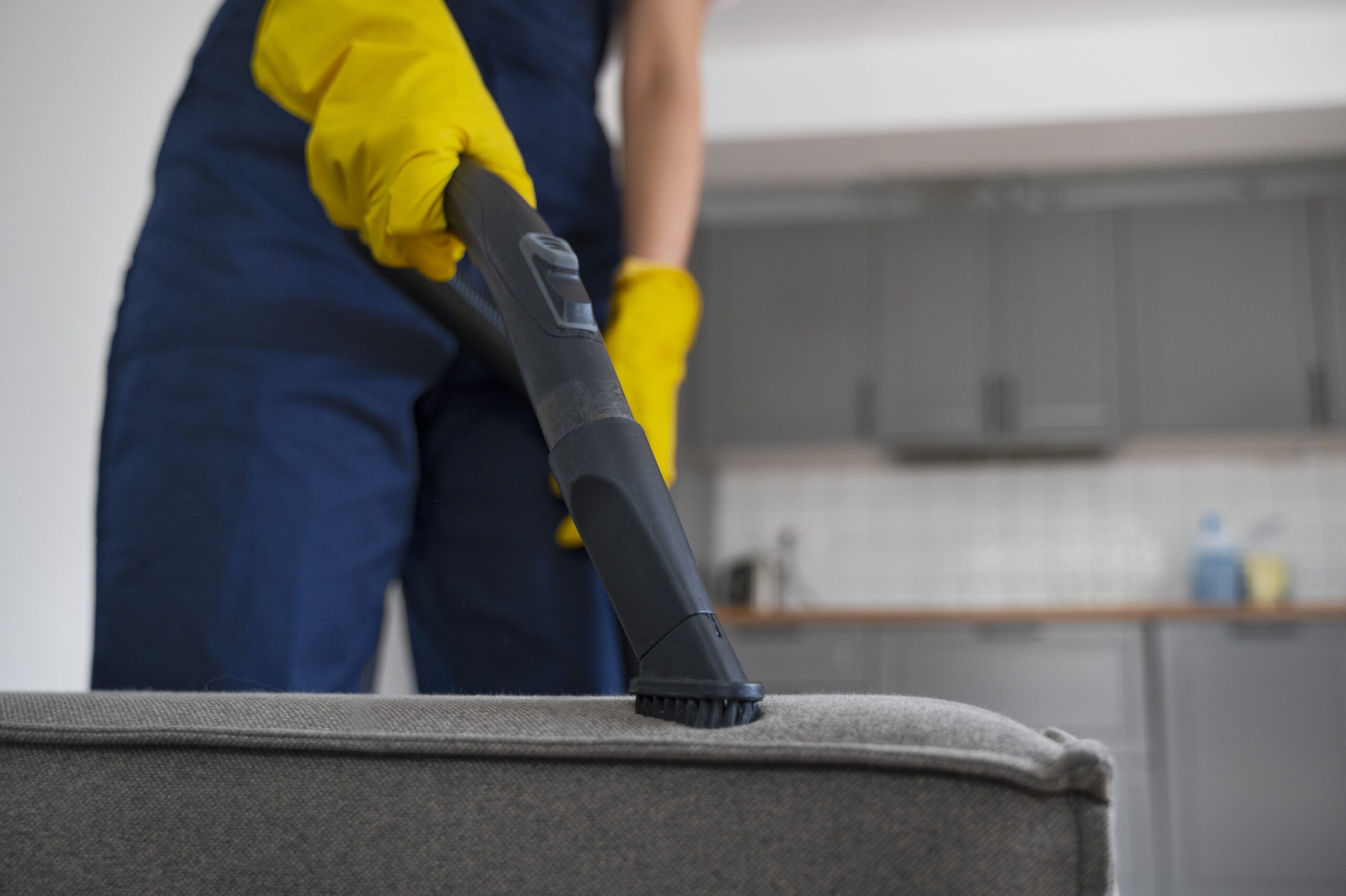
Once the fabric type is identified, the process typically begins with a dry vacuuming step that removes loose debris, pet hair, and surface dust from all cushions, crevices, armrests, and the back and sides of the piece. This step is more thorough than what most people do at home because professionals use tools designed to reach deep into seams and tight corners where debris collects and sits undisturbed for months.
After the initial vacuuming, a pre-treatment solution is applied to stained or heavily soiled areas. This loosens the bond between the fabric and the dirt, making it easier to extract during the cleaning phase. For pieces with pet stains or odors, an enzyme-based treatment is often used because it breaks down the organic matter causing the smell at a molecular level rather than just masking it on the surface.
The main cleaning method used by most upholstery cleaning professionals is hot water extraction, which is sometimes called steam cleaning. This process injects a controlled amount of hot water and cleaning solution into the fabric and immediately extracts it along with the loosened dirt, bacteria, allergens, and residue. The result is a deep clean that pulls out what dry methods leave behind. For delicate fabrics that cannot handle moisture, dry cleaning methods using low-moisture compounds are used instead.
After the main cleaning, a post-treatment conditioner is sometimes applied to certain fabrics to restore softness and protect the fibers. The piece is then left to dry, which typically takes a few hours depending on the fabric type, the humidity in the room, and how much moisture was used during cleaning.
What Types of Furniture Can Be Cleaned
One of the most common questions people have is whether their specific piece of furniture can be professionally cleaned. The short answer is that most upholstered furniture can be cleaned professionally, and the variety of items that fall under upholstery cleaning is wider than most people expect.
Sofas and sectionals are the most common items people have cleaned, but the service also covers loveseat cushions, accent chairs, ottomans, dining chairs with fabric seats, office chairs, headboards, window seat cushions, and even car interiors in some cases. For businesses, upholstery cleaning for couches and sofas in waiting rooms, lobbies, and conference rooms is part of maintaining a professional appearance and healthy environment. Commercial cleaning companies in the Bay Area that offer office cleaning services often include upholstery care as part of a deeper maintenance plan for office furniture that sees heavy use from employees and clients every day.
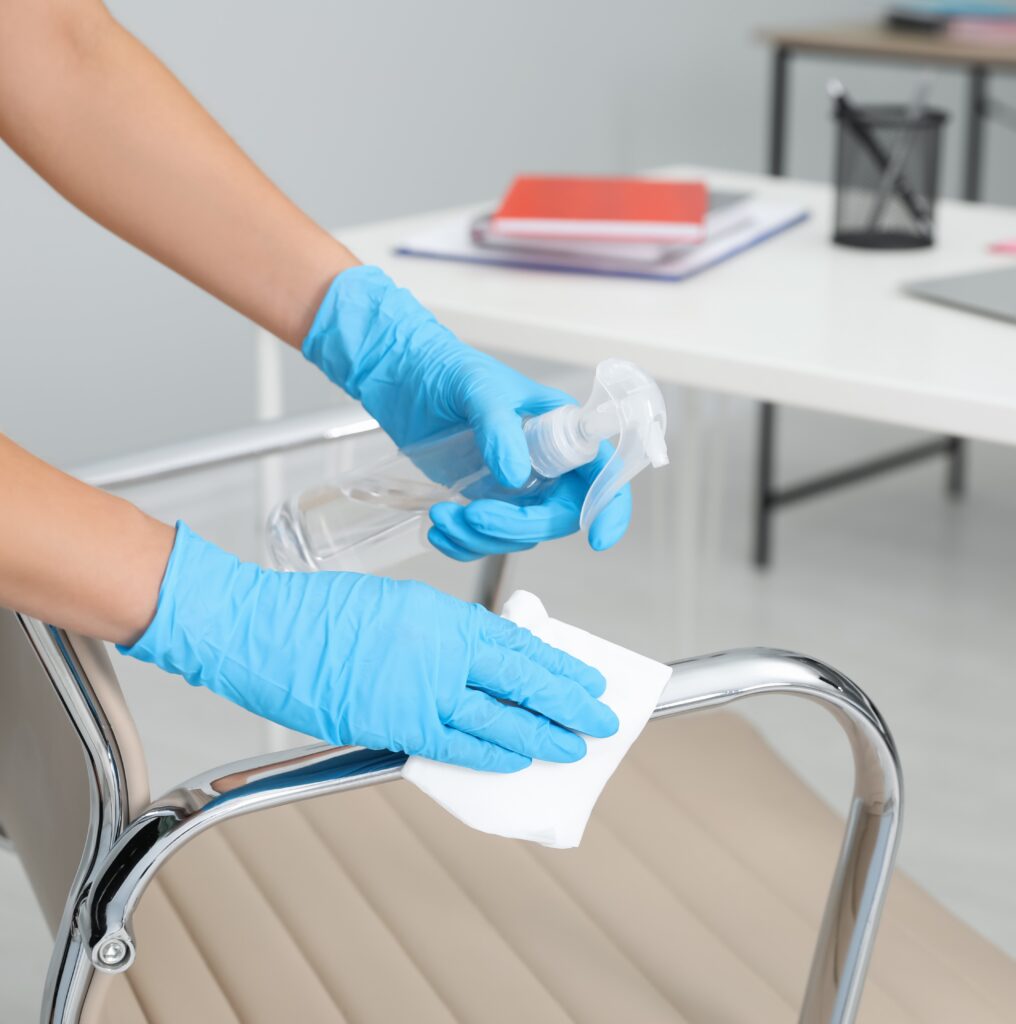
Woman cleaning armchair with antiseptic in office, closeup
Leather furniture can also be professionally cleaned and conditioned. Leather requires a completely different process than fabric, using pH-balanced cleaners and conditioners that clean without drying out or cracking the material. Many people assume leather just needs a wipe-down, but it accumulates body oils, dust, and surface grime that regular wiping spreads around rather than removes.
How Often Should Upholstery Be Cleaned
The right frequency depends on how much the furniture is used and what it is exposed to. For most households without pets or young children, professional upholstery cleaning once a year is a reasonable standard. For homes with pets, the recommendation goes up to every six months because pet dander and odor accumulate much faster in fabric fibers.
Households with allergy sufferers, asthma, or other respiratory sensitivities benefit from more frequent cleaning because upholstered furniture is one of the biggest reservoirs of allergens in a home. Dust mites in particular thrive in fabric furniture, and hot water extraction is one of the most effective ways to reduce their numbers.
Here are some signs that your furniture needs professional cleaning sooner rather than later:
The fabric has a persistent odor that does not go away after airing out the room
There are visible stains that have not responded to spot cleaning at home
You or someone in your household has been experiencing more allergy symptoms indoors
Pet hair is embedded in the fabric rather than sitting on the surface
The cushions look flat, dull, or dingy even after vacuuming
The furniture has not been professionally cleaned in more than a year
If you are moving into a new home, upholstery cleaning is worth scheduling alongside your move-in cleaning. You have no way of knowing what the previous owners left behind in the fabric of any furniture that stays with the property. Move-in and move-out cleaning services that include deep cleaning of upholstered pieces give you a genuinely fresh start rather than just a surface-level reset.
How Upholstery Cleaning Connects to Overall Home and Office Health
Upholstery cleaning does not exist in isolation. It is one part of a bigger picture when it comes to maintaining a genuinely clean indoor environment. The same allergens and bacteria that collect in furniture cushions also settle into carpets, circulate through air ducts, and coat window sills and blinds. Addressing one without the others limits how clean your space can actually get.
Professional carpet cleaning and upholstery cleaning go hand in hand because both trap the same types of particles. If your carpets have been deep cleaned but your couch has not, the couch is still releasing allergens and odors into the room. The same logic applies to duct cleaning. Air ducts that push dusty air through a room will re-deposit particles onto freshly cleaned furniture within days. For homeowners who want to genuinely improve their indoor air quality, combining upholstery cleaning with carpet steam cleaning and air duct cleaning gives results that last much longer than any single service done alone.
Heavenly Maids Cleaning Services in San Jose takes this whole-home approach seriously. Rather than treating each service as a separate transaction, the goal is to bring every part of a home or office up to the same standard of cleanliness. Residential cleaning, deep cleaning services, window cleaning, carpet steam cleaning, air duct and dryer vent cleaning, and pressure washing all work together to create a space that is clean from the floors to the ceiling and from the inside out.
For homeowners in San Jose and across the Bay Area who want detailed home cleaning services for busy families, combining upholstery cleaning with recurring maid services keeps the home at a high standard between deeper seasonal cleanings. For businesses, high-end commercial janitorial services that include furniture care reflect well on the company and contribute to a healthier workspace for everyone inside it.
Small Tips That Help Your Upholstery Stay Cleaner Longer
Professional cleaning resets the condition of your furniture, but a few habits between appointments make a real difference in how quickly it gets dirty again.
Vacuum upholstered furniture at least once a week, paying attention to seams and cushion edges where debris collects
Rotate and flip cushions regularly so wear and soil are distributed evenly rather than concentrated in one spot
Treat spills immediately by blotting, never rubbing, with a clean dry cloth to pull liquid out before it sets
Keep a fabric protector spray on hand for pieces that see heavy use, and reapply it after each professional cleaning
Wash removable cushion covers according to the care label rather than waiting for visible soil to build up
Keep pets off furniture with designated blankets or covers that can be laundered regularly
These steps will not replace professional cleaning, but they extend the time between appointments and keep your furniture looking and smelling better day to day.
Upholstery cleaning is one of those services that most people wish they had scheduled sooner once they see the results. Clean furniture changes how a room feels, improves the air you breathe in that space, and extends the life of pieces that would otherwise wear out faster from trapped grime. Whether it is a single couch in a living room or a full set of office chairs in a commercial space, Heavenly Maids Cleaning Services handles the work with care and the kind of attention to detail that makes a real difference in the finished result.
Most offices get wiped down and vacuumed on a regular basis. Trash gets emptied, surfaces get a quick wipe, and bathrooms get checked. That kind of routine upkeep is useful, but it is not the same as a deep clean. There is a layer of buildup that everyday janitorial services simply do not reach, and over time that buildup affects the health of the people working in the space, the condition of the furniture and flooring, and even how the office feels to anyone walking through the door.
If you manage or own a business and you have been wondering whether your current cleaning schedule is actually enough, the short answer is that most offices are not being deep cleaned as often as they should be.
Understanding the difference between routine office cleaning and a true deep clean, and knowing how often each type of service is needed, can help you make smarter decisions about your workspace and the people in it.
What Counts as a Deep Clean and Why It Matters for Offices
Regular office cleaning handles the visible stuff. It keeps things looking presentable on a daily or weekly basis. Deep cleaning goes further. It covers the things that build up over weeks and months without anyone noticing until the problem is already noticeable. Carpet fibers, air vents, window tracks, upholstered chairs, baseboards, light switches, door handles, the space under and behind furniture, and the insides of breakroom appliances all fall into the category of areas that need periodic deep attention.
In a commercial setting, the stakes are higher than in a home because more people are sharing the space. Germs, allergens, and dust accumulate faster in offices with heavy foot traffic. Common areas like conference rooms, lobbies, kitchens, and shared bathrooms are touched by many people throughout the day. Without sanitization and disinfecting services that go beyond surface wiping, bacteria and viruses can persist on high-contact surfaces for hours or even days. Studies have consistently shown that desks, keyboards, and phones in shared offices carry significantly more bacteria than most people realize.
Commercial cleaning services for offices that include deep cleaning are not a luxury for large corporations. They are a practical necessity for businesses of any size, including small offices and co-working spaces. The cost of employees missing work due to illness is almost always higher than the cost of keeping the workspace properly cleaned.
Carpet cleaning is one of the most telling examples of why deep cleaning matters in an office. Office carpets absorb everything: dust, food crumbs, spilled drinks, tracked-in dirt, and airborne particles that settle over time. A vacuum picks up surface debris, but the particles embedded deeper in the fibers stay put until a professional carpet cleaning service uses hot water extraction or steam to pull them out. Carpets that go without professional-grade carpet cleaning for extended periods not only look worn and stained, they actively hold onto allergens and odors that affect the air quality of the entire office.
The same is true for air ducts. Duct cleaning in an office environment removes the dust, mold spores, and debris that collect in HVAC systems and get pushed through the air every time the system runs. In a space where people spend eight or more hours a day, the quality of the air they are breathing has a direct impact on how they feel and how well they work.
How Often Should an Office Be Deep Cleaned?
The honest answer is that it depends on the size of the office, how many people use it, and what kind of work happens there. But there are general guidelines that work well for most commercial spaces.
For a small office with fewer than ten employees and moderate foot traffic, a thorough deep clean every three to four months is a reasonable baseline. This covers carpet steam cleaning, detailed bathroom sanitization, breakroom appliance cleaning, window washing, and a full wipe-down of all surfaces including areas that do not get touched during routine cleaning.
For medium to large offices, open floor plans with shared desks, or any space that sees clients or customers regularly, monthly deep cleaning is a better standard. High-traffic environments collect grime faster, and the impression your office makes on visitors matters. Dirty windows, stained carpets, and dusty vents are things people notice even when they do not say anything.
Medical offices, childcare facilities, food service areas, and any space where hygiene is directly tied to safety should be deep cleaned even more frequently, sometimes weekly. Commercial cleaning companies in the Bay Area that specialize in office janitorial services for small businesses understand how to scale cleaning frequency to the specific needs of each workspace.
Here are some factors that should push you toward more frequent deep cleaning:
Your office has a kitchen or breakroom that gets used daily by multiple people
Employees or clients have mentioned allergy symptoms or frequent illness
The carpet has visible staining or a persistent odor even after vacuuming
The HVAC system has not had a duct cleaning in over two years
The office has not had a professional window cleaning in more than six months
You have recently had construction, renovation, or any work done inside the space
The office has pets, high humidity, or poor ventilation
After any renovation or construction project, a post-renovation deep clean is not optional. Dust from drywall, sawdust, and construction debris settles into every surface, every vent, and every corner of the space. This material is a respiratory irritant and needs to be properly removed before employees return to work in the space.
When commercial cleaning services for offices perform a proper deep clean, the scope goes well beyond what most people picture. It is not just a more thorough version of the weekly clean. It is a different level of service entirely.
A professional deep cleaning for an office typically includes carpet steam cleaning and spot treatment for stains, interior and exterior window cleaning, full bathroom sanitization including grout scrubbing and fixture polishing, breakroom cleaning that covers the inside of the refrigerator, microwave, and other appliances, baseboard and vent cleaning, upholstery cleaning for couches and office chairs, detailed cleaning of all workstations including monitors and keyboards, and floor cleaning and polishing for hard floor surfaces.
High-end commercial janitorial services also include air duct and dryer vent cleaning, which has a direct effect on indoor air quality. In a sealed office environment, stale and particle-heavy air from a neglected HVAC system creates an environment where people feel sluggish, have headaches more often, and get sick at higher rates. Addressing the air system is part of a complete deep cleaning approach for any serious commercial space.
San Jose janitorial services that offer this full range of work, from carpet cleaning to duct cleaning to window washing, are worth seeking out because coordinating all of these services through one provider is simpler and more consistent than managing multiple vendors. Heavenly Maids Cleaning Services in San Jose provides commercial cleaning across the Bay Area with this kind of full-service approach, handling both the surface-level work and the deeper maintenance that keeps offices in genuinely good condition.
Practical Tips for Keeping Your Office Cleaner Between Deep Cleans
A professional deep clean sets a high baseline, but what happens between appointments matters too. There are simple habits that help offices stay cleaner for longer and reduce the buildup that makes deep cleaning harder.
Place doormats at all entrances to reduce the amount of dirt tracked onto carpet and hard floors
Keep disinfecting wipes at shared workstations and encourage employees to wipe down their space at the end of each day
Empty trash bins daily, especially in the kitchen, to prevent odors and pest activity
Run the HVAC system with clean filters and replace them on schedule
Keep the breakroom refrigerator organized and cleaned out weekly to prevent food odors and bacteria growth
Spot-clean carpet spills immediately rather than letting them set
Schedule window cleaning at least twice a year or more often if your office faces a busy street or construction
These small steps reduce the rate at which grime and bacteria accumulate, which means your deep cleaning appointments go further and the results last longer.
Keeping Offices Clean Is an Ongoing Commitment
Routine cleaning keeps an office functional. Deep cleaning keeps it healthy. The two work together, and neither one replaces the other. For businesses in San Jose and across the Bay Area, getting on a regular schedule that combines daily or weekly janitorial services with periodic deep cleaning is the most practical way to maintain a workspace that employees feel good in and clients take seriously.
Heavenly Maids Cleaning Services handles office cleaning San Jose businesses rely on, from recurring maintenance visits to full commercial deep cleaning packages. Whether your office needs a one-time reset or an ongoing cleaning plan, the condition of your workspace has a real effect on the people inside it and the impression your business makes. Investing in proper cleaning is one of the simplest and most effective ways to take care of both.
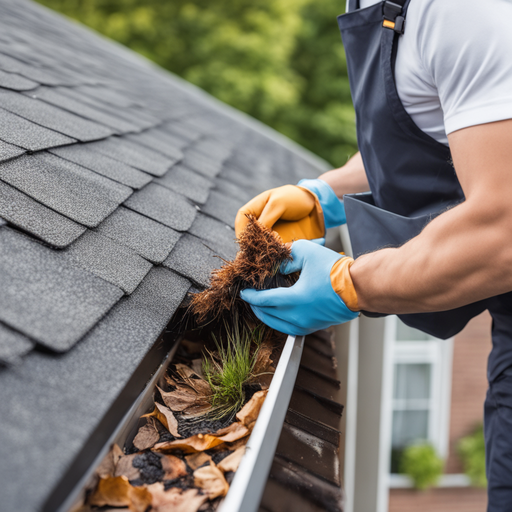
Gutters are one of those things most homeowners never think about until something goes wrong. They sit up on the roofline, out of sight, doing a job that feels invisible until the day water starts pouring over the sides, pooling around the foundation, or dripping through a ceiling. The reality is that gutters work hard every time it rains. They collect water from your entire roof and move it safely away from your home. When they get clogged with leaves, dirt, and debris, that whole system breaks down, and the damage that follows can be costly, slow-building, and easy to miss until it is already serious.
If you have ever wondered what actually happens when gutters go too long without cleaning, or whether the dripping you noticed during last week’s rainstorm is normal, this guide covers all of it. The problems dirty gutters cause go much further than most people expect, and the signs that your gutters need attention are worth knowing before a small issue turns into a big repair bill.
The Real Damage Dirty Gutters Can Do to Your Home
When gutters fill up with leaves, twigs, and compacted debris, water has nowhere to go. Instead of flowing down the downspout and away from the house, it sits in the gutter, overflows the sides, and falls in sheets right next to your foundation. Over time, this saturates the soil around the base of your home. That water works its way into crawl spaces, basements, and along the bottom of walls. Foundation damage from water intrusion is one of the most expensive home repairs a person can face, and clogged gutters are one of the most common causes.
Beyond the foundation, overflowing water runs down the exterior walls of your home. This leads to peeling paint, wood rot on fascia boards and soffits, and staining along siding. Once wood starts to rot, it spreads, and what starts as a small section of damage can affect large portions of the roofline if left alone. Exterior house cleaning and pressure washing can remove surface buildup and grime, but rotted wood caused by water damage requires actual replacement.
Dirty gutters also create a perfect home for pests. Standing water inside a clogged gutter attracts mosquitoes. Wet, decomposing leaves attract roaches, ants, and other insects. Birds and rodents sometimes nest in gutters that have not been cleared in a long time. These pests do not always stay outside. Once they establish themselves near the roofline, finding a way into your attic or walls is not difficult.
There is also a fire risk that many homeowners in California never think about. Dry leaves and debris packed into gutters can ignite from embers during wildfire season. For anyone living in or around the Bay Area, this is not a minor concern. Keeping gutters clear is part of responsible fire safety, especially in the dry summer and fall months.
Inside the home, the damage from dirty gutters often shows up as water stains on ceilings, damp walls, or musty smells in the attic. When water backs up under roof shingles because it has nowhere to drain, it seeps into the structure of the roof itself. This leads to mold growth in the attic and insulation damage that is expensive and disruptive to fix. Poor indoor air quality from mold is a health issue, not just a structural one, and it connects directly to the condition of your gutters outside.
How to Tell If Your Gutters Need Cleaning
Most people wait until they see a visible problem to address their gutters, but by that point, some damage has usually already started. There are clear signs to watch for that tell you it is time to get them cleaned out.
Water spilling over the sides during rain is the most obvious sign. If your gutters are overflowing like a waterfall rather than directing water down the downspout, they are clogged.
Plants growing out of your gutters mean debris has been sitting long enough for seeds to take root. This is a sign the gutter has not been cleaned in a very long time.
Sagging sections are caused by the weight of wet, compacted debris pulling the gutter away from the fascia board. Left too long, the entire section can detach.
Staining or streaking along the exterior walls below the gutters means water has been overflowing repeatedly and running down the side of your home.
Pools of water or erosion in the soil directly below the gutters after rain indicate water is not being directed away properly.
Pests near the roofline, including birds nesting or wasp activity, can indicate standing water and debris buildup in the gutter.
If you have not had your gutters cleaned in over a year, there is a good chance debris has built up enough to slow or block the flow of water, even if you cannot see it from the ground. Gutter cleaning and maintenance services typically recommend clearing them at least twice a year, once in late spring and once in late fall after leaves have dropped.
Is It Normal for Gutters to Drip in Heavy Rain?
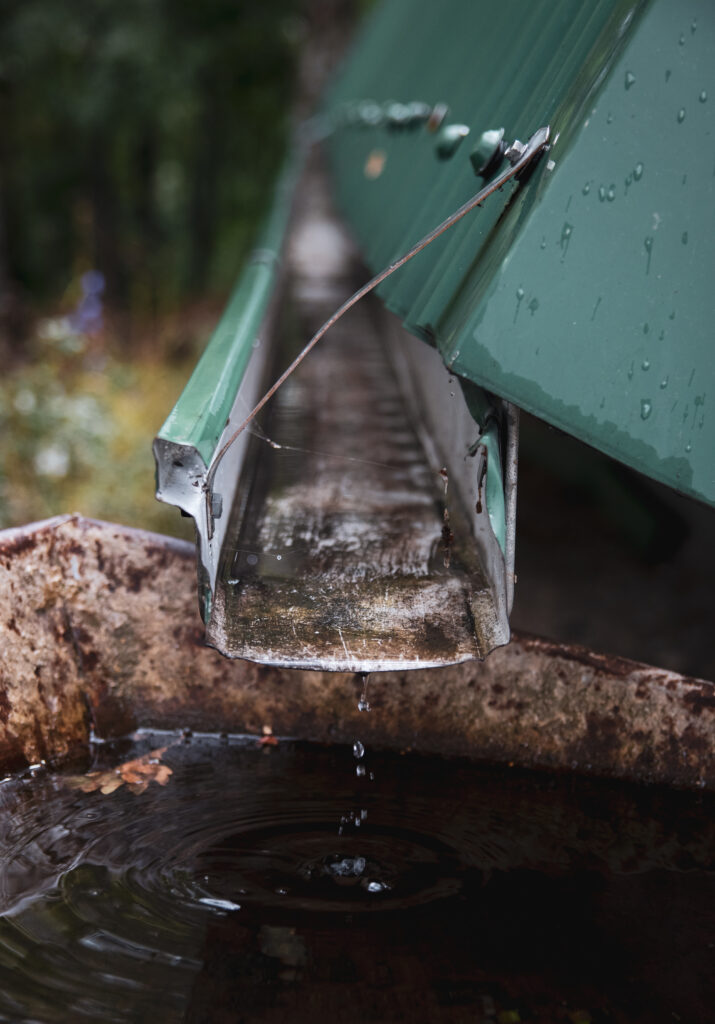
This is one of the most common questions homeowners have, and the answer depends on where the dripping is happening. Some water dripping from the end of a downspout is completely normal. That is the system working exactly as it should, moving water away from the roofline and releasing it at ground level.
What is not normal is water dripping from the middle of the gutter, from joints between sections, or from gaps where the gutter meets the fascia board. If you see dripping along the length of the gutter during rain, that usually points to one of a few issues. The gutter may be cracked or have a hole. The seams between sections may have separated over time. The gutter may be so full of debris that water is finding any gap it can to escape. In some cases, the gutter is simply pitched at the wrong angle and water is pooling instead of flowing toward the downspout.
Light dripping from joints during very heavy rain can sometimes be normal if the volume of water coming off the roof exceeds what the gutter can handle in that moment. But if it happens regularly during moderate rain, that is a sign something needs attention. The longer you wait on a small leak, the more water works its way into the fascia, soffit, and wall behind it. Gutter repair tends to be much less expensive when caught early compared to when the surrounding wood has already begun to rot.
How Urgent Is Gutter Repair?
Gutter problems sit in a range from minor to serious, and urgency depends on what the issue is. A small crack in a section of gutter is less urgent than a completely detached downspout or gutters that are overflowing every time it rains. That said, even minor issues tend to get worse quickly because gutters are exposed to weather constantly.
If your gutters are pulling away from the house, overflowing during rain, or you have already noticed water stains on your ceiling or walls, those situations call for fast action. Water damage compounds quickly. What is a stain today can be active mold in a few weeks if the moisture source keeps running.
For homeowners in San Jose and across the Bay Area, the rainy season makes gutter maintenance time-sensitive. Going into the wet months with clogged or damaged gutters almost guarantees water problems before spring. Scheduling a gutter cleaning and inspection before the rains start is one of the simplest ways to protect your home.
Heavenly Maids Cleaning Services in San Jose handles gutter cleaning and exterior home care as part of a broader approach to keeping homes in good condition from the outside in. Power washing services for driveways and patios, exterior house cleaning, and advanced pressure washing and exterior care all work alongside gutter maintenance to protect the home’s structure and appearance.
A home that is clean on the outside is also better protected. Algae and grime that build up on siding hold moisture against the surface, which speeds up deterioration. Pressure washing removes that buildup and helps surfaces last longer. It is the same principle as keeping gutters clear. Regular care prevents expensive repairs down the road.
Heavenly Maids Cleaning Services brings that same attention to detail inside the home too. Residential deep cleaning, carpet steam cleaning, window washing, air duct and dryer vent cleaning, and recurring maid services all contribute to a home that is genuinely healthy and well-maintained. For busy families across the Bay Area, having one reliable team handle both interior and exterior cleaning is a practical way to stay on top of home maintenance without letting things slip.
The Bottom Line on Gutters and Home Health
Dirty gutters are not a cosmetic problem. They are a structural one that affects your foundation, your roof, your walls, your air quality, and your safety. The signs are usually there before the damage gets bad. Overflowing water, sagging sections, staining on siding, and pests near the roofline are all things worth acting on quickly. Dripping during heavy rain may or may not be normal depending on where it is happening, but ongoing leaks at joints or along the gutter body always need attention. And when it comes to gutter repair, sooner is always better than later because water damage does not pause while you think it over.
Keeping gutters clean is one of the most straightforward things a homeowner can do to protect their investment. Paired with regular exterior cleaning, pressure washing, and interior deep cleaning services, it adds up to a home that is in genuinely good shape, not just one that looks fine from the street.
Most people think of an unhealthy home as one that looks dirty. But the truth is, a home can look clean on the surface and still be full of things that affect your health every single day. Dust hiding in your air ducts, mold growing behind walls, pet dander stuck in carpet fibers, and bacteria living on countertops you just wiped down. These are real problems that millions of homeowners deal with, often without even knowing it. If you have been feeling more tired than usual, dealing with headaches, or noticing that your allergies seem worse indoors than outside, your home might be telling you something important.
Understanding the signs of an unhealthy home is the first step toward fixing it. And once you know what to look for, you can take action before small problems turn into bigger, more expensive ones.
The Most Common Signs Your Home May Be Making You Sick
One of the biggest warning signs is poor indoor air quality. This is something you cannot always see, but you can often feel it. Stuffy rooms, a dusty smell that never goes away, or air that feels heavy are all clues that something is off. Air ducts that have not been cleaned in years collect dust, mold spores, pet dander, and other particles that get pushed through your home every time the heat or air conditioning turns on. Over time, this builds up and lowers the air quality inside your house significantly.
Another sign is visible or hidden mold. Mold thrives in damp areas like bathrooms, basements, kitchens, and around windows. You might see dark spots on grout lines, notice a musty smell in a closet, or find discoloration on a wall near a pipe. Even small amounts of mold can cause respiratory issues, skin irritation, and worsening asthma symptoms, especially in children and older adults. If you smell something musty but cannot find the source, there is a good chance mold is hiding somewhere out of sight.
Pest activity is another serious red flag. Droppings, chewed materials, or unexplained scratching sounds in the walls are signs that rodents or insects have found a way inside. Pests carry bacteria and allergens that spread across surfaces and into the air. Many homeowners do not realize this until the problem has already grown.
Dirty carpets are one of the most overlooked health hazards in a home. Carpets trap dust mites, bacteria, mold spores, and pet dander deep in their fibers, well below the surface that a regular vacuum can reach. If your carpet has not had a professional deep clean in over a year, it is likely holding onto far more than you think. Stains from food, drinks, or pet accidents go deeper than they appear, and the bacteria they carry can linger for months. Professional carpet cleaning uses steam and high-pressure methods that pull out what vacuuming simply cannot reach.
Cluttered and poorly ventilated spaces also contribute to an unhealthy home environment. When air cannot circulate properly, moisture builds up, and moisture is where mold and bacteria grow. Rooms that feel stuffy, closets that smell stale, and bathrooms without proper ventilation are all areas where air quality problems start.
What You Might Be Ignoring Without Realizing It
There are parts of a home that most people clean regularly but still miss the deep issues hiding underneath. Kitchen surfaces might look clean, but grease buildup in hard-to-reach areas behind appliances can hold bacteria and even attract pests. Bathroom tiles may look fine until you look closely at the grout, where mold quietly grows between cleanings.
Windows are another area people overlook. Dirty windows do more than block natural light. They can have mold and moisture buildup around the frames, especially in older homes. Interior and exterior window cleaning removes this buildup and also improves the amount of natural light getting into your space, which has a real effect on mood and energy levels.
Dryer vents are one of the most ignored safety hazards in a home. Lint that builds up in a dryer vent does not just reduce efficiency. It is a fire risk. A clogged dryer vent can also push moisture back into the home, which contributes to mold growth in the laundry area. Air duct and dryer vent cleaning is something most homeowners put off for years, but it makes a measurable difference in both safety and air quality.
The outside of your home matters too. Gutters clogged with leaves and debris cause water to back up and seep into your walls or foundation. This moisture works its way inside and creates the perfect conditions for mold and structural damage. Pressure washing driveways, siding, and patios removes built-up algae, mold, and grime that slowly break down surfaces over time. Gutter cleaning and exterior home cleaning are not just about curb appeal. They protect the structure of the home and prevent indoor moisture problems before they start.
Small Steps That Make a Big Difference
You do not have to overhaul your entire home at once. Here are some practical things you can do to start improving your home’s health right away:
Open windows regularly to let fresh air move through your space, even for just 15 to 20 minutes a day
Replace HVAC filters every one to three months depending on how much dust and pet hair your home collects
Check under sinks, around toilets, and near appliances for any signs of moisture or slow leaks
Vacuum carpets at least twice a week if you have pets, and schedule a professional steam cleaning at least once or twice a year
Clean bathroom grout and tile regularly to prevent mold from taking hold in damp areas
Keep gutters clear of debris, especially after fall and before the rainy season
Have your air ducts inspected and cleaned every three to five years, or sooner if you notice more dust than usual settling on furniture
These habits, done consistently, can dramatically change how your home feels and how healthy the air inside it actually is.
Why Professional Cleaning Makes a Real Difference
There is only so much a standard cleaning routine can do. Regular tidying keeps visible mess under control, but it does not address the deeper buildup that happens over months and years. That is where professional cleaning comes in. Services like those offered by Heavenly Maids Cleaning Services in San Jose, California go beyond surface cleaning. Residential deep cleaning, carpet steam cleaning, air duct and dryer vent cleaning, window washing, pressure washing, and gutter cleaning all work together to create a home that is genuinely cleaner and healthier from top to bottom.
Move-in and move-out cleaning is especially important because you have no idea what the previous occupants left behind inside vents, under appliances, or in carpet fibers. After a renovation, dust from drywall, wood, and construction materials settles into every corner of a home and needs to be properly removed before the space is safe to live in again. Recurring cleaning services keep a home from reaching the point where deep buildup becomes a problem in the first place.
For families in the Bay Area looking for reliable, professional house cleaning in San Jose, Heavenly Maids Cleaning Services covers everything from basic recurring maid services to full deep cleaning packages. A clean home is not just about how it looks. It is about how you feel inside it, how well you sleep, how clearly you breathe, and how healthy your family stays over time.
The Bottom Line
An unhealthy home does not always announce itself. It shows up slowly, through allergies that do not go away, air that feels stale, carpets that never quite smell fresh, or gutters that overflow every time it rains. Paying attention to these signs and acting on them is one of the most practical things you can do for your family’s health and your home’s long-term condition. Whether you handle things yourself or bring in a professional team like Heavenly Maids Cleaning Services, the goal is the same: a home that is clean all the way through, not just on the surface.
If you have a rug sitting in your living room, bedroom, or office, you have probably wondered at some point whether it is really worth paying someone to clean it. You might look at it and think it does not look that dirty. Or maybe it does look dirty and you are not sure a professional can even fix it. Either way, this is a question a lot of homeowners ask, and the honest answer is yes, it is usually very much worth it.
Here is why, and what you should know before you book your next cleaning.
What Happens to a Rug Over Time
Rugs go through a lot. Every day, people walk across them with shoes, bare feet, and socks. Pets curl up on them. Dust, pollen, dead skin cells, and bacteria settle deep into the fibers. Spills happen. Kids drop food. Dirt gets tracked in from outside.
The problem is that regular vacuuming only gets the surface. It does not pull out what is buried deep inside the rug fibers. Over time, all that buildup makes your rug look dull, smell musty, and feel rough under your feet. It can also affect the air quality in your home, especially if anyone in your family has allergies or asthma.
This is where professional carpet cleaning makes a real difference. Trained cleaners use equipment that goes much deeper than a home vacuum ever could. They use hot water extraction and other methods that pull out the grime, bacteria, and allergens that have been sitting in your rug for months or even years.
The Real Benefits of Professional Rug Cleaning
Getting a rug professionally cleaned is not just about looks. There are real, practical reasons why people who do it once tend to keep doing it.
Here are a few things a professional cleaning can do that a regular vacuum cannot:
Remove deep-seated dirt and debris that has compacted into the fibers over time
Eliminate pet odors and stains that sprays and home treatments often just cover up
Restore the texture and softness of the rug by lifting flattened fibers back up
Kill bacteria and allergens that live inside the rug and circulate into the air you breathe
Help the rug last longer by preventing fiber breakdown caused by trapped grit and dirt
Treat stains with the right products based on the type of rug material
If you have ever had a rug professionally cleaned and been shocked by how different it looks after, you already know this is true. What you thought was just an old, faded rug often turns out to just be a dirty one.
How Often Should You Get Your Rug Cleaned?
This depends on your household. A rug in a quiet bedroom used by one adult is very different from a rug in a busy living room with kids, dogs, and constant foot traffic.
As a general guide, most rugs benefit from a professional cleaning once every 12 to 18 months. If you have pets or young children, every 6 to 12 months is a better target. High-traffic rugs in commercial spaces or offices should be cleaned even more regularly to stay in good condition.
Between cleanings, regular vacuuming at least once a week helps slow down the buildup. For spills, blot right away with a clean cloth. Never rub a spill into a rug because that drives it deeper into the fibers and makes it much harder to remove later.
For area rugs, rotating them every few months also helps them wear evenly so one section does not get more traffic than another.
Different Types of Rugs Need Different Care
Not every rug is the same, and this matters when it comes to cleaning. A synthetic rug made of polyester or nylon can handle more aggressive cleaning methods. A delicate wool, silk, or Persian rug needs much gentler treatment.
This is one reason why DIY rug cleaning can go wrong. Using the wrong cleaning product or too much water on a natural fiber rug can shrink it, bleed the colors, or damage the backing. Professionals know how to identify the rug type and adjust their cleaning approach.
If you have a valuable or antique rug, always have it cleaned by someone with experience. The cost of a professional cleaning is nothing compared to the cost of replacing a rug that got damaged by the wrong cleaning method at home.
Is It Worth the Cost?
A lot of people hesitate because they are not sure the price is worth it. But when you break it down, professional rug cleaning is one of the better value services you can get for your home.
Think about it this way. A quality area rug can cost several hundred to several thousand dollars. Regular professional cleaning extends its life significantly. It is far cheaper to clean a rug every year or two than to replace it because it deteriorated from neglect.
For homeowners in San Jose and across the Bay Area, finding affordable cleaning services that also do quality work is not hard. Companies like Heavenly Maids Cleaning Services offer professional carpet steam cleaning as part of a wider range of home care services. Having one trusted company handle multiple needs including residential cleaning, window cleaning, and carpet care makes it easier to keep your whole home in good shape without juggling multiple vendors.
Signs Your Rug Needs a Professional Clean Right Now
Sometimes the signs are obvious. Other times they sneak up on you because you are used to seeing the rug every day.
Watch for these indicators that it is time to book a professional carpet cleaning:
The rug looks visibly darker or duller than it did when it was new
You notice a musty or pet odor that does not go away even after airing out
Family members have been sneezing or dealing with allergy symptoms more than usual
There are stains that have not responded to home treatments
The rug feels stiff or crunchy underfoot instead of soft
You have not had it cleaned in over a year and there is regular foot traffic on it
If any of these sound familiar, it is probably past time for a cleaning. The good news is that most rugs respond really well to a thorough professional clean, even if they look like they are past saving.
Keeping Your Rug Clean Longer After a Professional Service
After your rug gets cleaned, a few habits can help it stay fresh longer. Place a doormat at every entrance to your home so people wipe their feet before walking on the rug. Ask family members to remove shoes at the door if possible. This single habit alone can cut down on how much dirt makes it into the rug fibers.
If you have pets, brush them regularly to reduce shedding and bathe them on a schedule. Keeping pet hair and dander under control reduces how much ends up trapped in the rug.
For homes with young children, consider a washable area rug in play areas so you can toss it in the washing machine between professional cleanings. In living rooms and bedrooms where you have nicer rugs, spot clean spills the moment they happen and vacuum consistently.
Heavenly Maids Cleaning Services works with many Bay Area families on recurring cleaning plans that include carpet and rug care as part of broader residential cleaning. Building a regular routine around professional cleaning is the easiest way to protect your home investment and keep your space looking good day to day.
Getting your rug professionally cleaned is not a luxury. It is a smart, practical choice that improves your home environment, extends the life of your rug, and saves you money in the long run. Whether you have a high-traffic living room rug, a delicate Persian piece, or office carpet that sees heavy use every day, professional carpet steam cleaning gets results that home methods simply cannot match.