The kitchen is the most used room in most homes. Food gets prepared there multiple times a day, and the appliances that make that possible work hard and collect grease, food residue, bacteria, and odors as a natural byproduct of daily use. Most people wipe down counters regularly and wash dishes after every meal, but kitchen appliances often get ignored until the buildup becomes impossible to overlook.
The microwave smells every time it runs. The refrigerator has mystery residue on a shelf. The oven is coated in baked-on grease from months of use. These are not just aesthetic problems. Dirty appliances harbor bacteria, affect food safety, reduce the efficiency of the equipment, and can even shorten the lifespan of expensive machines you depend on every day.
Knowing how often to clean each kitchen appliance, and what actually needs to happen during each cleaning, takes the guesswork out of kitchen maintenance and keeps your cooking environment genuinely clean rather than just surface-level tidy. The frequency varies by appliance and by how heavily it is used, but there are clear standards that work well for most households.
Daily and Weekly Appliances: What Needs the Most Frequent Attention
Some kitchen appliances need attention far more often than others because of how frequently they are used and how quickly they accumulate residue that can become a food safety issue.
The microwave is one of the appliances that gets dirty fastest and is cleaned least often. Food splatters coat the interior walls, ceiling, and turntable every time something is heated without a cover. These splatters dry and harden quickly, and as they accumulate, the microwave starts to smell every time it runs, and bacteria begin to multiply in the wet, warm residue left behind.
The microwave should be wiped down inside at least once a week in a household that uses it daily. A simple and effective method is to heat a bowl of water with a few slices of lemon for three to four minutes, then let it sit for another two minutes before opening. The steam loosens the dried splatter, making it easy to wipe clean with a damp cloth. The turntable should be removed and washed weekly as well.
The coffee maker is an appliance most people clean far less often than they should. The carafe and removable parts should be washed after every use. The internal components of a drip coffee maker, including the water reservoir and the brewing mechanism, accumulate mineral deposits from water and coffee oils that affect the taste of the coffee and can promote bacterial and mold growth in the damp interior. Running a descaling cycle with a mixture of equal parts white vinegar and water once a month, followed by two full cycles of plain water to rinse, keeps the internal workings clean and the coffee tasting the way it should.
The toaster and toaster oven collect crumbs in their base trays with every use. These crumbs are a fire risk and also attract pests if left to accumulate. Toaster crumb trays should be emptied and wiped clean at least once a week. The interior of a toaster oven, which collects grease and food debris much more than a standard toaster, should be fully cleaned every two weeks for households that use it frequently, and the glass door should be addressed at the same time since baked-on grease on glass is harder to remove the longer it sits.
Monthly and Seasonal Appliances: Going Deeper Where It Counts
Some kitchen appliances need less frequent cleaning but require a more thorough approach when the time comes. Letting these go too long between cleanings leads to the kind of buildup that is hard to remove, affects appliance performance, and creates real food safety concerns.
The refrigerator is one of the most important appliances to keep clean because it is where food is stored, and cross-contamination from spills, leaks, and expired food affects everything else in the unit. Shelves and drawers should be removed and washed thoroughly at least once a month. The door seals, which are rubber gaskets that run around the perimeter of every door, collect crumbs, moisture, and mold in their ridges and should be scrubbed with a damp cloth or a soft brush monthly.
The coils at the back or bottom of the refrigerator, depending on the model, collect dust and reduce the efficiency of the cooling system when dirty. These should be vacuumed or brushed clean every six months. The drip pan underneath, which collects condensation, should be removed and cleaned at the same interval to prevent mold and odor buildup.
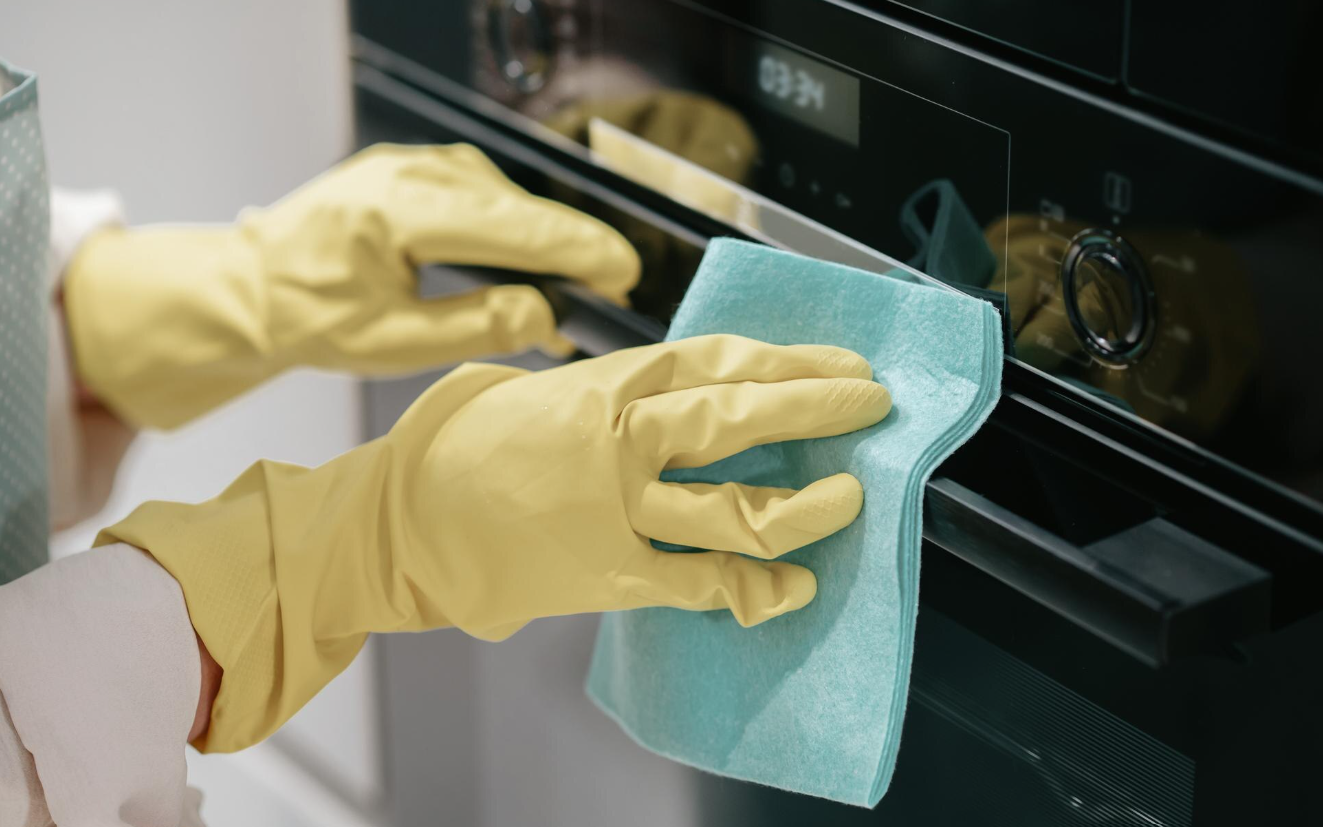
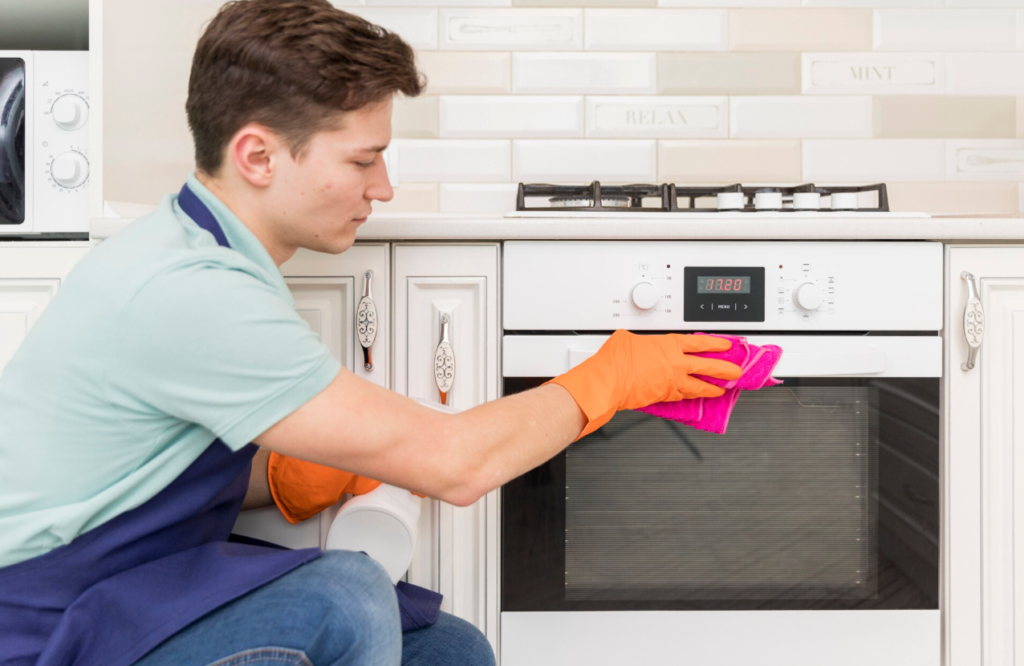
The oven needs a deep clean every one to three months depending on how often it is used and what is cooked in it. Roasting meats, baking dishes with cheese, and cooking anything at high temperatures with oil or fat all contribute to grease buildup on the oven walls, floor, and ceiling. This baked-on grease affects cooking performance, causes smoke and unpleasant odors during use, and is a fire hazard if it accumulates heavily. Self-cleaning cycles work but produce high heat and significant smoke.
A manual deep clean using a baking soda paste left to sit overnight followed by wiping and a light application of white vinegar is effective for most ovens and does not require harsh chemical oven cleaners that produce dangerous fumes. The oven racks should be removed and soaked in hot soapy water before scrubbing, as this is far easier than trying to clean them inside the oven.
The dishwasher cleans dishes but does not clean itself. Food particles collect in the filter at the bottom of the unit, and mineral deposits and soap scum build up on the interior walls and spray arms over time. The filter should be removed and rinsed under running water weekly in a household that runs the dishwasher daily. A full interior cleaning with a dishwasher cleaner tablet or a cup of white vinegar placed in the bottom of an empty machine and run on a hot cycle should be done once a month. The door gasket collects food residue and moisture and should be wiped down with a damp cloth weekly to prevent mold growth.
Here is a quick reference cleaning schedule for the most common kitchen appliances:
Microwave: Wipe interior and wash turntable weekly
Coffee maker: Wash removable parts after each use, descale monthly
Toaster and toaster oven: Empty crumb tray weekly, deep clean every two weeks
Refrigerator shelves and drawers: Remove and wash monthly
Refrigerator door seals: Scrub monthly
Refrigerator coils and drip pan: Clean every six months
Oven interior: Deep clean every one to three months
Oven racks: Remove and soak monthly or as needed
Dishwasher filter: Rinse weekly
Dishwasher interior: Run a cleaning cycle monthly
The Appliances People Forget and Why They Matter
Beyond the main appliances most people think of, there are several kitchen items that collect significant buildup and rarely get cleaned as often as they should.
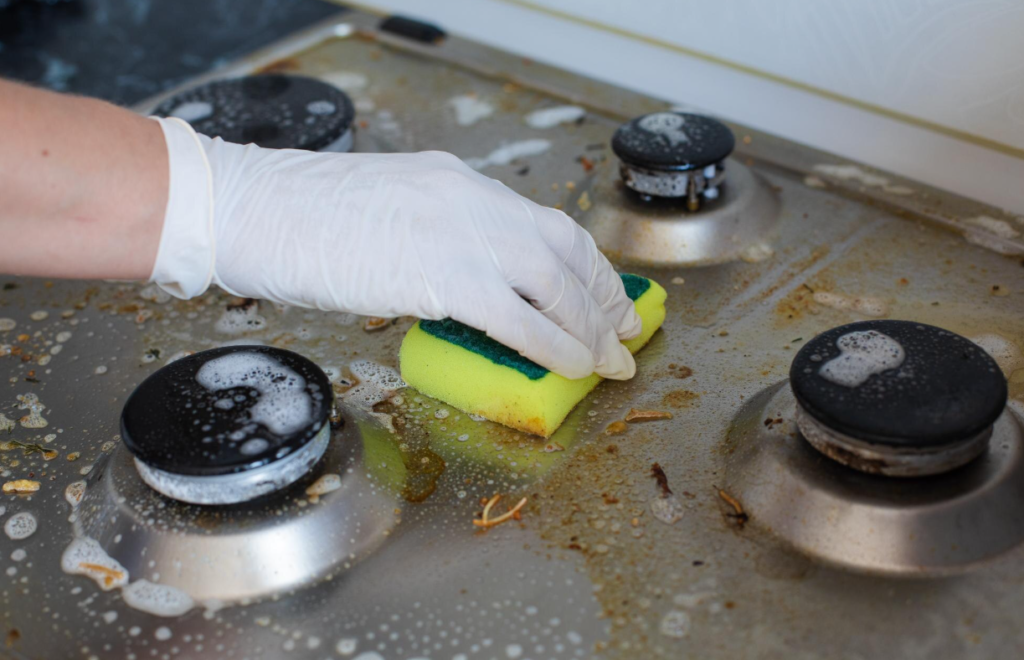
The range hood and its filters are one of the most overlooked cleaning tasks in any kitchen. The range hood pulls grease-laden air away from the stovetop during cooking and passes it through a filter before exhausting it. That filter becomes coated with grease over time, and a clogged filter reduces the hood’s ability to remove cooking fumes and grease from the air. Metal mesh filters should be soaked in hot water with a degreasing dish soap and scrubbed clean every one to two months for a household that cooks regularly. Charcoal filters in recirculating hoods cannot be cleaned and should be replaced every three to six months.
The garbage disposal develops odors quickly from the organic residue that builds up on the blades and inside the grinding chamber. Running cold water and dish soap through the disposal weekly helps, but a more thorough cleaning using ice cubes and rock salt to scrub the chamber, followed by grinding citrus peels, should be done monthly to address odor and buildup more effectively.
The blender is used frequently in many households but is often cleaned less thoroughly than it appears. Blending residue gets into the blade assembly and the rubber gasket seal and can harbor bacteria if not fully cleaned after each use. Disassembling the blender completely and washing all parts by hand rather than running it as a single unit gives a more thorough result.
Professional kitchen and bathroom cleaning that covers appliances at this level of detail makes a real difference in both the hygiene and the condition of a kitchen over time. Heavenly Maids Cleaning Services in San Jose provides residential deep cleaning services across the Bay Area that include thorough kitchen appliance cleaning as part of a complete home care approach. For busy households that struggle to keep up with the frequency these tasks require, detailed home cleaning services from professional home cleaners handle the deep work while daily habits maintain the baseline between visits.
Recurring cleaning services that include kitchen attention keep appliances from reaching the state where deep buildup becomes a major project. For homeowners preparing a property for a sale or a new tenant, move-in and move-out cleaning that includes thorough appliance cleaning is one of the most appreciated and most impactful parts of the service. Heavenly Maids Cleaning Services brings that level of care and consistency to every kitchen it works in throughout San Jose and the broader Bay Area.