Most people who struggle with sleep focus on the obvious things. Screen time before bed, caffeine too late in the day, stress from work, or an uncomfortable mattress. These are all real factors, but there is one that gets overlooked far more often than it should: the air quality and cleanliness of the room you sleep in. Dust is everywhere in a home, and the bedroom is one of the places it accumulates fastest.
While you sleep, you breathe the air in that room for seven to nine hours straight. If that air is loaded with dust, dust mite allergens, pet dander, and mold spores, your body is responding to those irritants the entire time, even when you are not awake to notice it.
The result is sleep that feels light, interrupted, or never quite restful enough. You wake up with a stuffy nose, scratchy throat, or that heavy, unrested feeling that a full night in bed should have fixed. Dust is often the reason, and the connection between a dusty sleeping environment and poor sleep quality is more direct than most people realize.
Why Do Bedrooms Contain So Much Dust?
Household dust is not just dirt. It is a mixture of dead skin cells, pet dander, textile fibers from bedding and clothing, pollen that has drifted in from outside, mold spores, and the waste particles produced by dust mites. That last one is the most significant from a health standpoint. Dust mites are microscopic organisms that live in soft, warm, humid environments, which makes mattresses, pillows, and upholstered furniture their preferred habitat. A single mattress can host hundreds of thousands of dust mites, and the waste particles they produce are one of the most common indoor allergen triggers known to affect human health.
When you move around in bed, sit on the edge of the mattress, or simply breathe, you disturb the surface and send these particles into the air around you. You then breathe them directly into your lungs during sleep. For people who are sensitive to these allergens, this triggers an immune response that causes nasal congestion, throat irritation, itchy eyes, and sometimes mild asthma symptoms. Even for people who do not think of themselves as allergy sufferers, repeated nighttime exposure to high levels of dust and allergens can cause low-grade inflammation in the respiratory tract that disrupts normal sleep patterns without producing obvious allergy symptoms during the day.
The bedroom accumulates dust faster than most other rooms because of the volume of soft surfaces it contains. Carpets, curtains, upholstered headboards, stuffed pillows, and heavy bedding all trap and hold dust particles. Every time the HVAC system runs, it pushes air through the room and disturbs settled dust, sending it back into circulation. If the air ducts feeding that room have not been cleaned in years, they are also adding their own contribution of accumulated dust and debris to the air you breathe while you sleep.
How Dust Disrupts Sleep Even When You Don’t Realize It
Many people associate allergies with obvious symptoms like sneezing and watery eyes. But the ways dust affects sleep are often more subtle than that, which is why so many people spend years sleeping poorly without connecting it to the state of their bedroom environment.
Nasal congestion is one of the most common effects. Even mild congestion from dust exposure forces the body to breathe through the mouth during sleep, which dries out the throat, contributes to snoring, and reduces the quality of oxygen intake during the night. People who breathe through their mouths during sleep often wake with a dry, sore throat and a feeling of not having rested well, and they chalk it up to snoring or dehydration when the underlying cause is the dusty air they spent the night breathing.
Airborne allergens from dust also trigger low-level immune activity during sleep. When your immune system is responding to allergens, even quietly and without producing obvious symptoms, it uses energy and keeps the body in a mild state of alertness that prevents the deepest stages of sleep. Deep sleep is where the body does most of its physical repair and where the brain consolidates memory and processes the experiences of the day. Losing even small amounts of deep sleep consistently adds up to significant fatigue, cognitive fog, and mood disruption over time.
Children are particularly vulnerable to dust-related sleep disruption because their immune systems react more strongly to allergens and their sleep needs are higher. A child who wakes frequently, seems overtired despite getting enough hours of sleep, or has chronic nighttime congestion may be reacting to a dusty bedroom environment rather than having a sleep disorder.
Here are the most common signs that dust may be affecting your sleep quality:
Waking with a stuffy nose, dry throat, or itchy eyes that clear up after you leave the bedroom
Sneezing frequently in the morning right after getting out of bed
Feeling unrested after a full night of sleep with no obvious explanation
Chronic nighttime coughing or throat clearing that is not related to illness
Waking at the same time each night, especially during hours when HVAC systems cycle on and push air through the room
Noticing that you sleep better when staying somewhere other than your own bedroom
The Cleaning Habits That Make the Biggest Difference
Reducing dust in the bedroom requires a consistent approach that goes beyond occasional surface cleaning. The goal is to reduce the reservoirs where dust accumulates and to improve the air quality in the room so that what is airborne is minimized.
Washing bedding weekly in hot water, at a minimum of 130 degrees Fahrenheit, kills dust mites and removes the allergen-containing particles they leave behind. Mattress covers and pillow protectors with allergen-barrier fabric add a layer of protection between the sleeping surface and the dust mite population that inevitably develops in any mattress over time. These covers are washable and make a measurable difference in nighttime allergen exposure.
Vacuuming bedroom carpets at least twice a week with a HEPA filter vacuum removes surface dust before it settles into the deeper fibers where a standard vacuum cannot reach. But even a HEPA vacuum has limits. Professional carpet cleaning using hot water extraction removes the deep-layer buildup that vacuuming leaves behind and reduces the overall allergen load of the carpet in a way that surface cleaning cannot achieve. For bedrooms with heavy carpet use or homes with pets, professional-grade carpet cleaning twice a year is one of the most effective investments in better sleep that a person can make.
Dusting with a damp microfiber cloth rather than a dry one prevents dust from becoming airborne during cleaning. Dry dusting with a feather duster or dry cloth simply moves dust from one surface to another and sends a large portion of it into the air, where it stays suspended for hours before settling back down. Damp microfiber cloths trap and hold dust particles so they can be removed from the room entirely.
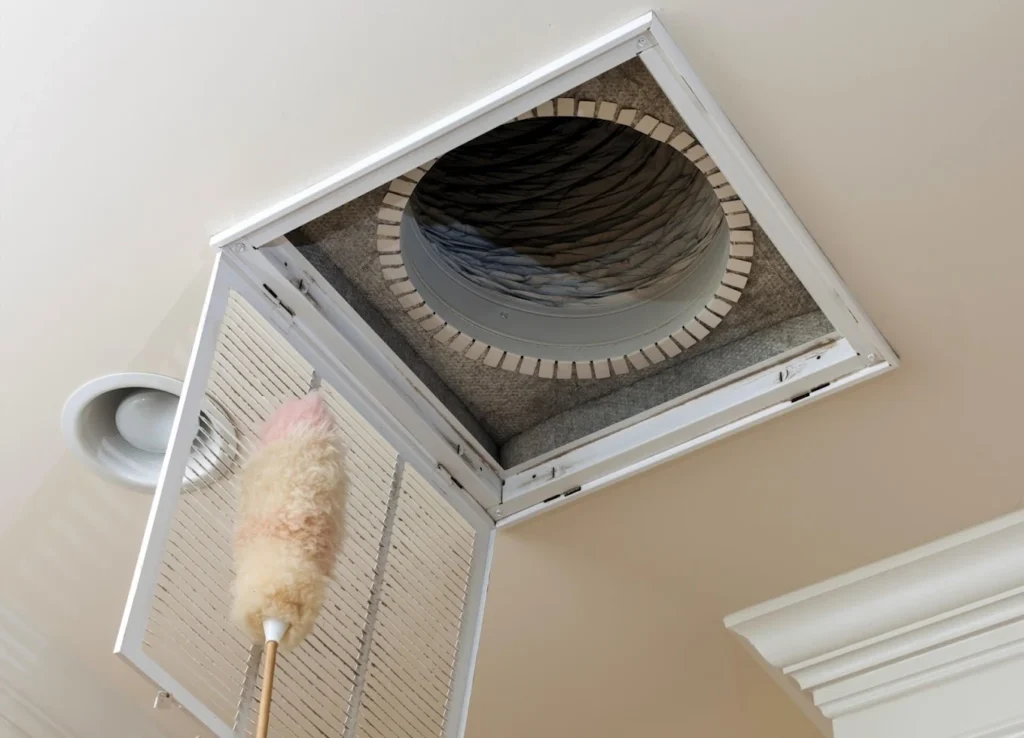
Air duct cleaning is one of the highest-impact steps for improving bedroom air quality. Ducts that have not been cleaned in years carry accumulated dust, pet dander, mold spores, and debris that get pushed directly into the bedroom every time the heating or cooling system runs. Professional duct cleaning removes this buildup and reduces the continuous reintroduction of allergens into the room during sleep. Paired with dryer vent cleaning, which prevents lint and moisture from recirculating into the home’s air, these two services together create a measurable improvement in the cleanliness of the air in every room including the bedroom.
Replacing HVAC filters on schedule, using filters rated MERV 8 or higher, also helps by capturing a greater percentage of airborne particles before they recirculate through the duct system and back into the bedroom.
Heavenly Maids Cleaning Services in San Jose provides residential deep cleaning services across the Bay Area with the kind of detail that addresses the bedroom environment specifically. From professional carpet cleaning and duct cleaning to full home deep cleaning services, the work goes beyond surface appearances to tackle the sources of dust and allergens that affect how well you sleep and how well you feel the next day.
Here are a few more practical tips for a lower-dust sleeping environment:
Keep bedroom clutter to a minimum because objects on shelves and surfaces collect and hold dust
Wash curtains and window treatments monthly since they trap large amounts of dust and release it when disturbed
Groom pets outside the bedroom and wash pet bedding weekly to reduce dander in the sleeping space
Run an air purifier with a HEPA filter in the bedroom to capture airborne particles continuously
Keep bedroom windows closed during high pollen days and rely on the filtered HVAC system for ventilation
Detailed home cleaning services for busy families from Heavenly Maids Cleaning Services can include recurring maid cleaning services that keep the bedroom environment consistently cleaner between deeper professional visits. Affordable maid services in the Bay Area that prioritize the areas where people sleep make a real difference not just in how clean the home looks but in how well everyone inside it actually rests. Sleep quality is one of the most important factors in long-term physical and mental health, and the cleanliness of the room you sleep in is one of the most practical levers you have to improve it.