Every home gets cleaned to some degree on a regular basis. Floors get swept and mopped. Countertops get wiped. Toilets get scrubbed. These are the tasks that make a home feel clean after each session, and they are the ones most people default to because they produce visible results quickly. But there is a whole category of cleaning tasks that rarely make it onto anyone’s list, not because they are unimportant but because they are either out of sight, rarely thought about, or simply never established as habits in the first place.
These forgotten tasks accumulate quietly over months and years, and the buildup they allow has real consequences for the condition of the home, the health of the people in it, and the longevity of the surfaces and materials involved.
This is not about making people feel bad for imperfect cleaning routines. It is about making the invisible visible, so that the areas most people miss can finally get the attention they need. Some of these forgotten tasks are quick and easy once you know to do them. Others require dedicated time or professional help. All of them matter more than most people realize until they see what has accumulated from years of being skipped.
The Forgotten Tasks Inside the Most-Used Rooms
The kitchen and bedroom are two of the most used rooms in any home, and both contain a surprising number of surfaces and items that get cleaned around rather than cleaned directly.
Inside kitchen cabinets is one of the most consistently overlooked cleaning areas in residential cleaning. The exterior of cabinet doors gets wiped regularly, but the interior shelves and walls of cabinets accumulate crumbs, spilled oils, dried residue from food packaging, and dust over months and years without ever being addressed. Most people go years without emptying their cabinets and cleaning the shelf surfaces inside. The longer this goes unaddressed, the more the residue hardens and the more it attracts insects and harbors bacteria. A thorough deep cleaning of cabinet interiors, done at least once or twice a year, removes this buildup and makes the space where food is stored genuinely clean rather than just visually tidy from the outside.
The range hood filter is another kitchen item that most homeowners acknowledge they have either never cleaned or cleaned only a handful of times. The range hood is designed to pull grease-laden air away from the cooking surface and pass it through a filter before exhausting it. Over time, that filter becomes saturated with grease to the point where it can no longer function effectively. A completely clogged range hood filter means the grease that should be captured is instead circulating through the kitchen air and settling on every surrounding surface.
The filter should be removed and cleaned in hot water with a strong degreasing dish soap every one to two months in a kitchen that sees regular cooking. Many people discover during this cleaning that the filter has not been addressed in years, by which point the grease has hardened significantly and requires extended soaking to remove.
The interior of the refrigerator door seals is a location that harbors significant bacterial and mold growth in most homes without anyone realizing it. The rubber gaskets that run around the perimeter of the refrigerator and freezer doors trap moisture, food residue, and crumbs in their ridges and folds. In a warm kitchen environment, this creates exactly the conditions mold and bacteria prefer.
Most people wipe the visible interior shelves of the refrigerator but never address the seals, which sit just at the edge of visibility and require deliberate attention to clean properly. Running a cloth or a soft brush into the ridges of the door seals monthly removes the accumulation and prevents mold from becoming established in a location that has direct contact with food containers every time the door is opened.
The tops of kitchen cabinets are one of the most dramatically neglected surfaces in any home. Positioned above eye level, they accumulate a thick layer of grease-laden dust that is different from the dust found elsewhere in the home because the cooking residue that rises to the ceiling level mixes with the dust and creates a dense, sticky coating. In a home where the kitchen is used daily and the cabinet tops are never cleaned, the accumulation over several years can be substantial. This buildup does not affect daily life visibly, but it is a significant reservoir of grime that professional house cleaning services address as part of a thorough kitchen deep clean.
In the bedroom, the top of the bed frame, headboard, and the area between the mattress and the headboard are surfaces that almost never get cleaned during routine house cleaning. Dust, hair, and small items accumulate in the gap between the mattress and headboard and on the flat surfaces of the frame, and the headboard itself, particularly if it is upholstered, collects dust and skin particles from the person sleeping against it.
The space under the bed, including the area closest to the wall which is hardest to reach, is another location that is often vacuumed around rather than under, and the dust that collects in this area circulates into the breathing zone of the room during sleep. Nightstands also accumulate rings from glasses, dust on their surfaces, and debris in their drawers that rarely gets addressed during a typical cleaning session.
The Overlooked Areas Throughout the Rest of the Home
Moving beyond the kitchen and bedroom, there are forgotten cleaning tasks distributed throughout every other room in a home that are worth understanding in specific terms.
Light switches and door handles are among the most touched surfaces in any home and among the least cleaned. Every person who moves through a home makes contact with door handles and light switches multiple times each day, making them one of the highest-bacteria surfaces per square inch in the entire house. Despite this, they are almost never included in a regular cleaning routine because they are not visually dirty in the way that a sink or a stovetop is. A monthly wipe with a damp microfiber cloth and a gentle sanitizing cleaner addresses this bacterial accumulation and is one of the fastest and most impactful hygiene improvements available in any home.
Baseboards throughout the entire home collect a consistent layer of dust and scuffs that most people associate with painting rather than cleaning. In reality, baseboards should be wiped down as part of a regular deep cleaning session because the dust that collects on their horizontal surface gets disturbed by foot traffic and recirculates into the room air. In homes where people suffer from seasonal allergies or respiratory sensitivities, dusty baseboards are a meaningful contributor to the indoor particle load. Wiping them with a damp microfiber cloth a few times a year removes the accumulated dust and keeps them looking well-maintained without requiring any special cleaning products.
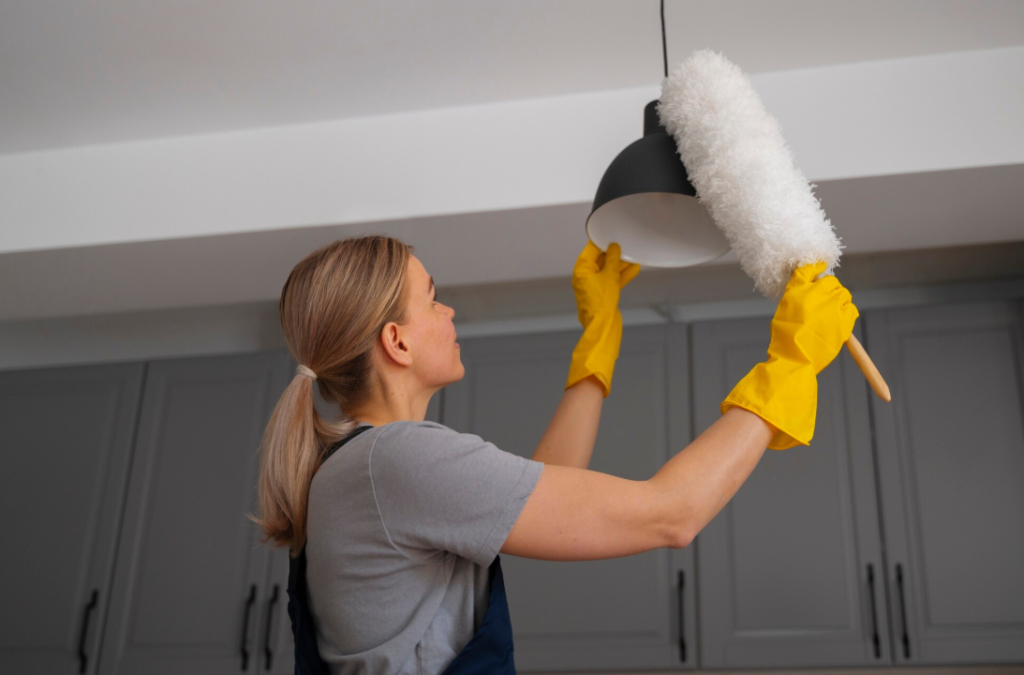
Ceiling fans are another surface that creates a disproportionate impact when forgotten. A ceiling fan that has not been cleaned for several months develops a visible layer of dust on the top edge of each blade. When the fan is turned on for the first time in a season, this accumulated dust is launched into the room air in a visible cloud that then settles on every surface in the space. Cleaning ceiling fan blades with a damp cloth before each seasonal transition prevents this redistribution and keeps the dust where it can be collected rather than recirculated. The motor housing and the light globe or shade on fans with lighting should also be addressed at the same time.
Window tracks and sills are consistently overlooked during window cleaning. Most people wipe the glass and consider the window clean, but the tracks that the window slides within accumulate a combination of dead insects, dust, debris, moisture residue, and in many cases mold in their grooves. These tracks are rarely visible from standing height and require deliberate attention to access properly. Cleaning them with a stiff brush and a damp cloth, or using a small vacuum attachment to remove the loose debris before wiping, completely changes the condition of the window area and removes a concentrated source of biological material that sits at breathing level in many rooms.
Drawer interiors throughout the home, in the kitchen, bathroom, bedroom, and office spaces, are rarely cleaned as distinct surfaces. Most people remove the contents when they are looking for something and replace them without ever wiping the drawer surface itself. Over time, crumbs, dust, hair, and residue from stored items accumulates on drawer surfaces and transfers to the items placed in them. Emptying and wiping the interior of drawers quarterly makes a significant difference in the overall hygiene of the home and is a task that takes only a few minutes per drawer.
Remote controls, keyboards, phones, and other handheld electronics are among the most bacteria-laden objects in any home and the ones that receive cleaning attention least frequently. Research consistently shows that handheld electronics carry more bacteria per square inch than toilet seats, largely because they are handled constantly and rarely sanitized. A monthly wipe with a slightly damp microfiber cloth, or a cloth with a small amount of isopropyl alcohol for surfaces that can tolerate it, dramatically reduces the bacterial load on these items. This is a particularly important habit in households with children or anyone with a compromised immune system.
The washing machine and dishwasher are two appliances that most people assume clean themselves through regular use. In reality, both accumulate significant residue and biological growth over time that affects their cleaning performance and contributes to odors. The washing machine drum develops a biofilm of detergent residue, fabric softener buildup, and mold, particularly in front-loading machines where the door seal retains moisture. Running a hot cleaning cycle with a washing machine cleaner monthly and leaving the door open after each load prevents this buildup from reaching the level where it produces noticeable odors and staining on laundry.
The dishwasher filter, which is the component at the bottom of the unit that catches food particles during washing, should be removed and rinsed weekly in a household that uses it daily. Most people are unaware that their dishwasher has a removable filter, let alone that it needs cleaning.
Heavenly Maids Cleaning Services in Silicon Valley provides deep cleaning services and recurring maid cleaning services throughout the Bay Area with specific attention to the tasks that regular cleaning consistently misses. For homeowners in Silicon Valley who want their homes cleaned at the level that addresses both the visible and the invisible accumulation, the detail-oriented approach of Heavenly Maids Cleaning Services covers the full scope of what a genuinely clean home requires, from the surfaces that get cleaned every week to the ones that have not been addressed in years.
Detailed home cleaning services for busy families who do not have time to address every forgotten corner of the home ensure that nothing continues to be overlooked simply because daily life gets in the way.
The tasks that get forgotten in cleaning are not the minor ones. Many of them, like range hood filters coated in years of grease, refrigerator door seals harboring mold, and light switches touched hundreds of times a day without ever being sanitized, are among the highest-impact cleaning jobs in the home. Building awareness of these overlooked areas is the first step toward a cleaning routine that actually addresses the full picture of what a home needs, rather than cycling through the same visible surfaces while the hidden ones accumulate unchecked.