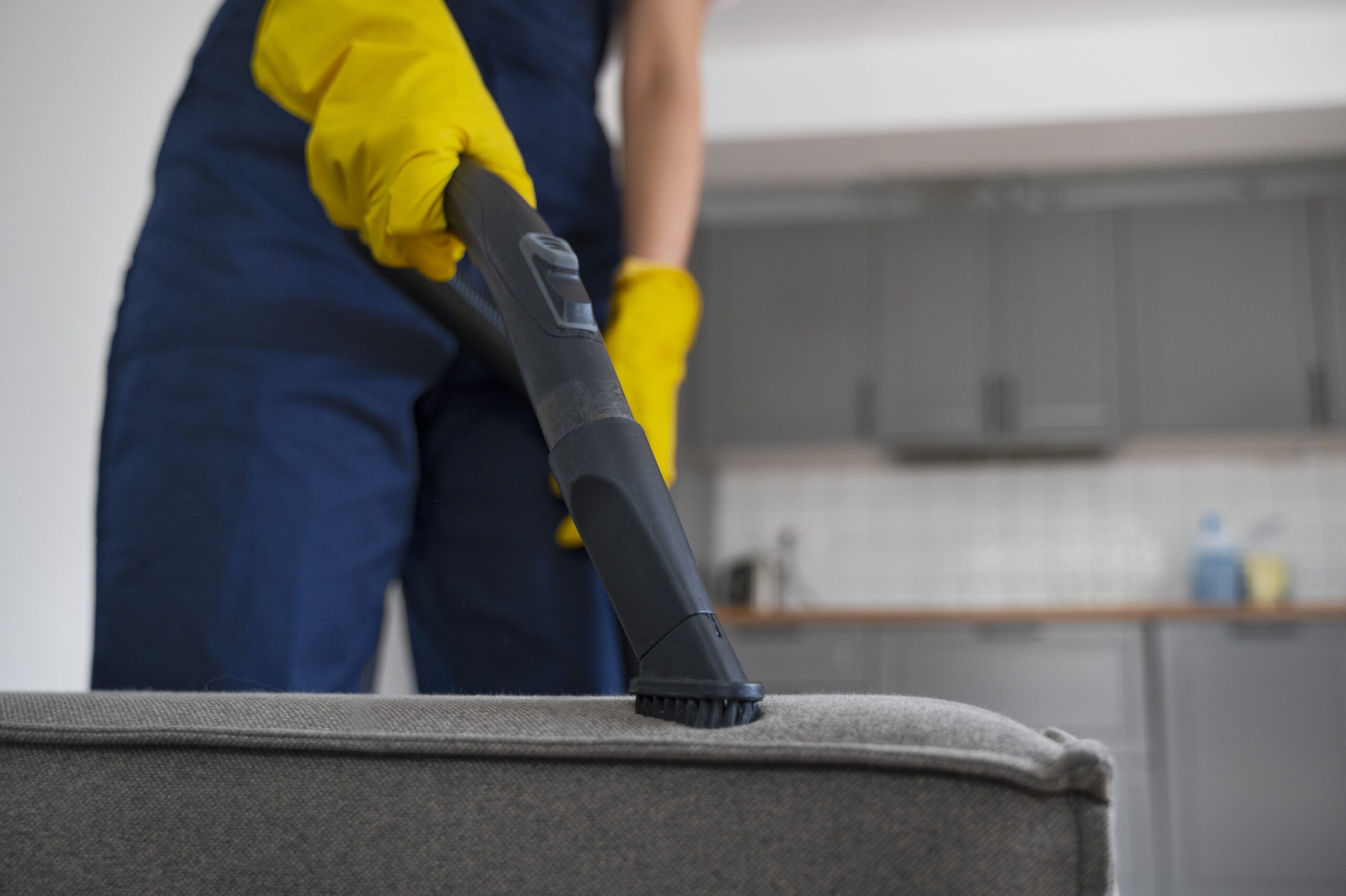
A landlord named Robert over in Downtown San Jose called us after a long term tenant moved out of a furnished unit. The tenant had lived there for six years with two cats and a habit of eating every meal on the sofa. Robert walked in expecting the usual turnover situation. What he found was furniture that had absorbed six years of concentrated daily use from someone who treated it as the center of their entire living situation.
The sofa cushions had visible darkening across every contact surface. The armchair had a headrest area so saturated with hair oil it had changed color entirely. The ottoman had food residue worked so deeply into the fabric that the surface texture felt different from the surrounding areas. The smell in the unit was significant enough that Robert opened every window before calling us and still had to step outside for air while he waited for us to pick up.
He expected us to tell him the furniture needed replacing. We told him we wanted to try deep cleaning first before making that call. Three hours later he walked back into the unit and stood in the doorway for a moment before saying anything. Every piece looked like it belonged in a different apartment. Not new but genuinely clean in a way that the surface condition going in had made seem impossible.
Deep upholstery cleaning is what made that outcome possible. Not surface treatment. Not a spray and wipe. A process that went through the fabric and into the padding and pulled out six years of accumulated material that had never been properly addressed. At Heavenly Maids Cleaning Services we do deep upholstery cleaning across San Jose and the Bay Area and the difference between what we do and standard surface cleaning is significant enough that the results consistently surprise people.
What Deep Upholstery Cleaning Actually Means
The word cleaning gets used to describe a wide range of interventions on upholstery that produce very different results. Vacuuming is cleaning. Spraying a store bought product and wiping is cleaning. Running a rental extraction machine over cushions is cleaning. Professional deep upholstery cleaning is also cleaning but what it does inside the furniture is fundamentally different from all of those approaches.
Deep upholstery cleaning means treating the full depth of the upholstery system, the surface fabric, the fiber structure of the fabric itself, and the foam padding underneath, rather than just the visible top layer. Most soil, odor, and allergen accumulation in furniture that has seen regular use for more than a year or two lives primarily in the padding rather than in the surface fabric. Surface treatment addresses what is visible. Deep cleaning addresses what is actually causing the problem.
The distinction matters most on furniture that has accumulated significant use over time. Furniture that is relatively new or lightly used can be adequately maintained with surface cleaning approaches. Furniture that has been in heavy daily use for several years in a household with pets, kids, or both has a level of material in the padding that surface treatment does not reach and cannot address regardless of the product used or the effort applied.
Homeowners across Evergreen, Almaden Valley, and Silver Creek who have tried every home cleaning approach on their furniture and found the results temporary or inadequate are almost always dealing with a padding level problem that requires deep cleaning to actually resolve.
Why Padding Is Where the Real Problem Lives
Upholstery fabric is designed to be durable and relatively resistant to immediate penetration. On reasonably new furniture in good condition, liquids bead briefly on the surface before soaking in. But once liquid gets through the fabric it moves quickly into the foam padding where it spreads laterally and settles. The foam holds moisture, organic compounds, and bacteria effectively because of its cellular structure which is excellent for cushioning and unfortunately also excellent for retaining whatever gets into it.
Sweat from daily body contact gets through the fabric gradually over time through repeated contact rather than single soaking events. Each session of sitting deposits a small amount of moisture and body oil that works progressively deeper into the foam over months and years. The cumulative effect of this gradual penetration is foam that is substantially saturated with body fluids, skin cells, and bacteria after several years of regular use even without any obvious spills or accidents.
Pet urine penetration into padding is the most dramatic version of this problem and the one people call us about most urgently. A pet accident that soaks through the cushion into the foam creates a contamination zone that can be significantly larger in the foam than the surface area suggests. The surface stain might be the size of a plate. The contamination in the foam underneath might extend to the size of a dinner table. Surface treatment of the visible stain leaves the majority of the contamination entirely untreated and the odor returns consistently because the source is still there releasing compounds upward through the fabric.
Deep upholstery cleaning for pet contamination requires enzyme treatment that penetrates to the foam level, adequate dwell time for the enzymes to break down uric acid crystals throughout the contaminated area, and extraction that draws the broken down material out from the full depth of penetration. Anything less produces temporary improvement that does not last because the source has not been fully addressed.
The Process That Makes Deep Cleaning Different
Deep upholstery cleaning is not faster than surface cleaning. It takes longer because it does more and the time invested in each step is what produces results that last rather than improve briefly and return to baseline.
The dry phase comes first and it is more thorough than most people expect. We vacuum every surface with appropriate attachments including seam lines, crevices, connection points on sectionals, and the undersides of removable cushions. Pet hair removal using specialized tools comes before vacuuming on furniture with significant animal exposure because wet pet hair mats into fabric and becomes substantially harder to extract. Getting as much dry material out as possible before any moisture is introduced improves the wet cleaning results significantly.
Pre-treatment is applied section by section with solutions matched to what each area needs. Armrests get degreasing pre-treatment because body oil does not respond to water based extraction without a degreasing agent to break it down first. Pet affected areas get enzyme treatment applied generously enough to reach the foam level. Stains get treatment matched to their specific chemistry. General body soil on seat and back cushions gets a different pre-treatment than concentrated staining from specific incidents.
Dwell time is the step that most home cleaning approaches skip because it requires patience and waiting. The pre-treatment solutions need time to work through the fabric and into the padding and to chemically address what they are designed to address. Enzyme solutions need particular dwell time to break down biological compounds at the molecular level. Rushing past this step means the extraction that follows is pulling out partially treated material rather than fully broken down compounds that release from the foam easily.
Hot water extraction at the appropriate temperature and pressure for the fabric type pulls everything out after dwell time is complete. We make multiple extraction passes over areas with significant contamination rather than a single pass that leaves treated material partially behind. The extraction tank contents after deep cleaning of heavily used furniture are consistently darker and more substantial than clients expect given how the furniture looked going in.
Post extraction inspection of every treated area before we consider the job complete. Areas that show remaining soil or odor get retreated and extracted again rather than left with the expectation that they are close enough. Deep cleaning means finishing the job properly rather than finishing when the time estimate has been met.
Deep Cleaning Versus Standard Cleaning and When Each Makes Sense
Deep upholstery cleaning is the right approach for furniture that has accumulated significant use over time and has reached a point where surface treatment no longer produces adequate results. It is not necessarily the right approach for every piece of furniture in every home.
Relatively new furniture in good condition that has been maintained with regular vacuuming and prompt attention to spills can be adequately cleaned with standard professional upholstery cleaning. The distinction between standard and deep cleaning is really about the level of padding contamination and the length of time soil has been accumulating without proper treatment.
Furniture that has been in heavy daily use for three or more years without professional cleaning almost always benefits from deep cleaning rather than standard surface treatment. Furniture with pet exposure that has never been professionally treated typically needs deep cleaning because surface pet contamination invariably means padding contamination as well. Furniture that has been treated at home repeatedly without lasting results needs deep cleaning because the surface has been addressed and the problem has clearly migrated to the padding level.
We assess each piece honestly before recommending an approach and we are straightforward about what level of intervention we think the furniture needs. Sometimes a client brings us in expecting to need deep cleaning on everything and some pieces are actually in better condition than they realized. Sometimes the opposite is true. The assessment tells us what each piece actually needs rather than what seemed likely from description alone.
We do this assessment for homeowners throughout San Jose including families in Cambrian, Rose Garden, Berryessa, Blossom Hill, and Downtown San Jose who want an honest evaluation of what their furniture needs before committing to a service level.
What Deep Cleaning Does for Indoor Allergens
Residential upholstery is one of the most significant sources of indoor allergens in most homes and the allergen sources live primarily in the padding rather than on the surface. Dust mites colonize foam padding because the conditions there, consistent temperature, humidity from body moisture, and abundant food sources in the form of skin cells, are ideal for their lifecycle. The allergenic compounds they produce become airborne every time someone sits down and disturbs the surface above the colony.
Pet dander similarly penetrates to the padding level over time and becomes embedded in the foam where surface cleaning does not reach it. People with pet allergies who avoid touching their pets but share upholstered furniture with them are still receiving consistent allergen exposure from the furniture because the dander source is in the padding below the surface they contact.
Deep upholstery cleaning that extracts allergen sources from the padding level produces measurable improvement in indoor allergen load that surface cleaning does not achieve. Families in San Jose who have managed allergy symptoms without resolution despite regular home cleaning often find meaningful improvement after professional deep cleaning because the furniture reservoir was contributing to allergen exposure in a way that had not been addressed.
We work with allergy affected households across San Jose including families in Willow Glen, Almaden, Evergreen, and Silver Creek where upholstery allergen load has been contributing to symptoms that other interventions have not fully resolved.
How Long Deep Cleaning Results Last
Deep upholstery cleaning produces results that last significantly longer than surface treatment because the source of the problem has been addressed rather than the symptom. But how long the results hold depends meaningfully on what happens after the clean in terms of maintenance and use.
Fabric protection applied immediately after deep cleaning while the fabric is thoroughly clean and the fibers are receptive is one of the most effective ways to extend the results. The protection barrier causes liquids to bead on the surface long enough to blot up rather than immediately soaking into the fabric and beginning the penetration process toward the padding again. For furniture that is going to receive the same level of daily use that made deep cleaning necessary in the first place, protection treatment is a practical investment rather than an optional add-on.
Regular vacuuming between professional cleanings removes surface soil before it has time to work into the fabric and begin the migration toward the padding. Prompt attention to spills using proper blotting technique rather than scrubbing prevents new penetration events from adding to the padding contamination that deep cleaning removed.
Most furniture that receives deep cleaning and appropriate after-care can maintain the results for twelve to eighteen months of normal use before professional cleaning is needed again. Furniture with heavy pet exposure or young children may need professional attention more frequently but the deep cleaning baseline means each subsequent clean is starting from a better position than the original pre-clean condition.
If your furniture has reached the point where surface approaches are no longer working, Heavenly Maids Cleaning Services handles deep upholstery cleaning for homes throughout San Jose and the Bay Area including Evergreen, Almaden, Berryessa, Silver Creek, Cambrian, Blossom Hill, Willow Glen, Rose Garden, and surrounding neighborhoods.