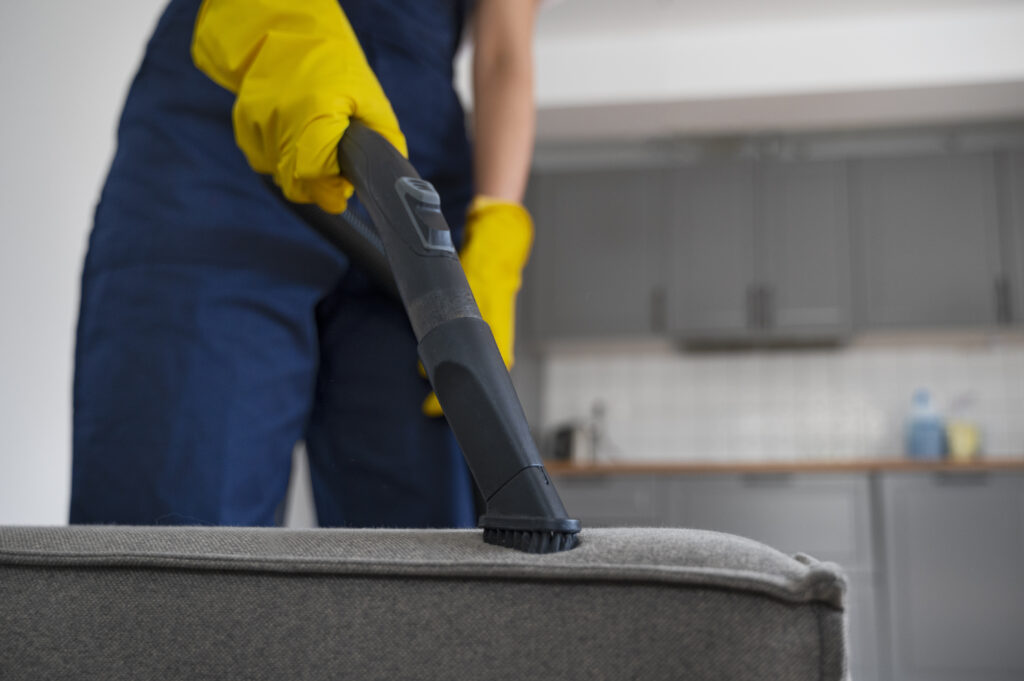
A retired teacher named Gerald over in Almaden had owned the same sofa for eleven years. Solid construction, held up structurally without any issues, no broken springs or sagging frame. The fabric had been cleaned a couple of times over those eleven years which kept the surface looking reasonable. Gerald was pretty diligent about surface maintenance by most standards.
What nobody had addressed in eleven years was the foam inside those cushions.
Gerald called us because the sofa had developed a persistent odor that fabric cleaning was no longer improving. We had cleaned it twice in the previous two years and each time the results were good initially and then the smell returned within a few weeks. The fabric was not the problem. The fabric was clean. The foam underneath had eleven years of accumulated body oil, sweat, skin cells, and moisture worked into its cellular structure and the odor was coming from in there, not from the surface.
When we explained foam cleaning as a specific targeted treatment rather than standard upholstery cleaning Gerald asked why nobody had mentioned it before. Fair question. Most cleaning conversations focus on the visible fabric surface because that is what people see and respond to. The foam is invisible and most people do not think about it as a distinct cleaning target until the surface approach stops producing lasting results.
We did a targeted foam cleaning treatment on his cushions. The difference in odor was immediate and it held. Three months later Gerald called to say the smell had not returned which had not happened after the previous two surface cleanings. At Heavenly Maids Cleaning Services we do foam cleaning for upholstery across San Jose and the Bay Area and Gerald’s situation is one we see consistently among homeowners whose furniture has reached the point where surface treatment alone is not enough.
Why Foam Is Where the Real Problem Lives
Most people think about upholstered furniture as fabric on the outside and frame on the inside with cushions that are basically decorative. The foam inside those cushions is actually a highly functional material that does a lot of things well, provides comfort, maintains shape, distributes weight, and unfortunately also absorbs and retains everything that gets through the fabric above it.
Foam is a cellular material. The structure of cushion foam consists of millions of tiny interconnected cells that give it its compression and recovery properties. Those same cells are extremely effective at capturing and holding liquid, organic compounds, and biological material that penetrates through the fabric surface. Once something gets into foam the cellular structure holds it there indefinitely because there is no mechanism for the material to escape on its own. It just stays in the cells and continues contributing to the odor and biological load of the cushion for as long as the foam exists.
Body oil from daily sitting is the most consistent source of foam contamination in residential furniture. Every hour of contact between skin and fabric transfers small amounts of body oil through the fabric and into the top layers of the foam. Over years of daily use this gradual transfer accumulates into significant contamination of the foam surface layer and increasingly deeper layers as the cellular structure becomes saturated in the contact zones. The body oil itself is not dramatically odorous initially but it creates ideal conditions for bacterial growth in the foam and the bacterial activity is what produces the characteristic smell of heavily used upholstered furniture.
Sweat absorption follows the same pathway and compounds the bacterial conditions created by body oil. The moisture from sweat raises the humidity inside the foam cells which accelerates bacterial growth. The organic compounds in sweat provide additional food sources for bacteria beyond the skin oils already present. In climates like San Jose where warm weather extends through much of the year and homes are kept at comfortable temperatures the bacterial conditions in foam that has accumulated body oil and sweat over years are consistently favorable for ongoing microbial activity.
Pet urine is the most acute version of foam contamination because a single accident can saturate the foam throughout the full depth of a cushion in a way that years of gradual body oil transfer does not approach. Urine soaks through the fabric almost immediately and spreads laterally in the foam as it penetrates downward. The contamination zone in the foam is almost always significantly larger than the surface stain suggests. A stain that looks the size of a hand on the fabric surface can have foam contamination the size of a dinner plate because the liquid spreads as it penetrates. The uric acid crystals that form as urine dries in the foam are the source of the persistent odor that returns with humidity changes and the reason why surface cleaning of pet accidents never fully resolves the smell.
What Foam Cleaning for Upholstery Actually Involves
Foam cleaning as a targeted treatment for upholstery is distinct from standard upholstery cleaning in the penetration depth and the dwell time involved in the process. Standard upholstery cleaning addresses the fabric surface and the interface between the fabric and the top of the foam. Targeted foam cleaning is designed to penetrate the foam cells and address contamination throughout the full depth of the cushion.
The treatment begins with a thorough fabric phase that removes surface contamination and opens the fabric to allow maximum penetration of the foam cleaning solution. Surface soil left on the fabric creates a barrier that limits how effectively solution penetrates into the foam below and removing it first improves the foam treatment results.
The foam cleaning solution is applied in quantities and at penetration rates designed to reach the full depth of the foam rather than just the surface layers. This requires more solution volume than standard upholstery cleaning and application technique that promotes penetration into the cellular structure rather than sitting on the foam surface. The solution chemistry includes enzyme compounds for biological contamination, degreasing agents for body oil, and in cases of uric acid contamination from pet accidents, specific compounds that break down uric acid crystals throughout the foam rather than just on the surface.
Dwell time for foam cleaning is longer than for standard fabric treatment because the solution needs time to work through the foam cells and chemically address the contamination throughout the full depth of penetration. Rushing this phase produces incomplete results because the solution has not had time to reach and address contamination in the deeper foam layers. This is one of the reasons foam cleaning takes longer than standard upholstery cleaning and why attempting to compress the timeline to save time consistently produces worse outcomes.
Extraction after dwell time uses professional equipment to pull the solution and the contamination it has mobilized out of the foam. Multiple extraction passes are often necessary on heavily contaminated cushions because the foam cellular structure releases material gradually rather than all at once. We continue extraction passes until the extracted material runs clear which indicates that the accessible contamination has been removed rather than stopping after a fixed number of passes regardless of what is still coming out.
Drying after foam cleaning requires more attention than standard upholstery cleaning because the foam has absorbed significantly more moisture during treatment and needs adequate drying time and airflow to fully dry before the cushion is returned to use. Foam that is put back into use while still damp creates ongoing moisture conditions that support bacterial growth rather than eliminating it. We provide specific drying guidance for each job based on the foam density and the amount of solution used during treatment.
The Cushion Types We Work With Across San Jose Homes
Residential upholstered furniture across San Jose uses several different foam types in cushion construction and the foam type affects both how contamination accumulates and how foam cleaning treatment is applied.
High density foam is the most common cushion material in quality residential furniture. It is firm, durable, and maintains its shape well over years of use. The higher density means more material per unit volume which makes it more resistant to immediate liquid penetration but also means contamination that does get into the foam is held more firmly by the denser cellular structure. High density foam responds well to foam cleaning treatment when adequate dwell time allows the solution to penetrate the denser structure fully.
Medium density foam is softer and more affordable than high density and it is used in a wide range of residential furniture at various price points. It absorbs liquids faster than high density foam which means contamination penetrates more quickly and more deeply. Pet accidents in medium density foam often saturate the full cushion depth because the lower density structure offers less resistance to liquid penetration. Foam cleaning for medium density cushions requires careful extraction management to remove the higher volume of solution that penetrates the more open cellular structure.
Memory foam upholstery is increasingly common in higher end residential furniture and it presents specific foam cleaning challenges because of its temperature sensitive behavior. Memory foam responds to body heat by softening and conforming but it returns to its original form at lower temperatures. This temperature sensitivity affects how cleaning solution distributes through the foam during treatment and how the foam behaves during extraction. We adjust our approach for memory foam cushions to account for this behavior and ensure thorough treatment without compromising the foam structure.
Down and feather fill cushions require completely different treatment than foam cushions because the fill material behaves nothing like foam during cleaning. Down fill is extremely sensitive to moisture and improper cleaning causes clumping and fill damage that affects the cushion feel permanently. We treat down fill cushions with low moisture approaches focused on the fabric surface rather than the fill material and are transparent with clients about the limitations of fill cleaning versus foam cleaning for their specific cushion construction.
Latex foam is a natural material used in some higher end and eco friendly furniture and it has different cleaning requirements than synthetic polyurethane foam. Latex is generally more resistant to bacterial growth than synthetic foam because of its natural antimicrobial properties but it is sensitive to certain cleaning compounds and temperature extremes. We use latex safe solutions for foam cleaning on latex cushion furniture and avoid high heat extraction that can affect latex properties.
When Foam Cleaning Versus Standard Upholstery Cleaning Is the Right Choice
The decision between standard upholstery cleaning and targeted foam cleaning depends on the condition of the furniture and what the cleaning objectives are. Not every piece of furniture needs foam cleaning and recommending it universally regardless of the actual condition would be charging for a level of treatment that is not always necessary.
Standard upholstery cleaning is appropriate for furniture that is maintained with regular professional cleaning and has not accumulated significant foam contamination. Furniture that gets professional cleaning every twelve to eighteen months and does not have significant pet accident history or years of heavy use without professional attention typically does not have foam contamination that warrants targeted foam cleaning treatment. Surface cleaning addresses what needs addressing and the foam remains in acceptable condition.
Foam cleaning becomes the appropriate recommendation when furniture has accumulated years of use without professional cleaning and surface cleaning has stopped producing lasting results. When odor returns within weeks of surface cleaning the foam is almost certainly the source and surface treatment alone will not resolve it. When pet accidents have occurred in a cushion and the urine odor persists despite surface stain treatment the foam is where the source lives. When furniture has been in daily heavy use for five or more years without professional cleaning the foam has accumulated contamination that surface cleaning cannot reach.
The honest assessment before recommending foam cleaning is important because it should be based on what the furniture actually needs rather than what generates more revenue. We look at the history of the piece, how long it has been in use, what kind of use it has received, what previous cleaning has been done and what results it produced, and what the current condition suggests about the likely level of foam contamination before recommending foam cleaning as the appropriate treatment level.
We make this assessment for homeowners across San Jose including families in Evergreen, Almaden, Berryessa, Silver Creek, Cambrian, Blossom Hill, Willow Glen, Rose Garden, and surrounding neighborhoods who want honest guidance about what their furniture actually needs rather than a standard recommendation that does not account for their specific situation.
The Connection Between Foam Cleaning and Indoor Air Quality
The foam in upholstered furniture is one of the more significant sources of indoor biological contamination in most homes and addressing it has implications for indoor air quality that go beyond the smell improvement that is the most obvious result of foam cleaning.
Bacteria that have established in foam cushions through years of accumulated organic material and moisture release metabolic byproducts into the air above the furniture continuously. The biological activity in contaminated foam is not static. It is ongoing and it produces compounds that affect the air quality in the room above the furniture in ways that are not always experienced as a distinct smell but can contribute to a general indoor air quality that feels stuffy or stale without an obvious cause.
Dust mites that colonize foam cushions are an allergen source that foam cleaning addresses more thoroughly than surface cleaning. The dust mite population in foam lives primarily in the deeper layers of the cushion rather than on the surface and surface cleaning and even standard upholstery cleaning does not reach the full colony. Targeted foam cleaning that penetrates to the full depth of the cushion and extracts biological material throughout the foam removes the dust mite population and its associated allergenic compounds more completely than surface approaches.
Mold that develops in foam from pet accidents or moisture events that were not fully addressed is a particular indoor air quality concern because mold in foam produces spores continuously until the mold is eliminated. Surface cleaning that addresses the fabric stain from a moisture event without treating the foam leaves any mold that established in the wet foam continuing to produce spores below a clean looking fabric surface. Foam cleaning that addresses the full depth of contamination including any mold that developed is the appropriate treatment for moisture events that reached the foam.
Families in San Jose who have managed indoor air quality issues without resolution despite cleaning and ventilation efforts sometimes find that foam contamination in upholstered furniture is contributing to the problem in ways that were not addressed by previous surface cleaning. We work with these households across Almaden Valley, Silver Creek, and Willow Glen to address the foam layer that previous cleaning had not reached.
If your furniture has reached the point where surface cleaning is no longer producing lasting results, Heavenly Maids Cleaning Services handles targeted foam cleaning for upholstered furniture throughout San Jose and the Bay Area. Reach out and we will assess what your furniture actually needs before recommending an approach.
A kindergarten teacher named Michelle over in Berryessa called us the week after her school went through a stomach bug that swept through her entire class in three days flat. Twenty two kids, most of them home sick by Wednesday. Michelle had been washing her hands constantly at school, changing clothes when she got home, doing everything right. She still got sick.
After she recovered she started thinking about surfaces in her home that never got properly sanitized. She had wiped down her kitchen counters and bathroom with disinfectant. She had washed her bedding. She had not thought once about her sofa, the armchair in her bedroom, or the reading bench at the foot of her bed. She sat on those surfaces every day after school before changing clothes. Her hands touched them before she washed them. Her face was inches from the sofa cushion when she lay down exhausted after a long day with twenty two kindergarteners.
She called us specifically requesting upholstery sanitizing rather than just cleaning because she wanted to know the surfaces she was living on were genuinely disinfected rather than just visually clean. We came out and did a full sanitizing treatment on every upholstered surface in her home. She said afterward that it was the first time since the outbreak that she felt like she had actually addressed the problem rather than just waiting for it to go away.
At Heavenly Maids Cleaning Services we do upholstery sanitizing across San Jose and the Bay Area and the distinction between cleaning and sanitizing is one that matters more than most people realize until something happens that makes them think about it directly.
Cleaning and Sanitizing Are Not the Same Thing
This is the distinction that most people have not thought carefully about until a specific situation brings it into focus. Cleaning removes visible soil, dirt, and debris from a surface. Sanitizing reduces the microbial population on a surface to levels considered safe by public health standards. These are related but genuinely different outcomes and a surface can be clean without being sanitized and sanitized without being thoroughly cleaned.
Upholstery cleaning that produces visually clean furniture without sanitizing treatment leaves the microbial population in the fabric largely intact. Hot water extraction removes significant amounts of biological material along with soil and this produces some reduction in bacteria levels as a byproduct of the cleaning process. But targeted sanitizing treatment applies compounds specifically designed to reduce microbial populations to defined levels in a way that cleaning alone does not consistently achieve.
The distinction matters most in specific situations. Illness recovery in a household where someone has been sick and sat on or lay on upholstered furniture. Pet accidents that introduce bacteria beyond what normal cleaning addresses. Households with immunocompromised members for whom ambient bacteria levels that are inconsequential for healthy people represent a real health concern. Post renovation situations where construction dust and outdoor contamination have been tracked across furniture surfaces. Rental properties being prepared for new occupants who have no relationship with or knowledge of the previous tenants.
For standard residential maintenance cleaning the sanitizing distinction is less critical. For the situations above it is specifically what is needed and cleaning without sanitizing does not deliver what the situation actually calls for.
What Lives in Upholstery Fabric That Sanitizing Addresses
The microbial population in upholstered furniture that has seen regular use without sanitizing treatment is more diverse and substantial than most people expect given how normal and clean their furniture appears to be.
Bacteria transfer to upholstery from every source of human and animal contact with the fabric. Skin bacteria from normal body contact. Oral bacteria from faces in close contact with cushions during napping or resting. Fecal bacteria tracked from surfaces onto hands and then onto furniture fabric in the normal course of touching things throughout a day. Food bacteria from eating on or near the furniture. Pet bacteria from animals sharing the furniture who carry their own microbial profiles from outdoor contact and normal animal behavior.
The foam padding underneath upholstery fabric creates conditions where bacteria thrive because the warmth, moisture, and organic material in the foam support bacterial growth in ways that hard surfaces do not. Bacteria in foam padding are protected from most surface cleaning approaches by the foam structure itself and can maintain active populations for extended periods in favorable conditions.
Common bacteria found in residential upholstery include Staphylococcus aureus which is a normal skin resident that becomes problematic in concentrations or in the context of cuts and immune compromise. Streptococcal species from oral and respiratory contact. Coliform bacteria from fecal cross contamination through the normal hand to surface transfer chain. E. coli variants from similar transfer pathways particularly in households with young children who are not yet consistent about handwashing.
None of this means furniture is dangerously contaminated under normal circumstances for healthy adults with normal immune function. It means that for the specific situations where sanitizing matters, illness recovery, immunocompromise, new occupancy, or specific hygiene concerns, the bacteria are present in upholstery and addressing them requires targeted sanitizing treatment rather than just cleaning.
We work with households across Willow Glen, Rose Garden, Almaden Valley, and Silver Creek where specific situations have made upholstery sanitizing a priority rather than a general maintenance consideration.
How Professional Upholstery Sanitizing Actually Works
professional cleaning services banner. Generative AI
Professional upholstery sanitizing in San Jose is a two phase process that combines thorough cleaning to remove the organic material that protects bacteria from sanitizing agents with targeted sanitizing treatment that reduces microbial populations to defined levels.
The cleaning phase comes first and it is not optional preparation for the sanitizing phase. Sanitizing agents work less effectively on surfaces with significant organic soil present because the organic material physically shields bacteria from the sanitizing compound and chemically neutralizes some sanitizing agents before they can reach their target. Sanitizing dirty upholstery produces significantly less effective microbial reduction than sanitizing upholstery that has been thoroughly cleaned first. This is why upholstery sanitizing as a standalone treatment without prior cleaning is less effective than the combined approach.
Hot water extraction during the cleaning phase removes the bulk of the organic material from the fabric and padding including the food sources and biological material that support bacterial populations. The heat of professional extraction equipment also produces direct thermal reduction of bacteria on contact throughout the treated area which is a meaningful sanitizing contribution from the cleaning phase itself.
The sanitizing treatment phase applies EPA registered sanitizing agents to the fabric after cleaning. These compounds are specifically evaluated and registered for efficacy against defined microbial populations at the concentrations and contact times used in professional application. The distinction between EPA registered sanitizers and general cleaning products matters because registration requires demonstrated efficacy data rather than manufacturer claims.
We use sanitizing agents appropriate for upholstery fabric that do not leave residue affecting the feel or appearance of the fabric after drying and do not create indoor air quality concerns through off-gassing. The sanitizing treatment is applied after extraction and allowed appropriate dwell time for the compound to work before the residual moisture evaporates during drying.
Upholstery Sanitizing for Specific Situations Across San Jose
Different situations that bring people to request upholstery sanitizing have different priorities and the approach is adjusted based on what the specific situation calls for.
Post illness sanitizing is the most common specific situation we address across San Jose. When someone in a household has been sick with a contagious illness and has used upholstered furniture during the illness period the surfaces they contacted carry the pathogen responsible for the illness in concentrations relevant to transmission risk for other household members. Standard cleaning after illness reduces but does not reliably eliminate transmission risk from upholstered surfaces. Sanitizing treatment applied to all surfaces the ill person contacted produces reliable microbial reduction that cleaning alone does not consistently achieve.
Michelle’s situation after the school stomach bug is a specific example but the pattern applies to household stomach bugs, influenza seasons, RSV in households with young children, and any situation where a pathogen has circulated through a household and surfaces need to be reliably addressed rather than just cleaned and hoped for the best.
New home and rental property sanitizing addresses the situation where a household is moving into a space with existing furniture or surfaces that were used by unknown previous occupants. The microbial profile of those previous occupants is completely unknown and the furniture carries their microbial legacy regardless of how visually clean it appears. Sanitizing upholstered furniture before new occupancy establishes a clean microbial baseline appropriate to the new occupants rather than inheriting whatever the previous occupants left behind.
We do this regularly for families moving into furnished rentals and for landlords turning over furnished units across San Jose including properties in Berryessa, Downtown San Jose, and East San Jose where furnished rental turnover is common and new tenants increasingly request confirmation that sanitizing has been done.
Immunocompromised household members including people undergoing chemotherapy, managing autoimmune conditions on immunosuppressive medications, or recovering from serious illness have reduced capacity to manage normal ambient bacterial exposure. For these households the standard microbial load in untreated upholstery that is inconsequential for healthy adults can represent a genuine health concern. Upholstery sanitizing that reduces microbial populations to levels appropriate for immunocompromised occupants is a practical health measure rather than an abundance of caution.
Households with newborns request upholstery sanitizing because infants have immature immune systems and spend significant time in close contact with upholstered surfaces during the early months of life. The tummy time mat, the nursing pillow, the sofa surface where the baby is placed during awake time all represent microbial exposure sources for an infant whose immune system is still developing. Sanitizing these surfaces is a reasonable precaution that parents with newborns across Evergreen, Almaden, and Cambrian increasingly request as awareness of the issue grows.
Eco Friendly Sanitizing Options
The sanitizing agents used in professional upholstery sanitizing range from conventional chemical disinfectants to naturally derived compounds with demonstrated antimicrobial efficacy and we offer options across this range for clients with preferences about what goes into their furniture.
Hydrogen peroxide based sanitizing agents are among the most effective green options for upholstery sanitizing because they decompose to water and oxygen after use leaving no persistent chemical residue. They are effective against a broad spectrum of bacteria and some viruses at appropriate concentrations and contact times and they do not produce the indoor air quality concerns associated with some conventional disinfectant compounds. We use hydrogen peroxide based sanitizing agents as our default eco friendly upholstery sanitizing option for clients who want green chemistry without compromising on sanitizing efficacy.
Quaternary ammonium compounds are the conventional sanitizing agents most commonly used in professional upholstery sanitizing and they have excellent efficacy data across a broad microbial spectrum. They are the appropriate choice for situations requiring maximum sanitizing reliability such as post serious illness sanitizing or preparation of furniture for immunocompromised occupants where the priority is the most reliable microbial reduction available rather than green chemistry preference.
Botanical antimicrobial compounds derived from thyme oil, oregano oil, and similar plant sources with demonstrated antimicrobial activity are an option for clients who want both green chemistry and sanitizing efficacy. These compounds have meaningful antimicrobial activity at appropriate concentrations and are fully biodegradable without synthetic chemical residue. They are appropriate for general maintenance sanitizing situations rather than for post serious illness or immunocompromised household applications where maximum efficacy is the priority.
We discuss these options with clients before scheduling based on their specific situation and preferences because the right sanitizing approach depends on what is being addressed and what the household priorities are around chemical exposure.
How Often Upholstery Sanitizing Makes Sense
For most healthy households in San Jose upholstery sanitizing as a standalone priority separate from regular cleaning is not something that needs to happen on a defined schedule. Annual professional cleaning that includes the thermal sanitizing effect of hot water extraction maintains upholstery in appropriate condition for normal residential use without requiring additional targeted sanitizing treatment between visits.
The situations that call for specific sanitizing treatment are event driven rather than calendar driven for most households. Post illness, new occupancy, a household addition like a newborn, a change in household member health status that introduces immunocompromise. These events are the appropriate triggers for sanitizing treatment rather than a fixed schedule.
Households with specific ongoing situations that create elevated sanitizing relevance, immunocompromised household members, infants, or people managing conditions that make bacterial exposure a consistent concern, benefit from more frequent sanitizing treatment on a schedule that reflects the ongoing nature of the situation rather than treating it as a one time event.
If your furniture needs genuine sanitizing rather than just cleaning, Heavenly Maids Cleaning Services handles professional upholstery sanitizing for homes throughout San Jose and the Bay Area including Evergreen, Almaden, Berryessa, Silver Creek, Cambrian, Blossom Hill, Willow Glen, Rose Garden, and surrounding neighborhoods.
A mom reached out to us after a frustrating experience with a cleaning company she had hired the previous year. The company cleaned her sectional using products that left a chemical smell in her living room strong enough that she kept her two young kids out of the room for three days afterward. The sofa looked clean. The air in the room smelled like a laboratory. She spent a week burning candles and running fans trying to clear it out.
When she finally let the kids back in her youngest started rubbing his eyes within an hour of being in the room. She could not prove it was the cleaning residue but she could not prove it was not either and that uncertainty was enough for her to decide she would never use that company again and would be significantly more careful about what went into her furniture going forward.
She found us through a neighbor who had specifically requested green cleaning for her upholstery and had been happy with the results. Priya called and asked a lot of questions before scheduling which we appreciated because it meant she was genuinely thinking about what she wanted rather than just booking the cheapest option. We cleaned her sectional using plant derived cleaning solutions with no synthetic fragrance, no harsh solvents, and no compounds associated with indoor air quality problems. The sectional came out clean. The room smelled like nothing afterward. Her kids were back on the sofa the same evening.
Our commitment to eco friendly practices ensures that your furniture is cared for with safe and sustainable methods.
At Heavenly Maids Cleaning Services we offer eco friendly upholstery cleaning across San Jose and the Bay Area and the demand for genuinely green cleaning solutions from San Jose homeowners has grown consistently as awareness of indoor air quality and chemical exposure has increased.
What Eco Friendly Upholstery Cleaning Actually Means
The term eco friendly gets applied loosely to cleaning products and services in ways that range from genuinely meaningful to purely marketing. Understanding what it actually means in the context of professional upholstery cleaning helps people make informed decisions about what they are asking for and whether what they are getting delivers on the description.
Genuinely eco friendly upholstery cleaning solutions share several characteristics that distinguish them from conventional cleaning chemistry. They are derived from plant based or naturally occurring compounds rather than petroleum derived synthetic chemicals. They biodegrade completely after use rather than persisting in wastewater and the environment. They do not contain volatile organic compounds that off-gas into indoor air after application and create the kind of chemical smell Priya experienced. They are not tested on animals and do not contain compounds associated with hormone disruption, respiratory irritation, or skin sensitization in humans.
The cleaning efficacy of plant based upholstery cleaning solutions has improved significantly over the past decade to the point where genuinely green products produce results comparable to conventional cleaning chemistry on most residential upholstery soiling. The gap that used to exist between green and conventional cleaning products in terms of results has narrowed considerably and for standard residential upholstery cleaning the green options perform well enough that the compromise in results people used to accept for choosing eco friendly cleaning is largely no longer necessary.
Where genuine differences in efficacy still exist is in extreme soiling situations, heavily set stains that have been through repeated heat cycles, significant mold contamination, or severe biological soiling where the chemistry of conventional products gives them a meaningful advantage over current plant based alternatives. We are honest with clients about these situations and discuss options when the specific cleaning challenge genuinely favors conventional chemistry.
Why Indoor Air Quality Makes Eco Friendly Upholstery Cleaning Worth Thinking About in San Jose
San Jose residents spend a significant portion of their time indoors and the air quality inside a home is affected by everything introduced into that environment including the cleaning products used on furniture and surfaces. Conventional upholstery cleaning products contain compounds that off-gas into indoor air during and after application, some for hours and some for days depending on the specific chemistry involved.
Volatile organic compounds are the primary indoor air quality concern with conventional cleaning products. VOCs evaporate readily at room temperature and become airborne after application to upholstery. Some VOCs are associated with respiratory irritation, headaches, and eye and throat irritation at the concentrations that can occur in indoor environments after cleaning. People with asthma, allergies, or chemical sensitivities are more affected than people without these conditions but VOC off-gassing affects indoor air quality for everyone in the space regardless of individual sensitivity.
Children are disproportionately affected by indoor chemical exposure because they breathe more air relative to their body weight than adults, spend more time in close contact with furniture surfaces through play and rest, and are in developmental stages where chemical exposures have greater potential impact than in fully developed adults. Priya’s concern about her kids being in a room that smelled strongly of cleaning chemicals was not unreasonable and the eye irritation her youngest experienced is consistent with VOC exposure in a child with existing sensitivity.
Pets are similarly more vulnerable to chemical residue on furniture surfaces because they have direct skin contact with upholstery, groom themselves after contact, and in the case of cats and small dogs spend significant time in direct contact with furniture fabric at close range to their respiratory systems. Eco friendly upholstery cleaning in San Jose homes with pets and young children is not just an environmental preference. It is a practical indoor health consideration.
The Cleaning Solutions We Use for Eco Friendly Upholstery Cleaning
Plant based surfactants derived from coconut, corn, and sugar cane are the foundation of the eco friendly upholstery cleaning solutions we use. Surfactants are the compounds that do the actual cleaning work by reducing the surface tension of water and allowing it to penetrate fabric fibers and lift soil from surfaces. Conventional upholstery cleaning uses petroleum derived synthetic surfactants that perform well but do not biodegrade readily and can leave residue in fabric that continues off-gassing. Plant based surfactants perform comparably for standard residential upholstery soiling and biodegrade completely without persistent environmental residue.
Enzyme based cleaners are a core component of eco friendly upholstery cleaning and they represent one area where green chemistry is genuinely competitive with or superior to conventional alternatives for specific cleaning challenges. Enzymes are proteins that catalyze the breakdown of specific compounds and the enzyme formulations used in professional upholstery cleaning are derived from naturally occurring microorganisms rather than synthesized from petrochemicals. Protease enzymes break down protein based stains including blood, pet urine, food, and body oil. Lipase enzymes address fat and grease based soil. These enzyme formulations are highly effective, fully biodegradable, and produce no VOC off-gassing after application.
Citrus based degreasers derived from orange and lemon peel extracts provide effective degreasing action for body oil accumulation on armrests and high contact areas without the synthetic solvent compounds used in conventional degreasers. The citrus compounds evaporate cleanly without leaving synthetic residue and the natural citrus scent dissipates quickly rather than persisting as an artificial fragrance.
We do not use synthetic fragrances in our eco friendly upholstery cleaning process. Synthetic fragrance compounds are among the most common sources of VOC off-gassing from cleaning products and they are frequently associated with respiratory and skin sensitization in sensitive individuals. Furniture cleaned with our eco friendly process smells like nothing after drying rather than like artificial fragrance which is exactly what Priya and most clients who request green cleaning are looking for.
Eco Friendly Upholstery Cleaning and Different Fabric Types
The approach to eco friendly upholstery cleaning needs to account for fabric type the same way conventional cleaning does because the plant based solutions we use have different optimal applications on different materials and getting this right determines both the cleaning results and the safety of the fabric during the process.
Natural fiber upholstery including cotton, linen, wool, and silk is actually better served by eco friendly cleaning chemistry than by conventional synthetic cleaning products in many cases. Natural fibers have a natural affinity for plant based cleaning compounds that are chemically similar to their own composition in ways that synthetic petroleum derived cleaners are not. Linen upholstery cleaned with plant based surfactants responds well and does not carry the risk of residue buildup that some synthetic cleaning compounds can create on natural fibers over repeated cleaning cycles.
Wool upholstery benefits particularly from enzyme based eco friendly cleaning because the protein structure of wool fiber is compatible with the enzyme activity in ways that make soil release effective without the harsh chemistry that can damage wool’s natural crimp and resilience. We use protease enzyme solutions carefully on wool with attention to pH levels because wool is sensitive to alkalinity and requires pH neutral or mildly acidic conditions during cleaning to maintain fiber integrity.
Synthetic upholstery fabrics including polyester, nylon, and microfiber respond well to plant based surfactants for standard soil removal and the eco friendly process produces results on these fabrics that are comparable to conventional cleaning for typical residential soiling. The extraction phase is the same regardless of the cleaning solution used and the hot water extraction that removes soil and cleaning solution from the fabric works equivalently with eco friendly chemistry.
Delicate and specialty fabrics including vintage upholstery, silk, and high end decorative textiles are actually better candidates for eco friendly cleaning chemistry than for conventional products because the gentler nature of plant based solutions reduces the risk of damage from harsh synthetic compounds on sensitive materials. We use eco friendly low moisture techniques on delicate fabrics across San Jose including homes in Rose Garden and Almaden Valley where people have valuable vintage or specialty upholstered pieces that need careful handling.
Eco Friendly Pet Stain and Odor Treatment
Pet stains and odors are among the most common reasons San Jose homeowners request professional upholstery cleaning and the eco friendly approach to pet contamination is one area where green chemistry genuinely delivers results comparable to conventional treatment.
Enzyme based pet stain treatment is inherently eco friendly because the enzymes are derived from naturally occurring microorganisms and they work by biologically breaking down the uric acid crystals and protein compounds in pet urine rather than masking them with synthetic chemistry or using harsh solvents to dissolve them. The enzyme process is slower than some conventional chemical approaches and requires adequate dwell time but the results in terms of complete odor elimination are comparable and the absence of synthetic residue in the fabric afterward is a meaningful advantage for households with children and pets who have close fabric contact.
Bacterial cultures added to enzyme formulations enhance the breakdown of organic pet contamination by consuming the compounds the enzymes break down and eliminating them from the fabric system rather than leaving broken down residue behind. These bacterial cultures are naturally occurring organisms that are safe for humans and pets and they continue working in the fabric for a period after application which produces ongoing odor elimination as the culture processes remaining organic material.
The families in San Jose we work with who have requested eco friendly pet stain treatment, particularly households in Cambrian, Blossom Hill, and Evergreen with young children and pets sharing the same upholstered furniture, consistently report satisfaction with the results and comfort with the absence of chemical odor after treatment that they experienced with conventional products previously.
Certifications and What to Look for in Eco Friendly Upholstery Cleaning
The eco friendly cleaning market has enough marketing ambiguity that it is worth understanding what certifications and standards mean when evaluating whether a cleaning service is genuinely using green chemistry or simply applying the label to conventional products.
EPA Safer Choice certification indicates that cleaning product ingredients have been evaluated for human and environmental safety by the Environmental Protection Agency and meet specific standards for biodegradability, toxicity, and environmental persistence. Products carrying this certification have been through a meaningful evaluation process rather than self-certified by the manufacturer. We use products that meet EPA Safer Choice standards where available in our eco friendly upholstery cleaning process across San Jose.
Green Seal certification is another meaningful standard applied to cleaning products that evaluates both ingredient safety and environmental impact across the product lifecycle. Products with Green Seal certification have met third party standards rather than relying solely on manufacturer claims.
Fragrance free and dye free formulations are a practical indicator of genuinely eco friendly chemistry because synthetic fragrances and dyes are among the most common sources of VOC off-gassing and chemical sensitization in conventional cleaning products. A product marketed as eco friendly that contains synthetic fragrance or artificial dye is not fully delivering on the green promise regardless of other ingredient improvements.
We are transparent with clients who ask about the specific products we use for eco friendly upholstery cleaning in San Jose. If you want to know what is going into your furniture we will tell you and provide product information for review before we start. That transparency is part of what genuinely eco friendly cleaning service looks like in practice versus marketing.
Eco Friendly Upholstery Cleaning for Specific San Jose Neighborhoods and Living Situations
San Jose has a significant population of environmentally conscious homeowners who apply green principles across how they live and eco friendly upholstery cleaning fits naturally into that orientation. Neighborhoods like Willow Glen, Rose Garden, and Almaden Valley have particularly high concentrations of homeowners who have made deliberate choices about the products they bring into their homes and who extend that thinking to professional cleaning services.
Families with newborns and infants request eco friendly upholstery cleaning specifically because of the close contact infants have with upholstered surfaces during tummy time, play, and the general floor and furniture level existence of early childhood. The reasoning is straightforward. Infants mouth surfaces, have close respiratory contact with furniture fabric, and have developing systems that make chemical exposure a more significant concern than for adults. Plant based cleaning solutions with no synthetic fragrance and complete biodegradability are the appropriate choice for furniture that will be in direct contact with infants.
People managing multiple chemical sensitivity or chronic illness who have made their home environment as low chemical as possible request eco friendly upholstery cleaning to maintain the integrity of that effort. Conventional cleaning products introduced into a home maintained as a low chemical environment can cause significant symptoms in chemically sensitive individuals and eco friendly cleaning that genuinely delivers on its green promise is the only appropriate option for these households.
Renters and homeowners preparing spaces for others, whether for guests, for sale, or for new occupants, increasingly request eco friendly cleaning because the absence of chemical residue and synthetic fragrance creates a genuinely neutral environment rather than one that announces its recent cleaning through persistent chemical scent.
If eco friendly upholstery cleaning in San Jose is what you are looking for, Heavenly Maids Cleaning Services uses genuinely plant based green chemistry across our upholstery cleaning services for homes throughout Evergreen, Almaden, Berryessa, Silver Creek, Cambrian, Blossom Hill, Willow Glen, Rose Garden, and the surrounding Bay Area.
My neighbor Christine over in Evergreen has two huskies. If you know anything about huskies you already know where this is going. These dogs shed continuously as a baseline and then twice a year they blow their entire undercoat in what husky owners describe as a seasonal event that coats every surface in the home with a thick layer of dense fine fur that gets into everything.
Christine vacuumed her sofa every single week without fail. She used the upholstery attachment, went over every cushion, worked along the seams, did everything right. After vacuuming the sofa looked acceptable from a distance. Up close the fabric still had a visible layer of embedded fur that the vacuum was clearly not reaching. The seat cushions felt slightly rough from the fur worked into the weave. The sofa had that particular husky smell that is not unpleasant exactly but is very present and follows you out of the room.
She called us expecting us to tell her the sofa was a lost cause or that she just needed to accept pet hair as a permanent feature of furniture ownership with two huskies. We told her we could get it out and she looked skeptical in a way that was completely understandable given how long she had been fighting it with the vacuum.
Two hours later the sofa looked like a different piece of furniture. The embedded fur that weekly vacuuming had never touched came out. The cushion fabric felt smooth again. The husky smell was gone. Christine stood in her living room looking at the sofa and said she had forgotten what it looked like without fur on it.
At Heavenly Maids Cleaning Services we do professional pet hair removal from upholstered furniture across San Jose and the Bay Area and the gap between what weekly vacuuming achieves and what professional pet hair removal produces is something clients consistently find more dramatic than they expected.
Why Pet Hair Gets Into Furniture in Ways Vacuuming Cannot Address
Pet hair removal from upholstery is one of the most requested services we provide across San Jose and the reason it requires professional attention rather than just more frequent vacuuming comes down to the physics of how pet hair interacts with fabric at the fiber level.
Pet hair does not simply rest on the surface of upholstery fabric the way dust does. It works its way into the fabric weave through a combination of static electricity, mechanical action from pets and people sitting on the furniture, and the microscopic structure of individual hair shafts. Most pet hair has microscopic scales along the shaft that function like tiny barbs when the hair contacts fabric fibers. These scales interlock with the fabric weave and anchor the hair in place in a way that resists the suction of a standard vacuum attachment.
Short fine pet hair is the worst offender. The intuition that longer fur would be harder to remove is actually backwards. Long fur sits on the surface and can be collected by vacuuming or lint rolling relatively easily. Short fine hair from breeds like labradors, beagles, boxers, and most cats works its way individually into the fabric weave and interlocks at the fiber level in a way that creates a mechanical bond the vacuum cannot overcome. The suction lifts the surface layer of the cushion and the embedded hair stays exactly where it was.
Static electricity in upholstery fabric actively attracts pet hair and holds it against the surface. Synthetic upholstery fabrics generate static through friction from regular use and that static charge makes the fabric surface attractive to airborne pet hair particles. Every time a pet shakes, rolls, or moves near upholstered furniture it releases hair into the local air and the static charge in the fabric draws those particles toward the surface and holds them there. This is why furniture in rooms where pets spend time accumulates pet hair even on surfaces the pet never directly contacts.
The density of the fabric weave determines how deeply pet hair penetrates before it is stopped. Tightly woven fabrics like microfiber catch hair at the surface layer where it is more accessible. Looser weave fabrics like chenille, linen blends, and some performance fabrics allow hair to work deeper into the structure before the weave stops it. Velvet is particularly challenging because the pile structure creates channels that guide hair inward and then close around it. Families across Almaden Valley, Silver Creek, and Berryessa with pets and velvet or chenille furniture are dealing with the most challenging version of the pet hair removal problem.
Professional Pet Hair Removal From Upholstery Versus What You Can Do at Home
The home pet hair removal tools available in San Jose stores produce results that range from moderately effective to genuinely useful depending on the fabric type and the depth of hair penetration. Understanding where home tools succeed and where they fall short helps explain why professional pet hair removal from upholstery produces dramatically different results.
Lint rollers work well on surface pet hair on smooth fabrics. They pick up hair that is sitting on top of the fabric without having worked into the weave. On heavily shedding breeds like huskies, German shepherds, and golden retrievers the volume of surface hair makes lint rollers impractical as a sole approach because they saturate quickly and require constant sheet replacement. On furniture that has not been cleaned in months the deeper embedded hair that lint rollers cannot reach remains after the surface layer is addressed.
Rubber pet hair removal tools including rubber gloves, rubber brooms, and specialized rubber pet hair brushes work through a different mechanism than vacuum suction. The rubber generates static in the opposite direction from the fabric’s charge and creates a raking action that pulls hair up out of the surface layer of the weave. These tools are genuinely more effective than vacuuming for surface pet hair removal on many fabric types and they are a useful part of maintenance between professional cleanings. Their limitation is penetration depth. They address the surface and shallow sub-surface layer without reaching hair that has worked deeper into the fabric structure or into the seam lines and crevices where hair compacts over time.
Professional pet hair removal from upholstery in San Jose combines specialized tools, professional vacuum equipment with significantly more suction than consumer machines, and hot water extraction that addresses what no dry method reaches. The dry removal phase using professional grade rubber tools and high suction vacuum equipment addresses the surface and sub-surface hair before any moisture is introduced. The wet extraction phase then reaches the hair and dander that dry methods could not dislodge, pulling it out from inside the fiber structure along with the cleaning solution and extracted soil.
This multi-phase approach is what produces results that regular home maintenance cannot match regardless of the effort applied or the quality of the consumer tools used.
Pet Hair Removal From Different Upholstery Types Across San Jose Homes
Professional pet hair removal from upholstery requires different approaches for different fabric types and the adjustment matters significantly for both the effectiveness of hair removal and the safety of the fabric during the process.
Microfiber upholstery is the most common fabric we treat for pet hair removal across San Jose and it responds well to the professional process. The tight weave means hair is generally caught in the surface and sub-surface layer rather than penetrating deep into the structure and the rubber tool and vacuum combination removes it effectively before extraction addresses residual dander and fine hair particles. Microfiber also releases pet odor compounds well during hot water extraction because the tight weave that limits deep hair penetration also limits how deeply odor compounds can migrate.
Velvet upholstery presents the most challenging pet hair removal situation because the pile structure of velvet creates ideal conditions for hair to work inward and become anchored. Professional pet hair removal from velvet requires working with the pile direction consistently throughout the process and using tools and techniques that lift hair out of the pile without crushing it permanently. We treat velvet upholstery with particular care during pet hair removal because the pile damage from incorrect technique is permanent in ways that other fabric damage often is not.
Chenille and textured weave upholstery falls between microfiber and velvet in terms of difficulty. The texture catches hair effectively which makes furniture with these fabrics look hair covered quickly but also means the hair has not necessarily penetrated as deeply as it does in pile fabrics. Rubber tool removal works well on chenille as a first phase before extraction addresses what remains.
Linen and cotton blend upholstery with looser weave construction allows deeper hair penetration than synthetic fabrics and needs lower moisture treatment during the extraction phase because natural fibers are more sensitive to water than synthetic materials. Professional pet hair removal from natural fiber upholstery in San Jose homes in Rose Garden, Willow Glen, and Almaden Valley where people tend toward natural material furniture requires careful moisture management alongside effective hair extraction.
Leather and vinyl upholstery does not embed pet hair the way fabric does but hair accumulates in seam lines, tufting, and textured areas where the hard surface transitions to gaps and crevices. Professional pet hair removal from leather and vinyl furniture focuses on these specific accumulation points using appropriate tools that clean the seam and texture areas without scratching or damaging the surface.
Pet Dander and What It Leaves Behind After the Hair Is Gone
Pet hair removal from upholstery addresses the visible evidence of pet presence but pet hair and pet dander are related but distinct problems that need to be addressed together for complete results. Pet dander consists of microscopic skin flakes shed by pets continuously during normal life and it penetrates fabric and foam padding far more deeply than hair because of its particle size.
Dander particles are small enough to pass through fabric weave and accumulate in the foam padding below the surface in quantities that build significantly over time. A sofa that a cat or dog has shared for several years contains dander in the padding at levels that make it a significant allergen source regardless of how recently the surface was vacuumed or the visible hair removed. Professional pet hair removal from upholstery that includes thorough hot water extraction addresses the dander in the padding alongside the hair removal phase which is what produces the allergen reduction that allergy and asthma sufferers in the household notice after treatment.
Pet odor similarly requires extraction rather than surface treatment to fully address. The odor compounds from pet skin oils and dander accumulate in the foam padding over time and continue off-gassing through the fabric surface into the room air. Surface deodorizing sprays mask this temporarily but the source in the padding continues releasing odor compounds. Professional pet hair removal combined with hot water extraction that reaches the padding level removes the odor source rather than covering it.
Families in San Jose with allergy sensitive household members who share their home with cats, dogs, or both find that professional pet hair removal and dander extraction from upholstery produces improvements in indoor allergen levels that surface cleaning and air purification alone do not achieve. We work with these households regularly across Berryessa, East San Jose, Cambrian, and Blossom Hill where pet and allergy management in the same household is a common challenge.
Pet Hair in Car Upholstery
Pet hair removal from car upholstery is a service we provide regularly across San Jose and it presents the same fundamental challenges as furniture pet hair removal with some additional complications specific to vehicle interiors.
Car seat fabrics tend to be tighter weave than most home upholstery which limits deep hair penetration but the enclosed interior space and frequent temperature extremes in San Jose create conditions where pet hair becomes more firmly embedded than it does in climate controlled home environments. The heat inside a parked car effectively bakes pet hair into seat fabric in a way that makes it more resistant to removal than the same amount of hair in a home setting.
Professional pet hair removal from car upholstery across San Jose addresses the seats, carpet, door panels, and headliner as a complete system because pet hair distributes throughout the interior during travel. Dogs in back seats shed hair that travels forward onto front seats and into the footwell carpet through air movement. Cats in carriers shed hair that works through the carrier fabric into the surrounding seat area. Addressing only the seat directly occupied by the pet leaves hair sources throughout the rest of the interior.
Car upholstery pet hair removal is something we do for pet owners throughout San Jose including families in Evergreen, Almaden, Silver Creek, and Downtown San Jose who transport pets regularly and have reached the point where the hair situation in the car requires professional intervention to reset.
How to Keep Pet Hair Under Control Between Professional Visits
Professional pet hair removal from upholstery produces results that regular home maintenance cannot achieve but maintaining those results between professional visits extends how long the furniture stays in good condition and reduces the frequency of professional cleaning needed.
Regular vacuuming with a quality upholstery attachment remains the most practical home maintenance tool between professional visits even though it does not reach deeply embedded hair. Weekly vacuuming removes surface accumulation before it has time to work deeper into the fabric and reduces the total volume of hair that builds up between professional cleanings. Rubber pet hair removal tools used before vacuuming bring surface and sub-surface hair up for the vacuum to collect and improve the effectiveness of the vacuuming pass.
Washable furniture covers on the specific areas where pets concentrate their furniture time, typically one or two favorite spots, protect the underlying upholstery from ongoing hair and dander accumulation between professional cleanings. Covers that can be washed weekly in hot water address the ongoing deposition at the pet contact surface without requiring the underlying furniture to be professionally cleaned as frequently.
Consistent pet grooming reduces the volume of hair shed into the environment and onto furniture. Regular brushing removes loose hair before it sheds onto furniture surfaces and in heavy shedding breeds like huskies and golden retrievers can meaningfully reduce the rate of furniture hair accumulation during the weeks following a professional grooming session.
If pet hair in your upholstered furniture has reached the point where regular maintenance is not keeping up with it, Heavenly Maids Cleaning Services handles professional pet hair removal from upholstery throughout San Jose and the Bay Area including Evergreen, Almaden, Berryessa, Silver Creek, Cambrian, Blossom Hill, Willow Glen, Rose Garden, and surrounding neighborhoods.
My friend Carla over in Rose Garden had a son who developed asthma symptoms at age seven that his pediatrician described as mild but worth monitoring. He used an inhaler before soccer practice and occasionally woke up in the middle of the night coughing. The pediatrician ran allergy testing and dust mites came back as a significant trigger. Carla went home and spent a weekend implementing every dust mite reduction measure she could find online.
She washed all the bedding in hot water. She bought dust mite proof mattress and pillow covers. She removed the area rug from his bedroom. She got an air purifier with a HEPA filter and put it in the corner of his room. His nighttime symptoms improved somewhat. The daytime symptoms at home persisted more than she expected given everything she had done.
What nobody had mentioned was the sofa. Her son spent two to three hours every afternoon after school on the family sofa doing homework, watching television, and generally being a kid who just got home and needed to decompress. That sofa had been in the family for six years, had never been professionally cleaned, and was shared with their golden retriever who considered it personal property. The dust mite population in that sofa was almost certainly substantial and her son was sitting directly on top of it for hours every day receiving sustained allergen exposure at close range that the bedroom interventions did nothing to address.
We cleaned the sofa and the loveseat in their living room with targeted dust mite treatment and her son’s daytime symptoms at home improved noticeably within two weeks. The pediatrician called it a meaningful environmental change. Carla called us back three months later to schedule the next cleaning.
At Heavenly Maids Cleaning Services we do dust mite treatment for upholstered furniture across San Jose and the Bay Area and the living room sofa being the missing piece in an otherwise thorough dust mite reduction effort is something we encounter regularly.
Understanding Dust Mites Well Enough to Actually Get Rid of Them
Most people know dust mites exist and cause allergies and not much beyond that. Understanding how they actually live and where they concentrate is what makes the difference between dust mite reduction efforts that work and efforts that address the wrong things while the actual population continues undisturbed.
Dust mites are arachnids, related to spiders, and microscopic enough that a population of thousands is invisible to the naked eye. They do not bite, do not burrow into skin, and are not parasitic in any direct sense. The allergy problem comes from their waste products and body fragments which are protein compounds that trigger immune responses in sensitized individuals. A single dust mite produces waste at a rate that makes even small populations significant allergen sources and colonies in furniture foam number in the thousands rather than the dozens.
They require three things to survive and reproduce. A food source, which is primarily human and animal skin cells shed during normal daily activity. A temperature range between roughly 65 and 80 degrees Fahrenheit which describes most indoor environments in San Jose homes year round. And relative humidity above 50 percent at the local level which the foam padding in upholstered furniture maintains through absorbed body moisture even when the room humidity is lower.
The foam padding in a sofa or mattress that has been in regular use for more than a year provides all three requirements consistently. Skin cells accumulate in the foam continuously. Body heat warms the cushion to the preferred temperature range. Body moisture raises the local humidity in the foam above ambient room levels. From the dust mite perspective upholstered furniture in regular use is essentially purpose built habitat and they respond to it accordingly.
This is why dust mite reduction efforts focused exclusively on bedding and air quality produce incomplete results for people who spend significant time on upholstered furniture. The furniture is providing habitat conditions that the bedroom interventions do not address.
Where Dust Mites Actually Live in Your Furniture
The surface of upholstered furniture is not where dust mites primarily live. They concentrate in the foam padding underneath the fabric where conditions are stable and protected from surface disturbance. Surface cleaning, vacuuming, and fabric sprays address the surface fabric while the colony in the padding beneath it continues largely undisturbed.
This is the fundamental problem with most consumer dust mite control approaches for furniture. The sprays marketed for dust mite control on upholstery affect the surface fabric and a shallow layer beneath it. The dust mite population in the deeper layers of the foam is not meaningfully impacted by surface treatment. The allergenic particles from the colony continue migrating upward through the fabric and becoming airborne during furniture use regardless of what was applied to the surface.
The distribution within the padding follows the use pattern of the furniture. The areas of highest body contact, seat cushions and armrests, have the highest dust mite populations because those areas receive the most skin cell deposition and body moisture. The center of a seat cushion where someone sits every day for years has a dramatically higher dust mite population density than the outside edge of the same cushion that receives minimal contact. This is why people with dust mite allergies often notice symptoms specifically during prolonged sitting even if they feel relatively fine in other parts of the home.
Pet occupied furniture has additional complexity because pet dander provides a supplementary food source that supports larger dust mite populations than skin cells alone. A sofa shared between a family and a dog or cat has higher dust mite population potential than the same sofa in a pet free household because the food source supply is greater. Families across Evergreen, Almaden Valley, and East San Jose with both allergy sensitive household members and pets sharing furniture are dealing with this compounding effect regularly.
Why Standard Vacuuming Does Not Solve the Problem
Vacuuming upholstered furniture is a legitimate and worthwhile maintenance practice that removes surface debris, loose skin cells from the fabric surface, and some surface level dust mite material. It does not reach the foam padding where the primary dust mite population lives and it does not extract the allergenic particles that have accumulated in the fiber structure below the surface layer that the vacuum attachment contacts.
Consumer vacuum cleaners, even those with HEPA filtration that is genuinely effective for airborne particles, do not generate enough suction at the point of contact with upholstery fabric to pull material from inside the foam padding. The suction is sufficient for surface debris but the foam’s cellular structure resists penetration by the modest suction of consumer equipment. The dust mite population in the padding is effectively protected from surface vacuuming by the foam structure itself.
There is also the issue of what vacuuming does to dust mite material it does disturb on the surface. Vacuuming can aerosolize surface allergen particles that were settled on the fabric into the room air where they remain suspended and continue to be breathed for extended periods afterward. A vacuum without adequate filtration makes this worse by exhausting fine particles through the motor. This is why people with dust mite allergies sometimes experience symptom flares during and immediately after vacuuming despite doing the right thing by cleaning regularly.
Professional dust mite treatment that uses hot water extraction with adequate temperature and extraction power does what vacuuming cannot. The combination of heat that kills mites on contact throughout the treated area and extraction that physically removes the population, their waste products, and their allergenic compounds from the foam is what produces lasting reduction rather than temporary surface improvement.
Heat Treatment and Why Temperature Matters
The most reliable non-chemical method of dust mite elimination is heat. Dust mites cannot survive sustained exposure to temperatures above approximately 130 degrees Fahrenheit and professional hot water extraction equipment reaches and maintains temperatures in this range throughout the cleaning process in a way that consumer equipment does not.
This temperature threshold is the basis for the recommendation to wash bedding in hot water for dust mite control. The same principle applied to upholstered furniture through professional hot water extraction produces the same result, thermal elimination of the dust mite population throughout the treated area combined with physical removal of the allergenic material through extraction.
Consumer rental steam cleaning machines often do not reach the temperatures needed for reliable dust mite elimination even when the marketing suggests otherwise. The temperature at the point of contact with the fabric surface is what matters and this is typically significantly lower than the temperature inside the machine after heat losses through the hoses and attachment. Professional equipment maintains treatment temperatures at the point of application in ways that consumer machines do not.
The extraction phase after heat treatment is what removes the eliminated dust mite population and their accumulated allergenic compounds from the furniture. Heat treatment alone leaves the dead mites and their allergenic waste products in the foam where they remain allergenic even after the mites themselves are no longer viable. Extraction physically removes this material from the furniture which is why the combination of heat and extraction produces better allergen reduction than either approach alone.
We use professional equipment capable of reaching and maintaining appropriate temperatures throughout dust mite treatment for upholstered furniture across San Jose including homes in Cambrian, Rose Garden, Downtown San Jose, and Blossom Hill where dust mite triggered allergy and asthma management has been a priority.
Chemical Treatment Options for Persistent Dust Mite Problems
In situations where heat treatment alone may not be sufficient for the level of dust mite contamination present or where furniture construction limits the penetration of hot water extraction, chemical acaricide treatment is an additional tool we use for dust mite control in upholstered furniture.
Acaricides are compounds specifically designed to kill mites and their eggs. The most commonly used in professional upholstery treatment are based on essential oil compounds or synthetic compounds that disrupt the nervous system of mites. These are applied before extraction and given adequate dwell time to penetrate into the foam and address the population throughout the padding depth rather than just on the surface.
The choice between heat treatment alone and combined heat and chemical treatment depends on the construction of the furniture, the depth of the cushion padding, the suspected severity of the dust mite population based on the history and condition of the furniture, and whether any household members have sensitivities to specific chemical compounds. We discuss these factors with clients before deciding on the approach because the goal is effective dust mite reduction without introducing anything that creates a different problem for sensitive household members.
Natural compound acaricides based on tea tree oil, eucalyptus oil, and similar substances are available for households that prefer to avoid synthetic chemicals. These have meaningful efficacy against dust mites when applied in appropriate concentrations with adequate dwell time and are an option we offer for families in San Jose with concerns about synthetic chemical exposure particularly in households with young children.
How Often Dust Mite Treatment Needs to Happen
A single dust mite treatment removes the existing population from upholstered furniture and produces a meaningful reduction in allergen load that improves symptoms for allergy and asthma sufferers. It does not permanently prevent dust mite recolonization because the conditions that support dust mite populations, skin cell deposition, warmth, and foam moisture retention, continue as long as the furniture is in regular use.
Recolonization of treated furniture begins after cleaning as the food source and moisture conditions rebuild in the foam. The rate of recolonization depends on how heavily the furniture is used, whether pets share the furniture, and the baseline humidity conditions in the home. Under normal residential conditions in San Jose homes the dust mite population in treated furniture rebuilds to levels relevant for allergy management within six to twelve months.
Annual dust mite treatment for upholstered furniture used regularly by allergy and asthma sensitive household members is the approach that produces consistent ongoing symptom management. Every six months for furniture with heavy use or significant pet sharing maintains a lower allergen load more consistently than annual treatment for households where dust mite sensitivity is severe. Families in Silver Creek, Berryessa, Willow Glen, and Almaden who maintain this schedule report more consistent symptom control than those who treat once and wait for symptoms to return before scheduling again.
Fabric protection applied after dust mite treatment slows the reaccumulation of skin cells in the fabric surface by creating a barrier that reduces how deeply new deposits penetrate before the next professional treatment. This does not prevent recolonization but it meaningfully slows the rate at which the food source rebuilds in the foam and extends the interval between treatments needed for effective allergen management.
If dust mite triggered allergies or asthma in your household have not fully responded to standard management measures, Heavenly Maids Cleaning Services handles professional dust mite treatment for upholstered furniture throughout San Jose and the Bay Area including Evergreen, Almaden, Berryessa, Silver Creek, Cambrian, Blossom Hill, Willow Glen, and Rose Garden.
My colleague Sandra over in Blossom Hill spent almost two years managing what her doctor called moderate persistent allergic rhinitis. Morning congestion that took hours to clear. Eyes that itched consistently throughout the evening. Sneezing that her coworkers started commenting on. She went through antihistamines, nasal sprays, air purifiers, and a significant amount of money on various interventions that produced partial improvement at best.
Her allergist eventually asked a question nobody had asked before. When do your symptoms feel worst? Sandra thought about it and realized the answer was evenings at home, specifically after she had been sitting on her sofa for an hour or more. Mornings were bad too but they followed evenings on the sofa. The allergist suggested getting her upholstered furniture professionally cleaned and tested before assuming the problem was primarily airborne pollen or outdoor allergens.
We came out and cleaned her sofa, loveseat, and the reading chair in her bedroom. The extraction tank contents after cleaning the sofa alone were darker than anything we typically see from furniture that looks reasonably maintained on the surface. Significant dust mite material, pet dander from a cat she had rehomed two years prior that had apparently left a substantial biological legacy in the foam padding, and general allergen accumulation that had been building for years.
Within ten days of the cleaning Sandra reported the most significant symptom improvement she had experienced in two years of treatment. Her allergist called it a meaningful environmental intervention. We called it upholstery cleaning but the outcome was the same either way.
At Heavenly Maids Cleaning Services we do allergen removal from upholstered furniture across San Jose and the Bay Area and Sandra’s situation represents a pattern we encounter regularly among households where allergy management has been incomplete despite genuine effort.
The Furniture Connection That Most Allergy Sufferers Miss
Allergy management typically focuses on airborne allergens and the interventions designed to reduce them. Air purifiers with HEPA filtration, regular vacuuming with filtered vacuums, keeping pets out of bedrooms, washing bedding frequently in hot water. These are all legitimate interventions that address real sources. What they do not address is the reservoir function that upholstered furniture performs in most homes.
Upholstered furniture accumulates allergens in its padding over months and years and releases them continuously into the breathing zone above the furniture every time someone sits down and disturbs the surface. The allergen source is not in the air. It is in the foam. Air purifiers filter what is already in the air but they do not prevent the furniture from generating new airborne particles with every use. Regular vacuuming addresses the surface but does not reach the padding where the primary accumulation lives.
This is why allergy sufferers who have addressed every obvious environmental factor still experience significant symptoms in their own homes. The furniture they sit on every evening is releasing allergen particles into their immediate breathing space continuously during the hours when they are most sedentary and most exposed. The concentration of allergen exposure from sitting directly on contaminated furniture for several hours is higher than ambient room allergen levels measured away from the furniture.
Households across Willow Glen, Silver Creek, and Almaden Valley where we have cleaned upholstery for allergy management purposes consistently report the same pattern. Symptoms that have been partially managed improve meaningfully after the furniture reservoir is addressed through professional allergen removal cleaning.
Dust Mites and Why They Choose Your Furniture Specifically
Dust mites are the allergen source most people have heard of and the least well understood in terms of where they actually live and why. They are microscopic and invisible to the naked eye which makes people think of them as distributed generally throughout the home environment. They are not. They are concentrated in specific locations that offer the conditions they need to thrive and upholstered furniture is one of the primary locations.
What dust mites need is warmth, moderate humidity, and a food source. Human skin cells shed continuously during normal activity and a significant portion of that shedding happens while people are sitting on upholstered furniture. Body heat warms the cushion surface and the foam beneath it. Body moisture from normal perspiration during extended sitting raises the local humidity in the foam to the range dust mites prefer. The food source is abundant and delivered directly to the location by the person sitting there.
These conditions are essentially ideal for dust mite colonization and furniture that has been in regular use for more than a year without professional cleaning typically harbors colonies in the padding that produce the allergenic compounds responsible for symptoms. The dust mite waste products and body fragments are what trigger allergic responses and they are present in proportion to the size and duration of the colony.
The allergenic particles from dust mites are small enough to remain airborne for extended periods after being disturbed. Sitting down on furniture containing a significant dust mite colony launches particles into the breathing zone at close range in concentrations that exceed ambient room levels significantly. An allergy sufferer spending several hours each evening on contaminated furniture is receiving sustained high concentration allergen exposure that sleep in a separate room with clean bedding does not compensate for.
Professional allergen removal cleaning that reaches the padding level and extracts the colony and its associated biological material is the only intervention that addresses this source directly. Surface cleaning moves allergen material around without removing it from the furniture system. Deep extraction removes it.
Pet Dander Behaves Differently Than People Assume
Pet allergy management advice typically centers on limiting pet access to certain rooms, washing hands after contact, and keeping pets groomed. These measures reduce ongoing dander production and direct contact but they do not address the dander that has already accumulated in upholstered furniture over months or years of pet and furniture cohabitation.
Cat dander is particularly persistent because the allergenic protein in cat dander is exceptionally small and lightweight compared to other allergens. It penetrates fabric weave and works into padding more effectively than larger particles. It also remains allergenic for extended periods after the cat is no longer present which is why people with cat allergies experience symptoms in homes where cats lived years previously. Sandra’s furniture still carried significant cat dander two years after her cat was rehomed because the dander had accumulated in the padding and surface cleaning had not removed it.
Dog dander accumulation in furniture follows the contact patterns of the specific dog. A dog that shares the sofa with the family deposits dander into the contact areas of the sofa consistently. A dog that is not allowed on furniture still contributes dander to room air that settles on furniture surfaces and works into fabric over time, just at lower concentrations than a dog with direct furniture access. The distinction matters for assessing the likely level of padding contamination and setting realistic expectations for what allergen removal cleaning will produce.
Rehomed pets leave a dander legacy in furniture that can persist for years. Families in San Jose who adopt pets and later need to rehome them for allergy reasons sometimes find that symptoms persist after the pet leaves because the furniture continues releasing accumulated dander. Thorough allergen removal cleaning of all upholstered furniture after rehoming a pet addresses this residual source in a way that time alone does not.
Mold and Mildew in Upholstery Padding
Mold is an allergen source in upholstered furniture that gets less attention than dust mites and pet dander but is significant for a portion of the allergy sufferers we work with across San Jose. Foam padding in upholstered furniture can develop mold growth under certain conditions and once established the mold produces allergenic spores continuously until it is removed.
The conditions that lead to mold in upholstery padding are moisture related. A spill that saturated the padding without being properly dried, pet urine that soaked into the foam and created sustained moisture conditions, or consistently high humidity in a poorly ventilated room can all create conditions where mold establishes in the foam. The mold is not visible on the surface and does not necessarily produce a strong odor in early stages which means it can be present and producing allergenic spores for extended periods before anyone identifies it as a source.
Homes in San Jose with high indoor humidity, rooms without adequate ventilation, or furniture that has experienced moisture events without proper drying treatment are the most common locations where we find mold related allergen sources in upholstery. The musty quality of the odor from mold contaminated furniture is often what prompts people to call us and the allergen removal cleaning that addresses the mold simultaneously addresses the odor.
We treat mold in upholstery padding with antimicrobial solutions applied before extraction that neutralize the mold growth before the extraction phase removes the material from the padding. This approach is more effective than extraction alone because it prevents mold fragments from becoming airborne during the cleaning process and ensures the colony is eliminated rather than just partially removed.
Pollen and Outdoor Allergens That Come Inside
Seasonal allergy sufferers in San Jose often experience their worst indoor symptoms during high pollen periods and attribute this correctly to outdoor pollen entering the home. What they sometimes miss is that upholstered furniture acts as a collector for airborne pollen that enters through windows and doors and settles on fabric surfaces before working into the fiber structure over time.
Furniture near windows or in rooms with frequent outdoor air exposure accumulates pollen more rapidly than furniture in interior rooms. The fabric surface traps pollen particles that land on it and over the course of a pollen season a significant amount accumulates on and in upholstered furniture. Sitting on pollen laden furniture disturbs the surface and raises the local pollen concentration in the breathing zone in a way that contributes to indoor symptoms even when windows are closed and outdoor exposure is limited.
Allergen removal cleaning during or after high pollen seasons removes accumulated pollen from furniture and reduces the indoor reservoir that continues releasing particles after outdoor levels drop. Families in San Jose who experience prolonged allergy seasons that extend beyond the typical outdoor pollen period sometimes find that furniture pollen accumulation is contributing to the extended duration of their symptoms.
Getting the Right Results From Allergen Removal Cleaning
The effectiveness of allergen removal cleaning depends on the process going deep enough to address where the allergens actually live rather than just cleaning the visible surface. This means pre-treatment with appropriate solutions, adequate dwell time for those solutions to penetrate to the padding level, and extraction powerful enough to pull material out from inside the foam rather than just from the surface fabric.
Assessment before cleaning determines what we are dealing with. Dust mite contamination, pet dander, mold, or a combination of multiple allergen sources each need specific treatment approaches applied in the appropriate sequence. Applying a single general solution to every piece of furniture regardless of what allergen sources are present produces less complete results than targeted treatment matched to the specific contamination profile.
We work with allergy affected households throughout San Jose including families in Evergreen, Almaden, Berryessa, Cambrian, Blossom Hill, and Rose Garden where upholstery allergen removal has been part of a broader allergy management approach that produced improvement when other interventions alone were insufficient.
If allergy symptoms in your home have persisted despite other management efforts, Heavenly Maids Cleaning Services handles professional allergen removal cleaning for upholstered furniture across San Jose and the Bay Area.
There is a conversation we have pretty regularly with homeowners across San Jose that goes something like this. Someone calls and says they steam cleaned their sofa last weekend with a machine they rented from the hardware store and now the cushions smell musty and the fabric feels stiff and they want to know what went wrong.
What went wrong is almost always one of two things. Either the machine left too much moisture in the fabric and the padding got saturated without enough extraction to pull it back out, creating conditions for mildew growth in the foam. Or the temperature was too high for the fabric type and the heat distorted the fibers or set certain stains permanently rather than releasing them. Rental steam cleaning machines are consumer grade equipment designed for simplicity rather than precision and the results reflect that.
This happens enough that steam cleaning as a concept has developed a mixed reputation among homeowners who have tried the DIY version and walked away with furniture that looked questionable and smelled like a damp basement for two weeks.
Professional steam cleaning upholstery in San Jose is a different process entirely. The equipment operates at temperatures and extraction rates that consumer machines cannot match. The technique involves actual knowledge of fabric behavior, stain chemistry, and moisture management that makes the difference between furniture that comes out genuinely clean and furniture that comes out wet and stays that way. At Heavenly Maids Cleaning Services we do professional steam cleaning on upholstery across San Jose and the Bay Area and the gap between what we produce and what a rental machine produces is significant enough that clients who have tried both are consistently emphatic about the difference.
What Steam Cleaning Upholstery Actually Is and What It Is Not
People use the term steam cleaning loosely to describe several different cleaning processes that are actually distinct from each other. Understanding the difference matters because each process produces different results on different fabric types and using the wrong one causes problems that range from disappointing results to permanent damage.
True steam cleaning uses dry steam vapor produced at high temperatures to clean surfaces. The vapor has very low moisture content relative to its temperature which makes it effective for sanitizing hard surfaces and killing bacteria and dust mites on contact. On upholstery true dry steam works well for sanitizing but the high heat is incompatible with many fabric types and the limited moisture means it does not extract soil from deep in the fabric the way more moisture intensive methods do.
Hot water extraction is what professional upholstery cleaners mean when they use the term steam cleaning in the context of fabric furniture. This process uses hot water mixed with appropriate cleaning solution injected into the fabric under pressure and immediately extracted along with the loosened soil, bacteria, allergens, and moisture using powerful vacuum suction. The combination of heat, cleaning chemistry, mechanical action, and extraction is what produces the deep cleaning results people are hoping for when they call about steam cleaning upholstery.
The distinction matters because the right process for a specific piece of furniture depends on what the fabric can handle and what the cleaning objective is. Sanitizing a firm surface fabric with dry steam vapor is a different application than deep cleaning a heavily used sofa cushion with hot water extraction. We use both approaches in the appropriate contexts and we assess which is right for each piece before starting rather than defaulting to the same method on everything.
Why the Equipment Makes Such a Difference in Results
The performance gap between professional steam cleaning equipment and consumer rental machines comes down to three factors that directly determine cleaning results. Temperature, extraction power, and solution management.
Professional hot water extraction equipment heats water to temperatures that rental machines do not reach. Higher water temperature produces better soil suspension and more effective bacteria elimination than lower temperature water with the same cleaning solution. The chemistry works better at higher temperatures because the heat accelerates the reaction between the cleaning solution and the soil compounds it is designed to address.
Extraction power is where the gap between professional and consumer equipment is most dramatic. The suction that pulls dirty water back out of the fabric determines how much moisture remains in the furniture after cleaning and how thoroughly the loosened soil is actually removed. Consumer rental machines leave significantly more residual moisture in fabric and padding than professional equipment because their extraction motors are a fraction of the power of professional truck mounted or professional portable systems. That residual moisture is what causes the musty smell and extended drying times that people report after DIY steam cleaning.
Solution management in professional steam cleaning means using the right cleaning chemistry in the right concentration for the specific fabric and soil type being addressed. Consumer machines use whatever solution is sold alongside them at the rental counter regardless of what the furniture actually needs. Professional steam cleaning upholstery in San Jose means matching the solution to the fabric type, the soil profile, and any specific stains being treated before any cleaning begins.
What Happens to Different Fabric Types During Steam Cleaning
Fabric behavior under steam cleaning conditions varies significantly and the differences are consequential enough that the fabric assessment before cleaning is not a step that can be skipped without risking damage.
Synthetic fabrics including polyester, nylon, and acrylic upholstery handle hot water extraction well in most cases because synthetic fibers are dimensionally stable under heat and moisture. They do not shrink, they do not bleed color in most cases, and they release soil effectively with appropriate extraction. The tight weave of most synthetic upholstery fabrics means the extraction phase can pull moisture back out effectively without leaving excessive residual dampness.
Natural fiber fabrics including cotton, linen, and wool behave differently under steam cleaning conditions in ways that require adjustment of temperature and moisture levels. Cotton and linen can shrink with excessive heat or moisture and need lower temperature treatment with more controlled moisture application than synthetic fabrics. Wool is particularly sensitive to heat and aggressive agitation and can felt permanently if the process is not carefully managed. We reduce temperature and moisture levels significantly when working on natural fiber upholstery and increase drying attention after cleaning to prevent the uneven shrinkage that occurs when natural fibers dry unevenly.
Velvet upholstery requires the most careful approach during steam cleaning because the pile can crush permanently if heat, moisture, or agitation is applied incorrectly. The pile direction has to be maintained throughout cleaning and the heat and moisture levels need to be lower than for flat weave fabrics. Velvet that has been steam cleaned incorrectly before sometimes shows areas of permanently flattened pile that cannot be restored and we always note any pre-existing pile damage before starting to ensure expectations are accurate.
Blended fabrics combine the characteristics of their component fibers and the cleaning approach needs to account for the most sensitive fiber in the blend. A fabric that is eighty percent polyester and twenty percent wool needs the temperature and moisture management appropriate for wool because the wool component will behave according to its characteristics regardless of how much of it is present.
We work with every upholstery fabric type across San Jose including homes in Rose Garden, Willow Glen, Almaden, and Evergreen where people have invested in quality furniture with fabrics that need careful handling during the cleaning process.
Steam Cleaning Upholstery and What It Does for Allergens and Bacteria
The heat component of professional steam cleaning is what produces results on allergens and bacteria that surface cleaning approaches cannot match. Dust mites cannot survive sustained exposure to temperatures above a certain threshold and professional steam cleaning reaches and maintains temperatures that exceed that threshold throughout the treatment area in ways that consumer equipment and surface sprays do not.
Dust mite colonies in upholstery padding are a significant contributor to indoor allergen load in most homes and they are effectively addressed by the heat of professional steam cleaning when the process is conducted properly. The extraction phase after treatment removes the biological material including the allergenic compounds the mites produce along with the mites themselves. The combination of heat elimination and physical extraction produces a more complete allergen reduction than either approach would achieve independently.
Bacteria in upholstery fabric and padding from pet accidents, food contamination, and body fluid absorption are similarly addressed by the heat of professional steam cleaning. The temperatures reached during hot water extraction sanitize the fabric in a way that cold water extraction and surface spray treatments do not. For households in San Jose with young children who have close contact with upholstered furniture, the sanitizing effect of professional steam cleaning is a meaningful benefit beyond the visible soil removal results.
Pet dander that has accumulated in fabric and padding over months or years is removed during the extraction phase of professional steam cleaning in a way that surface cleaning does not achieve. The extraction pulls allergen particles from inside the fiber structure and padding rather than just from the surface which is where allergen sources accumulate most significantly in pet households. Families across San Jose including homes in Berryessa, East San Jose, and Cambrian with allergy affected household members who share their home with pets find meaningful improvement in symptoms after professional steam cleaning of upholstered furniture.
Drying Time and What to Expect After Professional Steam Cleaning
One of the most common questions we get about steam cleaning upholstery in San Jose is how long it takes for furniture to dry afterward and whether the furniture can be used the same day. The honest answer depends on several variables that we assess for each job.
Fabric type is the primary determinant of drying time. Synthetic fabrics with tight weaves dry faster than natural fiber fabrics with looser construction because the extraction phase removes moisture more effectively from tighter weave materials. A microfiber sofa cleaned with professional equipment typically dries within two to three hours under normal room conditions. A linen blend sofa or a chenille fabric chair might take four to five hours to dry fully because the fiber structure retains more residual moisture after extraction.
The condition of the furniture going into the cleaning affects drying time as well. Heavily saturated padding from pet accidents or extensive liquid exposure takes longer to fully dry than padding that was dry going in and only received the moisture introduced during cleaning. We assess padding condition before starting and adjust our moisture application to minimize drying time while still achieving the penetration needed for effective deep cleaning.
Airflow in the room after cleaning is the variable homeowners have the most control over and it makes a meaningful difference. A fan directed at the cleaned furniture, an open window with cross ventilation, or running the HVAC fan without heating or cooling all accelerate drying significantly. We always recommend maximizing airflow after professional steam cleaning upholstery and we provide specific guidance for each job based on the fabric type and the conditions in the room.
San Jose’s generally dry climate is actually helpful here compared to more humid regions. The low relative humidity means moisture evaporates from fabric faster than it would in a coastal or humid environment and most furniture cleaned in San Jose homes is fully dry and ready for normal use within a few hours of professional steam cleaning.
If your upholstered furniture is due for professional steam cleaning, Heavenly Maids Cleaning Services handles residential and commercial upholstery across San Jose and the Bay Area. We serve homeowners and businesses throughout Evergreen, Almaden, Berryessa, Silver Creek, Cambrian, Blossom Hill, Willow Glen, Rose Garden, and surrounding neighborhoods.
A landlord named Robert over in Downtown San Jose called us after a long term tenant moved out of a furnished unit. The tenant had lived there for six years with two cats and a habit of eating every meal on the sofa. Robert walked in expecting the usual turnover situation. What he found was furniture that had absorbed six years of concentrated daily use from someone who treated it as the center of their entire living situation.
The sofa cushions had visible darkening across every contact surface. The armchair had a headrest area so saturated with hair oil it had changed color entirely. The ottoman had food residue worked so deeply into the fabric that the surface texture felt different from the surrounding areas. The smell in the unit was significant enough that Robert opened every window before calling us and still had to step outside for air while he waited for us to pick up.
He expected us to tell him the furniture needed replacing. We told him we wanted to try deep cleaning first before making that call. Three hours later he walked back into the unit and stood in the doorway for a moment before saying anything. Every piece looked like it belonged in a different apartment. Not new but genuinely clean in a way that the surface condition going in had made seem impossible.
Deep upholstery cleaning is what made that outcome possible. Not surface treatment. Not a spray and wipe. A process that went through the fabric and into the padding and pulled out six years of accumulated material that had never been properly addressed. At Heavenly Maids Cleaning Services we do deep upholstery cleaning across San Jose and the Bay Area and the difference between what we do and standard surface cleaning is significant enough that the results consistently surprise people.
What Deep Upholstery Cleaning Actually Means
The word cleaning gets used to describe a wide range of interventions on upholstery that produce very different results. Vacuuming is cleaning. Spraying a store bought product and wiping is cleaning. Running a rental extraction machine over cushions is cleaning. Professional deep upholstery cleaning is also cleaning but what it does inside the furniture is fundamentally different from all of those approaches.
Deep upholstery cleaning means treating the full depth of the upholstery system, the surface fabric, the fiber structure of the fabric itself, and the foam padding underneath, rather than just the visible top layer. Most soil, odor, and allergen accumulation in furniture that has seen regular use for more than a year or two lives primarily in the padding rather than in the surface fabric. Surface treatment addresses what is visible. Deep cleaning addresses what is actually causing the problem.
The distinction matters most on furniture that has accumulated significant use over time. Furniture that is relatively new or lightly used can be adequately maintained with surface cleaning approaches. Furniture that has been in heavy daily use for several years in a household with pets, kids, or both has a level of material in the padding that surface treatment does not reach and cannot address regardless of the product used or the effort applied.
Homeowners across Evergreen, Almaden Valley, and Silver Creek who have tried every home cleaning approach on their furniture and found the results temporary or inadequate are almost always dealing with a padding level problem that requires deep cleaning to actually resolve.
Why Padding Is Where the Real Problem Lives
Upholstery fabric is designed to be durable and relatively resistant to immediate penetration. On reasonably new furniture in good condition, liquids bead briefly on the surface before soaking in. But once liquid gets through the fabric it moves quickly into the foam padding where it spreads laterally and settles. The foam holds moisture, organic compounds, and bacteria effectively because of its cellular structure which is excellent for cushioning and unfortunately also excellent for retaining whatever gets into it.
Sweat from daily body contact gets through the fabric gradually over time through repeated contact rather than single soaking events. Each session of sitting deposits a small amount of moisture and body oil that works progressively deeper into the foam over months and years. The cumulative effect of this gradual penetration is foam that is substantially saturated with body fluids, skin cells, and bacteria after several years of regular use even without any obvious spills or accidents.
Pet urine penetration into padding is the most dramatic version of this problem and the one people call us about most urgently. A pet accident that soaks through the cushion into the foam creates a contamination zone that can be significantly larger in the foam than the surface area suggests. The surface stain might be the size of a plate. The contamination in the foam underneath might extend to the size of a dinner table. Surface treatment of the visible stain leaves the majority of the contamination entirely untreated and the odor returns consistently because the source is still there releasing compounds upward through the fabric.
Deep upholstery cleaning for pet contamination requires enzyme treatment that penetrates to the foam level, adequate dwell time for the enzymes to break down uric acid crystals throughout the contaminated area, and extraction that draws the broken down material out from the full depth of penetration. Anything less produces temporary improvement that does not last because the source has not been fully addressed.
The Process That Makes Deep Cleaning Different
Deep upholstery cleaning is not faster than surface cleaning. It takes longer because it does more and the time invested in each step is what produces results that last rather than improve briefly and return to baseline.
The dry phase comes first and it is more thorough than most people expect. We vacuum every surface with appropriate attachments including seam lines, crevices, connection points on sectionals, and the undersides of removable cushions. Pet hair removal using specialized tools comes before vacuuming on furniture with significant animal exposure because wet pet hair mats into fabric and becomes substantially harder to extract. Getting as much dry material out as possible before any moisture is introduced improves the wet cleaning results significantly.
Pre-treatment is applied section by section with solutions matched to what each area needs. Armrests get degreasing pre-treatment because body oil does not respond to water based extraction without a degreasing agent to break it down first. Pet affected areas get enzyme treatment applied generously enough to reach the foam level. Stains get treatment matched to their specific chemistry. General body soil on seat and back cushions gets a different pre-treatment than concentrated staining from specific incidents.
Dwell time is the step that most home cleaning approaches skip because it requires patience and waiting. The pre-treatment solutions need time to work through the fabric and into the padding and to chemically address what they are designed to address. Enzyme solutions need particular dwell time to break down biological compounds at the molecular level. Rushing past this step means the extraction that follows is pulling out partially treated material rather than fully broken down compounds that release from the foam easily.
Hot water extraction at the appropriate temperature and pressure for the fabric type pulls everything out after dwell time is complete. We make multiple extraction passes over areas with significant contamination rather than a single pass that leaves treated material partially behind. The extraction tank contents after deep cleaning of heavily used furniture are consistently darker and more substantial than clients expect given how the furniture looked going in.
Post extraction inspection of every treated area before we consider the job complete. Areas that show remaining soil or odor get retreated and extracted again rather than left with the expectation that they are close enough. Deep cleaning means finishing the job properly rather than finishing when the time estimate has been met.
Deep Cleaning Versus Standard Cleaning and When Each Makes Sense
Deep upholstery cleaning is the right approach for furniture that has accumulated significant use over time and has reached a point where surface treatment no longer produces adequate results. It is not necessarily the right approach for every piece of furniture in every home.
Relatively new furniture in good condition that has been maintained with regular vacuuming and prompt attention to spills can be adequately cleaned with standard professional upholstery cleaning. The distinction between standard and deep cleaning is really about the level of padding contamination and the length of time soil has been accumulating without proper treatment.
Furniture that has been in heavy daily use for three or more years without professional cleaning almost always benefits from deep cleaning rather than standard surface treatment. Furniture with pet exposure that has never been professionally treated typically needs deep cleaning because surface pet contamination invariably means padding contamination as well. Furniture that has been treated at home repeatedly without lasting results needs deep cleaning because the surface has been addressed and the problem has clearly migrated to the padding level.
We assess each piece honestly before recommending an approach and we are straightforward about what level of intervention we think the furniture needs. Sometimes a client brings us in expecting to need deep cleaning on everything and some pieces are actually in better condition than they realized. Sometimes the opposite is true. The assessment tells us what each piece actually needs rather than what seemed likely from description alone.
We do this assessment for homeowners throughout San Jose including families in Cambrian, Rose Garden, Berryessa, Blossom Hill, and Downtown San Jose who want an honest evaluation of what their furniture needs before committing to a service level.
What Deep Cleaning Does for Indoor Allergens
Residential upholstery is one of the most significant sources of indoor allergens in most homes and the allergen sources live primarily in the padding rather than on the surface. Dust mites colonize foam padding because the conditions there, consistent temperature, humidity from body moisture, and abundant food sources in the form of skin cells, are ideal for their lifecycle. The allergenic compounds they produce become airborne every time someone sits down and disturbs the surface above the colony.
Pet dander similarly penetrates to the padding level over time and becomes embedded in the foam where surface cleaning does not reach it. People with pet allergies who avoid touching their pets but share upholstered furniture with them are still receiving consistent allergen exposure from the furniture because the dander source is in the padding below the surface they contact.
Deep upholstery cleaning that extracts allergen sources from the padding level produces measurable improvement in indoor allergen load that surface cleaning does not achieve. Families in San Jose who have managed allergy symptoms without resolution despite regular home cleaning often find meaningful improvement after professional deep cleaning because the furniture reservoir was contributing to allergen exposure in a way that had not been addressed.
We work with allergy affected households across San Jose including families in Willow Glen, Almaden, Evergreen, and Silver Creek where upholstery allergen load has been contributing to symptoms that other interventions have not fully resolved.
How Long Deep Cleaning Results Last
Deep upholstery cleaning produces results that last significantly longer than surface treatment because the source of the problem has been addressed rather than the symptom. But how long the results hold depends meaningfully on what happens after the clean in terms of maintenance and use.
Fabric protection applied immediately after deep cleaning while the fabric is thoroughly clean and the fibers are receptive is one of the most effective ways to extend the results. The protection barrier causes liquids to bead on the surface long enough to blot up rather than immediately soaking into the fabric and beginning the penetration process toward the padding again. For furniture that is going to receive the same level of daily use that made deep cleaning necessary in the first place, protection treatment is a practical investment rather than an optional add-on.
Regular vacuuming between professional cleanings removes surface soil before it has time to work into the fabric and begin the migration toward the padding. Prompt attention to spills using proper blotting technique rather than scrubbing prevents new penetration events from adding to the padding contamination that deep cleaning removed.
Most furniture that receives deep cleaning and appropriate after-care can maintain the results for twelve to eighteen months of normal use before professional cleaning is needed again. Furniture with heavy pet exposure or young children may need professional attention more frequently but the deep cleaning baseline means each subsequent clean is starting from a better position than the original pre-clean condition.
If your furniture has reached the point where surface approaches are no longer working, Heavenly Maids Cleaning Services handles deep upholstery cleaning for homes throughout San Jose and the Bay Area including Evergreen, Almaden, Berryessa, Silver Creek, Cambrian, Blossom Hill, Willow Glen, Rose Garden, and surrounding neighborhoods.
A homeowner named Elena over in Silver Creek called us last spring in a situation that a lot of people find themselves in without realizing how common it is. She had spent the better part of a Saturday trying Residential Upholstery before her in-laws arrived for a two week visit. Good intentions, wrong tools. She used a upholstery spray she found at the grocery store, scrubbed the cushions with a cloth, and let everything dry.
By the time the furniture dried the seat cushions had water rings around every area she had treated. The stain she was trying to remove was still visible inside the ring. The fabric looked worse than before she started because now there were water marks in addition to the original stain. She had about four days before her in-laws landed at SFO and she was genuinely stressed about it.
We came out the next morning. Everything we treated came back looking significantly better than the state it was in before Elena started her Saturday cleaning attempt and considerably better than the state it was in before that. The water rings came out with the original stain. The fabric looked uniformly clean across the whole piece for the first time in probably a couple of years. Elena sent us a message after her in-laws left saying they had complimented the furniture.
That situation happens more often than people think. At Heavenly Maids Cleaning Services we do residential upholstery cleaning across San Jose and the Bay Area and the difference between what professional cleaning produces and what home treatment attempts produce is something we demonstrate on a regular basis.
What Residential Upholstery Actually Goes Through in a Real Home
Daily Life Is Hard on Fabric in Ways That Build Up Slowly
The furniture in a lived in home absorbs the reality of daily life continuously and gradually enough that people stop noticing the accumulation until it becomes impossible to ignore. A sofa that looked great the day it was delivered looks very different after two or three years of regular use and the change happened so incrementally that nobody in the household witnessed it happening.
Body oil from skin contact transfers to fabric every time someone sits down. A family of four using the same sofa every evening deposits body oil into the seat cushions, armrests, and back cushions continuously. Over months this creates a buildup that dulls the fabric appearance and creates a film that attracts additional soil. The fabric does not look dirty in the way a stain looks dirty. It just looks less bright, less clean, vaguely tired. People often attribute this to the furniture aging when it is actually soil accumulation that cleaning addresses effectively.
Pet ownership accelerates everything. Cats and dogs that share furniture with their families contribute dander, hair, and body oil to every surface they contact regularly. A dog with a favorite cushion deposits significant dander and body oil into that specific cushion over months of daily contact. The dander becomes a food source for dust mites which set up colonies in the foam padding underneath the fabric. The result is furniture that carries allergen levels significantly higher than furniture in pet free homes and a persistent odor that people in the home stop noticing but guests detect immediately.
Kids contribute their own specific layer to residential upholstery soil. Food residue from snacks eaten on the couch, juice and drink spills that happen regularly, craft project materials that end up on the furniture, and the general outdoor soil that kids track in and deposit wherever they sit. Families in Evergreen, Almaden Valley, and Cambrian with young children have residential upholstery that accumulates soil at a rate that pet free adult households would find surprising.
The Problem With Home Cleaning Attempts
Why Good Intentions Produce Bad Results on Upholstery Fabric
The cleaning aisle at any San Jose grocery or home goods store has multiple products marketed for upholstery cleaning and most of them produce disappointing results for reasons that have nothing to do with the effort people put in. The products are generally designed for surface treatment and residential upholstery soil does not live primarily on the surface.
Scrubbing is the most common mistake people make with upholstery stains. The instinct when something spills is to rub it out. Rubbing a fabric stain spreads it outward and pushes it deeper into the fiber simultaneously. The stain gets larger in area and more embedded in the fabric with every scrubbing motion. By the time someone stops scrubbing they have a stain that is bigger and harder to remove than the original spill would have been with proper blotting technique.
Over-wetting is the second most common issue. Using too much liquid on upholstery saturates the fabric and soaks into the foam padding underneath. The surface may appear to improve as the excess liquid dries but the soil that was in the fabric has been pushed down into the foam and the water has brought tannins and other compounds from inside the padding up to the surface as it wicks upward during drying. This is what creates water rings around treated areas. The ring is the boundary where wicking stopped and tannins deposited on the fabric surface.
Using the wrong product for the fabric type causes damage that ranges from color change to permanent texture distortion. Bleach based products on colored fabric, solvent products on fabrics coded for water based cleaning only, or water based products on fabrics that should only receive solvent treatment all cause damage that professional cleaning cannot fully reverse. We see the results of wrong product application regularly across homes in Willow Glen, Rose Garden, and Berryessa and the honest assessment is that some of this damage is permanent.
How Professional Residential Upholstery Cleaning Works
Starting With the Right Information Before Touching Anything
The assessment before cleaning begins is what separates professional residential upholstery cleaning from the home treatment approach. We look at the fabric type, check the manufacturer cleaning code, assess the soil profile, identify individual stains and what caused them where possible, and evaluate the overall condition of each piece before we decide on an approach.
The cleaning code matters more than most people realize. That small tag tucked into the cushion or under the furniture frame specifies exactly what the fabric can handle. Water based cleaning, solvent based cleaning, both, or neither. Ignoring this and assuming every upholstery fabric responds the same way is one of the fundamental errors of DIY upholstery cleaning. Professional residential upholstery cleaning in San Jose starts with reading this information and building the entire approach around it.
Pre-treatment of specific problem areas comes before any general cleaning. Armrests get degreasing pre-treatment because body oil accumulation needs a targeted degreasing agent to break down before extraction can remove it. Individual stains get treatment matched to their specific chemistry. Pet staining gets enzyme treatment that needs dwell time to break down uric acid crystals at the molecular level. Food stains get the treatment appropriate to whether they are protein based, tannin based, or oil based because these respond to entirely different solutions.
Hot water extraction after pre-treatment is what pulls everything out of the fabric and padding rather than just moving it around or temporarily masking it. The extraction process draws soil, cleaning solution, allergens, bacteria, and moisture up out of the fabric and into the recovery tank. What comes out of furniture that appears reasonably clean is often darker and more substantial than people expect because the visible surface condition does not reflect what has accumulated in the padding over time.
Every Piece of Furniture in a Home Is Different
Living Rooms Bedrooms and Home Offices All Have Different Upholstery Needs
Residential upholstery cleaning across a whole home involves furniture in multiple rooms that each accumulate soil differently based on how the room is used and who uses it.
Living room furniture gets the most varied use in most homes. The main sofa sees family movie nights, guests visiting, kids doing homework, and adults unwinding after work. The accent chairs see less use but collect more dust from their position in the room. The ottoman that doubles as a coffee table gets foot contact, food contact, and occasional sitting. Each piece has a different soil profile that needs assessment rather than a blanket approach.
Bedroom upholstery including reading chairs, benches at the foot of the bed, and fabric headboards accumulates different soil than living room pieces. The enclosed nature of most bedrooms means less ventilation and more concentrated odor buildup. Fabric headboards develop hair oil accumulation from nightly head contact that is similar to the headrest buildup on recliners and reading chairs. Bedroom seating often has less food exposure than living room furniture but more consistent body contact from a smaller number of users over longer periods.
Home office upholstery in San Jose homes where remote work is common gets heavy daily contact from work hours that often exceed the time spent on living room furniture. A fabric office chair used for eight hours a day five days a week accumulates body oil and sweat faster than a sofa used for a few hours each evening. The confined position in an office chair means contact is concentrated in the same spots with every use rather than distributed across the cushion the way sofa use distributes more naturally.
Guest room furniture presents its own situation. Rarely used but when guests arrive it gets concentrated use from people whose soil profile is different from the regular household members. Guest room chairs and sofas often look clean on the surface but have accumulated dust and low level soil from years of sitting empty between visits.
We clean upholstered furniture throughout homes across San Jose including pieces in every room from living areas to bedrooms to home offices for clients in Almaden, Evergreen, Cambrian, Silver Creek, Blossom Hill, and surrounding neighborhoods.
Fabric Types Common in San Jose Homes
What Your Furniture Is Made Of Changes Everything About How We Clean It
San Jose homes have residential upholstery across a wide range of fabric types and the variation matters significantly for how cleaning is approached. The wrong method on the wrong fabric produces damage. The right method on the right fabric produces results that genuinely surprise people with how dramatic the improvement is.
Microfiber is probably the most common residential upholstery fabric across San Jose and it responds well to professional cleaning. The tight weave releases soil effectively with hot water extraction and the fabric dries relatively quickly compared to more absorbent materials. Microfiber that has been cleaned with water at home and developed the stiff crusty texture that people associate with ruined microfiber usually recovers well with professional treatment because the home cleaning left a residue that professional extraction removes.
Linen and cotton blend upholstery needs lower moisture treatment than synthetic fabrics because natural fibers absorb water more readily and can shrink or wrinkle unevenly if they get too wet. We use more controlled moisture application on natural fiber residential upholstery and ensure thorough drying with good airflow after cleaning. The results on natural fiber furniture are consistently good when the approach accounts for the material characteristics.
Performance fabrics marketed as stain resistant or pet friendly are increasingly common in San Jose homes particularly among families with kids and animals. These fabrics do resist immediate liquid penetration better than standard fabrics but they still accumulate soil over time and benefit from professional cleaning. The factory applied stain resistance also wears down with use and cleaning and can be refreshed after professional cleaning to restore the original protection level.
Velvet residential upholstery has become more popular in San Jose homes and it needs particular attention during cleaning to avoid permanently crushing the pile. We work with the nap direction throughout cleaning and use lower agitation than we would on flat weave fabrics. Velvet that has been incorrectly cleaned before sometimes shows areas of distorted pile and while we can improve these areas we always assess pre-existing pile damage before starting.
How Residential Upholstery Cleaning Affects Indoor Air Quality
The Connection Between Clean Furniture and the Air You Breathe
Most people think about upholstery cleaning in terms of appearance and odor. The indoor air quality dimension is something fewer people consider but it is genuinely significant particularly for households with allergy or asthma sufferers.
Upholstered furniture is one of the primary reservoirs for dust mites in a home. Dust mites live in the foam padding underneath upholstery fabric where temperature and humidity conditions are ideal and food sources in the form of dead skin cells are abundant. The waste products of dust mites are among the most common indoor allergens and they become airborne every time someone sits down on furniture that disturbs the surface and sends particles into the breathing zone.
Pet dander that accumulates in residential upholstery is similarly a significant allergen source. Dander particles are small enough to remain airborne for extended periods after being disturbed and regular contact with heavily pet contaminated furniture produces consistent allergen exposure that affects people with sensitivities in ways they often cannot identify as furniture related.
Professional residential upholstery cleaning that penetrates to the padding level and extracts allergen sources rather than just cleaning the surface produces meaningful improvement in indoor allergen levels. Families in San Jose who have managed allergy symptoms without improvement despite other interventions sometimes find that thorough upholstery cleaning is the missing piece because the furniture was a source that had not been addressed.
If your residential upholstery is overdue for professional cleaning, Heavenly Maids Cleaning Services handles furniture throughout homes across San Jose and the Bay Area. We work with families, individuals, and homeowners across Evergreen, Almaden, Berryessa, Silver Creek, Cambrian, Blossom Hill, Willow Glen, Rose Garden, and surrounding neighborhoods.
A property manager named Vincent over in Downtown San Jose reached out to us about eighteen months ago for Commercial Upholstery. He managed a mid sized office building with a reception area, two conference rooms, a waiting lounge, and a break room that all had upholstered seating. The building had about sixty tenants cycling through common areas every single day. The furniture had been there for about four years and had never been professionally cleaned once.
Vincent knew it looked bad. He just kept pushing it down the priority list because the furniture was not broken and replacing it felt like a bigger project than he wanted to deal with. When a prospective tenant toured the building and made a comment about the waiting area chairs during the walkthrough Vincent made the call that week.
We came in after hours and cleaned every piece of upholstered furniture in the building. The reception chairs that had turned a dull grayish tone from four years of daily contact came back looking close to their original color. The conference room chairs that had accumulated body oil and clothing transfer on every back cushion looked visibly refreshed. The waiting lounge sofa that had seen thousands of people sit on it over four years responded better than Vincent expected given how far gone it looked going in.
He signed up for quarterly cleaning after that first visit. His comment was that he wished he had done it years ago instead of letting it get to the point it did.
At Heavenly Maids Cleaning Services we do commercial upholstery cleaning across San Jose and the Bay Area and Vincent’s situation represents something we see consistently across business properties throughout the region.
Why Commercial Upholstery Gets Dirty So Much Faster Than Home Furniture
Home furniture gets used by the same small group of people every day. A sofa in a family home might have three or four regular users. A waiting room chair in a busy San Jose office or medical facility might have thirty different people sit in it on a single day. That volume difference compounds over weeks and months into a level of soil accumulation that has no equivalent in residential cleaning.
The variety of contact also matters. Home furniture collects the specific soil profile of the people who live there. Commercial upholstery collects soil from dozens of different people every day, different clothing fabrics that transfer dye and fiber, different personal care products that leave residue, different levels of outdoor exposure tracked in from the street. The accumulation is faster and more varied than anything that happens to residential furniture under normal circumstances.
Commercial environments also tend to have more consistent temperature and humidity control than homes which sounds like it should help but actually creates conditions where soil bonds into fabric fibers more consistently. The constant climate control without the natural variation of a home environment means fabric does not get the occasional airing out that residential furniture gets when windows open and air moves through differently with seasons.
Businesses across Berryessa, North San Jose, and the downtown corridor deal with this reality every day and the ones that address it regularly with professional cleaning maintain an appearance that reflects well on the business. The ones that ignore it reach a point where the furniture tells a story about the business that nobody wants told.
The Impression Dirty Commercial Furniture Makes on Clients and Visitors
There is research on this and it aligns with what we observe working with commercial clients across San Jose. People make judgments about a business based on the physical environment they walk into and upholstered seating is one of the first things that registers consciously or not when someone sits down to wait.
A waiting room with visibly soiled chairs communicates something about the business that has nothing to do with the actual quality of the service provided. It suggests that details are not attended to. That maintenance is deferred. That the experience of the person waiting is not a priority. None of that may be true about the business itself but the furniture is communicating it regardless.
The flip side is equally true. Clean well maintained upholstered furniture in a reception area or waiting room communicates professionalism and attention without anyone having to say a word about it. It is one of those environmental factors that influences perception below the level of conscious awareness and affects how people feel about the business before a single interaction has occurred.
We work with medical offices, law firms, real estate agencies, corporate offices, and commercial property managers across San Jose who understand this connection and invest in regular commercial upholstery cleaning as part of how they present their business to clients and visitors.
Types of Commercial Spaces We Clean
Medical and dental offices present particular cleaning requirements because of the nature of the contact the furniture receives. Waiting room chairs in a medical facility need thorough sanitizing treatment in addition to standard upholstery cleaning because of the population using them and the nature of medical visits. We use antimicrobial treatment on medical office upholstery as part of the standard process for these environments.
Corporate office environments across North San Jose and the Downtown corridor have conference room chairs that accumulate body oil and clothing transfer from extended meetings. The back cushions of conference room chairs develop the same hair oil buildup that home recliners develop because people lean back during long meetings and the contact is consistent over time. Reception area seating in corporate offices tends to show the heaviest soil concentration because it gets the widest variety of visitors.
Hospitality environments including hotel lobbies, restaurant waiting areas, and event spaces in San Jose deal with furniture that gets heavy concentrated use during peak periods followed by lighter use between events or service periods. The soil profile from hospitality upholstery is different from office upholstery because food and drink proximity is higher and the variety of contact is even greater than in office environments.
Retail environments with upholstered seating in fitting rooms, shoe departments, or customer lounge areas have specific challenges around dye transfer from clothing tried on by customers and foot contact on seating used during shoe try-ons. These environments often have light colored upholstery chosen for aesthetic reasons that shows soil accumulation faster than darker commercial fabrics.
Educational environments including university common areas, school staff rooms, and tutoring center seating across San Jose see heavy daily use from a young demographic that generates specific kinds of soil including food residue, backpack contact grime, and outdoor soil tracked in from campus environments.
Scheduling Around Business Operations
One of the practical realities of commercial upholstery cleaning is that it needs to happen without interrupting normal business operations. Furniture that is wet or being actively cleaned cannot be used and in a busy commercial environment that creates a scheduling challenge that does not exist in residential cleaning.
We work with commercial clients across San Jose to schedule cleaning during off hours, overnight, on weekends, or during known slow periods in the business cycle. A medical office that closes at five can have its waiting room cleaned between five and eight with everything dry and ready by opening the next morning. A corporate office that is quiet on Saturdays can have conference room and reception area cleaning done over the weekend without anyone being displaced.
The drying time for commercial upholstery after professional cleaning depends on the fabric type and the ventilation in the space. Most commercial environments have HVAC systems that maintain consistent airflow and temperature which actually helps furniture dry faster than it might in a home environment with less controlled air circulation. Most pieces are dry within two to three hours under normal commercial HVAC conditions.
We have worked with property managers and office administrators across Almaden, Evergreen, and Downtown San Jose to develop cleaning schedules that fit their operational calendar without creating disruption. Quarterly cleaning during the first weekend of each quarter is a common approach that keeps commercial furniture consistently maintained without requiring individual scheduling decisions each time.
High Traffic Areas Versus Low Traffic Areas in Commercial Spaces
Commercial spaces have upholstered furniture in areas that range from extremely high traffic to relatively low traffic and a smart cleaning approach accounts for that variation rather than treating every piece identically regardless of use.
Reception and waiting area furniture typically gets the heaviest use and needs the most frequent professional cleaning. Conference room furniture gets heavy use during meeting heavy periods and lighter use between them. Private office furniture used by a single occupant gets much lighter contact than common area furniture and can go longer between professional cleanings. Break room furniture falls somewhere in between depending on how many people use the space and what kind of food and drink exposure the furniture receives.
We work with commercial property managers in San Jose to assess traffic patterns and develop cleaning frequency recommendations for different areas of the same building. Heavy use common area furniture might need quarterly cleaning while lower use conference room chairs can go six months between visits. This approach produces better results per dollar spent than blanket cleaning of every piece on the same schedule regardless of actual use.
Fabric Protection on Commercial Upholstery
Commercial upholstery benefits even more from fabric protection treatment than residential furniture does because of the volume of contact it receives. The protection barrier that causes liquids to bead on the surface rather than immediately soaking in is put to work dozens of times a day on a busy waiting room chair in a way that a home sofa cushion might never experience.
Applied right after professional cleaning while the fabric is thoroughly clean and receptive to the coating, fabric protection on commercial upholstery meaningfully extends the interval between professional cleanings. A chair that would need cleaning every three months without protection might hold up for four or five months with protection applied. Over the course of a year that adds up to real savings on cleaning frequency without any compromise in appearance standards.
The protection also makes day to day maintenance easier for facility staff. Spills that would immediately soak into unprotected fabric bead up long enough for someone to blot them up without leaving a stain. That kind of easy daily maintenance between professional visits keeps commercial furniture looking better consistently rather than declining steadily between scheduled cleanings.
If your commercial space has upholstered furniture that is overdue for professional attention, Heavenly Maids Cleaning Services handles commercial upholstery cleaning for businesses throughout San Jose including properties in Evergreen, Almaden, Berryessa, Silver Creek, Cambrian, Downtown San Jose, North San Jose, and the surrounding Bay Area.