A kindergarten teacher named Michelle over in Berryessa called us the week after her school went through a stomach bug that swept through her entire class in three days flat. Twenty two kids, most of them home sick by Wednesday. Michelle had been washing her hands constantly at school, changing clothes when she got home, doing everything right. She still got sick.
After she recovered she started thinking about surfaces in her home that never got properly sanitized. She had wiped down her kitchen counters and bathroom with disinfectant. She had washed her bedding. She had not thought once about her sofa, the armchair in her bedroom, or the reading bench at the foot of her bed. She sat on those surfaces every day after school before changing clothes. Her hands touched them before she washed them. Her face was inches from the sofa cushion when she lay down exhausted after a long day with twenty two kindergarteners.
She called us specifically requesting upholstery sanitizing rather than just cleaning because she wanted to know the surfaces she was living on were genuinely disinfected rather than just visually clean. We came out and did a full sanitizing treatment on every upholstered surface in her home. She said afterward that it was the first time since the outbreak that she felt like she had actually addressed the problem rather than just waiting for it to go away.
At Heavenly Maids Cleaning Services we do upholstery sanitizing across San Jose and the Bay Area and the distinction between cleaning and sanitizing is one that matters more than most people realize until something happens that makes them think about it directly.
Cleaning and Sanitizing Are Not the Same Thing
This is the distinction that most people have not thought carefully about until a specific situation brings it into focus. Cleaning removes visible soil, dirt, and debris from a surface. Sanitizing reduces the microbial population on a surface to levels considered safe by public health standards. These are related but genuinely different outcomes and a surface can be clean without being sanitized and sanitized without being thoroughly cleaned.
Upholstery cleaning that produces visually clean furniture without sanitizing treatment leaves the microbial population in the fabric largely intact. Hot water extraction removes significant amounts of biological material along with soil and this produces some reduction in bacteria levels as a byproduct of the cleaning process. But targeted sanitizing treatment applies compounds specifically designed to reduce microbial populations to defined levels in a way that cleaning alone does not consistently achieve.
The distinction matters most in specific situations. Illness recovery in a household where someone has been sick and sat on or lay on upholstered furniture. Pet accidents that introduce bacteria beyond what normal cleaning addresses. Households with immunocompromised members for whom ambient bacteria levels that are inconsequential for healthy people represent a real health concern. Post renovation situations where construction dust and outdoor contamination have been tracked across furniture surfaces. Rental properties being prepared for new occupants who have no relationship with or knowledge of the previous tenants.
For standard residential maintenance cleaning the sanitizing distinction is less critical. For the situations above it is specifically what is needed and cleaning without sanitizing does not deliver what the situation actually calls for.
What Lives in Upholstery Fabric That Sanitizing Addresses
The microbial population in upholstered furniture that has seen regular use without sanitizing treatment is more diverse and substantial than most people expect given how normal and clean their furniture appears to be.
Bacteria transfer to upholstery from every source of human and animal contact with the fabric. Skin bacteria from normal body contact. Oral bacteria from faces in close contact with cushions during napping or resting. Fecal bacteria tracked from surfaces onto hands and then onto furniture fabric in the normal course of touching things throughout a day. Food bacteria from eating on or near the furniture. Pet bacteria from animals sharing the furniture who carry their own microbial profiles from outdoor contact and normal animal behavior.
The foam padding underneath upholstery fabric creates conditions where bacteria thrive because the warmth, moisture, and organic material in the foam support bacterial growth in ways that hard surfaces do not. Bacteria in foam padding are protected from most surface cleaning approaches by the foam structure itself and can maintain active populations for extended periods in favorable conditions.
Common bacteria found in residential upholstery include Staphylococcus aureus which is a normal skin resident that becomes problematic in concentrations or in the context of cuts and immune compromise. Streptococcal species from oral and respiratory contact. Coliform bacteria from fecal cross contamination through the normal hand to surface transfer chain. E. coli variants from similar transfer pathways particularly in households with young children who are not yet consistent about handwashing.
None of this means furniture is dangerously contaminated under normal circumstances for healthy adults with normal immune function. It means that for the specific situations where sanitizing matters, illness recovery, immunocompromise, new occupancy, or specific hygiene concerns, the bacteria are present in upholstery and addressing them requires targeted sanitizing treatment rather than just cleaning.
We work with households across Willow Glen, Rose Garden, Almaden Valley, and Silver Creek where specific situations have made upholstery sanitizing a priority rather than a general maintenance consideration.
How Professional Upholstery Sanitizing Actually Works
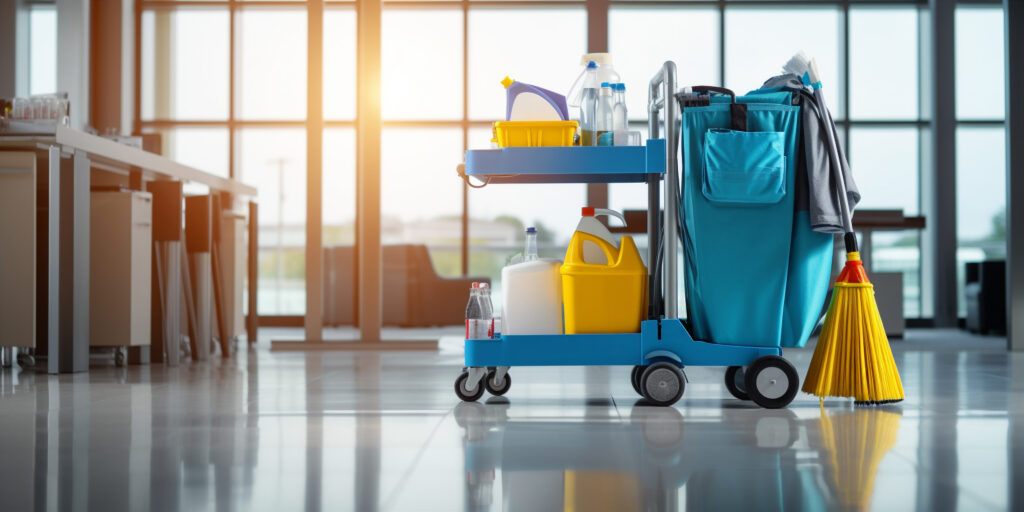
professional cleaning services banner. Generative AI
Professional upholstery sanitizing in San Jose is a two phase process that combines thorough cleaning to remove the organic material that protects bacteria from sanitizing agents with targeted sanitizing treatment that reduces microbial populations to defined levels.
The cleaning phase comes first and it is not optional preparation for the sanitizing phase. Sanitizing agents work less effectively on surfaces with significant organic soil present because the organic material physically shields bacteria from the sanitizing compound and chemically neutralizes some sanitizing agents before they can reach their target. Sanitizing dirty upholstery produces significantly less effective microbial reduction than sanitizing upholstery that has been thoroughly cleaned first. This is why upholstery sanitizing as a standalone treatment without prior cleaning is less effective than the combined approach.
Hot water extraction during the cleaning phase removes the bulk of the organic material from the fabric and padding including the food sources and biological material that support bacterial populations. The heat of professional extraction equipment also produces direct thermal reduction of bacteria on contact throughout the treated area which is a meaningful sanitizing contribution from the cleaning phase itself.
The sanitizing treatment phase applies EPA registered sanitizing agents to the fabric after cleaning. These compounds are specifically evaluated and registered for efficacy against defined microbial populations at the concentrations and contact times used in professional application. The distinction between EPA registered sanitizers and general cleaning products matters because registration requires demonstrated efficacy data rather than manufacturer claims.
We use sanitizing agents appropriate for upholstery fabric that do not leave residue affecting the feel or appearance of the fabric after drying and do not create indoor air quality concerns through off-gassing. The sanitizing treatment is applied after extraction and allowed appropriate dwell time for the compound to work before the residual moisture evaporates during drying.
Upholstery Sanitizing for Specific Situations Across San Jose
Different situations that bring people to request upholstery sanitizing have different priorities and the approach is adjusted based on what the specific situation calls for.
Post illness sanitizing is the most common specific situation we address across San Jose. When someone in a household has been sick with a contagious illness and has used upholstered furniture during the illness period the surfaces they contacted carry the pathogen responsible for the illness in concentrations relevant to transmission risk for other household members. Standard cleaning after illness reduces but does not reliably eliminate transmission risk from upholstered surfaces. Sanitizing treatment applied to all surfaces the ill person contacted produces reliable microbial reduction that cleaning alone does not consistently achieve.
Michelle’s situation after the school stomach bug is a specific example but the pattern applies to household stomach bugs, influenza seasons, RSV in households with young children, and any situation where a pathogen has circulated through a household and surfaces need to be reliably addressed rather than just cleaned and hoped for the best.
New home and rental property sanitizing addresses the situation where a household is moving into a space with existing furniture or surfaces that were used by unknown previous occupants. The microbial profile of those previous occupants is completely unknown and the furniture carries their microbial legacy regardless of how visually clean it appears. Sanitizing upholstered furniture before new occupancy establishes a clean microbial baseline appropriate to the new occupants rather than inheriting whatever the previous occupants left behind.
We do this regularly for families moving into furnished rentals and for landlords turning over furnished units across San Jose including properties in Berryessa, Downtown San Jose, and East San Jose where furnished rental turnover is common and new tenants increasingly request confirmation that sanitizing has been done.
Immunocompromised household members including people undergoing chemotherapy, managing autoimmune conditions on immunosuppressive medications, or recovering from serious illness have reduced capacity to manage normal ambient bacterial exposure. For these households the standard microbial load in untreated upholstery that is inconsequential for healthy adults can represent a genuine health concern. Upholstery sanitizing that reduces microbial populations to levels appropriate for immunocompromised occupants is a practical health measure rather than an abundance of caution.
Households with newborns request upholstery sanitizing because infants have immature immune systems and spend significant time in close contact with upholstered surfaces during the early months of life. The tummy time mat, the nursing pillow, the sofa surface where the baby is placed during awake time all represent microbial exposure sources for an infant whose immune system is still developing. Sanitizing these surfaces is a reasonable precaution that parents with newborns across Evergreen, Almaden, and Cambrian increasingly request as awareness of the issue grows.
Eco Friendly Sanitizing Options
The sanitizing agents used in professional upholstery sanitizing range from conventional chemical disinfectants to naturally derived compounds with demonstrated antimicrobial efficacy and we offer options across this range for clients with preferences about what goes into their furniture.
Hydrogen peroxide based sanitizing agents are among the most effective green options for upholstery sanitizing because they decompose to water and oxygen after use leaving no persistent chemical residue. They are effective against a broad spectrum of bacteria and some viruses at appropriate concentrations and contact times and they do not produce the indoor air quality concerns associated with some conventional disinfectant compounds. We use hydrogen peroxide based sanitizing agents as our default eco friendly upholstery sanitizing option for clients who want green chemistry without compromising on sanitizing efficacy.
Quaternary ammonium compounds are the conventional sanitizing agents most commonly used in professional upholstery sanitizing and they have excellent efficacy data across a broad microbial spectrum. They are the appropriate choice for situations requiring maximum sanitizing reliability such as post serious illness sanitizing or preparation of furniture for immunocompromised occupants where the priority is the most reliable microbial reduction available rather than green chemistry preference.
Botanical antimicrobial compounds derived from thyme oil, oregano oil, and similar plant sources with demonstrated antimicrobial activity are an option for clients who want both green chemistry and sanitizing efficacy. These compounds have meaningful antimicrobial activity at appropriate concentrations and are fully biodegradable without synthetic chemical residue. They are appropriate for general maintenance sanitizing situations rather than for post serious illness or immunocompromised household applications where maximum efficacy is the priority.
We discuss these options with clients before scheduling based on their specific situation and preferences because the right sanitizing approach depends on what is being addressed and what the household priorities are around chemical exposure.
How Often Upholstery Sanitizing Makes Sense
For most healthy households in San Jose upholstery sanitizing as a standalone priority separate from regular cleaning is not something that needs to happen on a defined schedule. Annual professional cleaning that includes the thermal sanitizing effect of hot water extraction maintains upholstery in appropriate condition for normal residential use without requiring additional targeted sanitizing treatment between visits.
The situations that call for specific sanitizing treatment are event driven rather than calendar driven for most households. Post illness, new occupancy, a household addition like a newborn, a change in household member health status that introduces immunocompromise. These events are the appropriate triggers for sanitizing treatment rather than a fixed schedule.
Households with specific ongoing situations that create elevated sanitizing relevance, immunocompromised household members, infants, or people managing conditions that make bacterial exposure a consistent concern, benefit from more frequent sanitizing treatment on a schedule that reflects the ongoing nature of the situation rather than treating it as a one time event.
If your furniture needs genuine sanitizing rather than just cleaning, Heavenly Maids Cleaning Services handles professional upholstery sanitizing for homes throughout San Jose and the Bay Area including Evergreen, Almaden, Berryessa, Silver Creek, Cambrian, Blossom Hill, Willow Glen, Rose Garden, and surrounding neighborhoods.