A dad bought a microfiber sectional specifically because the salesperson at the furniture store told him it was the easiest fabric to clean. Stain resistant, durable, wipes right off. Kevin had three kids under ten and a labrador so easy to clean sounded exactly like what he needed.
Two years later he called us with a problem that is probably the most common complaint we hear specifically about microfiber upholstery cleaning in San Jose. He had cleaned a juice spill on the armrest with a damp cloth, the way the salesperson implied he could, and the fabric dried with a stiff crusty texture in the cleaned area that felt completely different from the surrounding fabric. Then he tried to clean that area again to fix it and made a larger crusty patch. Then he found a YouTube tutorial that said to use rubbing alcohol and a brush and tried that which made the texture slightly better in some spots and worse in others.
By the time he called us there were three distinct problem areas on the sectional, each treated differently, none of them resolved. He was ready to reupholster or replace the whole thing.
We cleaned the entire sectional in about two and a half hours. Every problem area he had created with previous cleaning attempts resolved during the process. The crusty patches disappeared. The fabric felt uniform across the whole piece. Kevin sent his wife a photo from the living room and her response was asking if we had replaced the cushions.
That situation happens so regularly with microfiber that we could describe it before the client finishes explaining it. At Heavenly Maids Cleaning Serviceswe do microfiber upholstery cleaning across San Jose and the Bay Area and the irony of a fabric marketed as easy to clean being one of the most commonly damaged by home cleaning attempts is something we deal with on a regular basis.
What Microfiber Actually Is and Why It Behaves the Way It Does
Microfiber upholstery cleaning in San Jose starts with understanding what microfiber actually is because the cleaning behavior that surprises people makes complete sense once you understand the fabric construction.
Microfiber is a synthetic fabric made from fibers that are significantly finer than a human hair, typically polyester or a polyester nylon blend, woven at extremely high density. The fineness of the individual fibers and the density of the weave are what give microfiber its characteristic softness and what make it more resistant to immediate liquid penetration than coarser weave fabrics. Liquid sits briefly on the surface of microfiber before the capillary action of the fine fiber weave draws it inward rather than immediately soaking through the way it would on a looser weave fabric.
This capillary action is also what causes the cleaning problem Kevin experienced. When you apply water to microfiber and it begins to evaporate the capillary action that drew the water inward also draws dissolved compounds from inside the fiber toward the surface as the moisture wicks upward during drying. These dissolved compounds deposit on the fiber surface at the boundary of the wet area as the last moisture evaporates. The result is the stiff crusty ring that forms around any area cleaned with water that was not fully extracted before drying.
The crust is not dirt in the traditional sense. It is the mineral content from tap water, the dissolved residue from whatever cleaning product was used, and the soil compounds that were lifted from the fiber surface and then redeposited as the moisture evaporated. Rubbing it with more water just repeats the process and either makes the ring larger or creates a new ring outside the first one. The only approach that breaks the cycle is extraction that removes the moisture and everything dissolved in it before it has the chance to wick back to the surface and deposit during evaporation.
The Cleaning Code That Most People Have Never Looked At
Microfiber upholstery cleaning across San Jose homes would produce far fewer damaged pieces if more people knew about the cleaning code that is on every piece of upholstered furniture and actually read it before attempting to clean anything.
Every upholstered piece has a tag somewhere, usually under a cushion or on the frame underneath the furniture, with a letter code that specifies what the fabric can safely be cleaned with. W means water based cleaning is appropriate. S means solvent only. WS means both work. X means vacuum only, no liquids of any kind.
Microfiber upholstery comes in both W and S coded versions and they need completely different cleaning approaches. W coded microfiber can be cleaned with water based solutions and hot water extraction which is the standard professional approach for most upholstery. S coded microfiber needs solvent based cleaning and using water on S coded microfiber is exactly what creates the crusty ring problem Kevin experienced because the solvent only code exists specifically because water based cleaning causes this issue on that particular fabric.
The furniture store salesperson who told Kevin microfiber just wipes right off was describing the general category without accounting for the cleaning code of the specific piece he bought. S coded microfiber does not wipe right off with a damp cloth. It needs solvent. Using water on it causes damage that looks like incomplete cleaning but is actually a chemical interaction between the water, the fabric fiber, and the dissolved compounds in both.
We check the cleaning code on every piece before touching anything and it is the most important step in microfiber upholstery cleaning because getting this wrong before the cleaning even starts is what produces the outcomes that make people think their furniture is ruined.
Professional Microfiber Upholstery Cleaning Versus What Happens at Home
The gap between professional microfiber upholstery cleaning in San Jose and home cleaning attempts comes down to three things that are difficult to replicate with consumer equipment and products regardless of effort applied.
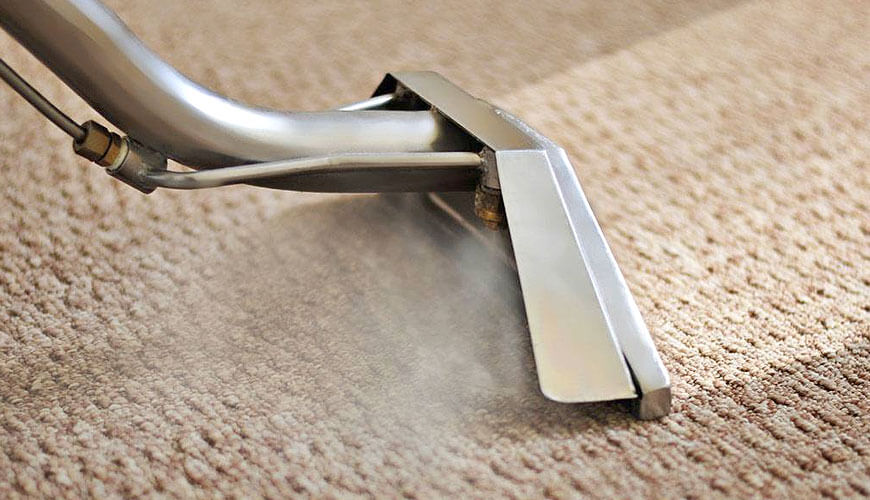
Extraction power is the most significant difference. The crusty ring problem with microfiber happens because moisture evaporates from the surface rather than being removed by extraction. Professional extraction equipment generates enough suction to pull moisture out of the fiber before the evaporation and wicking process deposits dissolved compounds back on the surface. Consumer extraction machines and the spray-wipe-dry approach of home cleaning do not generate enough suction to remove moisture fast enough to prevent the wicking and deposition cycle. The professional extraction speed is what breaks the pattern that home cleaning is trapped in.
Solution chemistry is the second difference. Professional microfiber upholstery cleaning uses solutions specifically formulated for the fiber type and cleaning code of the specific fabric being cleaned. The solution chemistry affects how soil is suspended in the water for extraction versus how it behaves during the slower evaporation process of home cleaning. Solutions designed for professional extraction are formulated to keep soil in suspension for removal rather than depositing it as a residue during drying.
Technique is the third difference. Professional microfiber upholstery cleaning uses directional extraction passes that work with the fiber orientation to lift suspended soil out of the fabric rather than pushing it sideways or deeper. Home cleaning approaches tend to use circular or back and forth motions that distribute soil across a larger area rather than directing it toward removal. On microfiber specifically the directional technique matters because the fine fiber weave responds differently to extraction that works with the fiber than to agitation that works across it.
S Coded Microfiber Cleaning Across San Jose Homes
S coded microfiber upholstery cleaning is the version of microfiber cleaning that most people do not know exists and that is responsible for the majority of the damaged microfiber pieces we see across San Jose. The S code means solvent only and the cleaning process for S coded microfiber uses dry cleaning solvents rather than water based extraction.
Solvent based microfiber cleaning works by dissolving soil in the solvent compound and allowing it to carry the dissolved soil away from the fabric as the solvent evaporates. Because solvents evaporate cleanly without leaving an aqueous residue the wicking and ring formation that water causes in microfiber does not occur. The solvent lifts the soil and leaves the fiber clean and uniform without the crusty ring that water produces.
The limitation of solvent cleaning compared to hot water extraction is penetration depth. Solvents address the surface and sub-surface fiber layers effectively but do not penetrate into the foam padding the way water based extraction does. For S coded microfiber with significant odor from body oil or pet accidents that has reached the foam level a combination approach using minimal targeted moisture for the foam with careful solvent treatment for the fabric surface is sometimes appropriate. This requires experience and judgment about what the specific piece can tolerate.
We do S coded microfiber upholstery cleaning for homeowners throughout San Jose including families in Almaden, Evergreen, and Blossom Hill who have microfiber furniture with specific cleaning code requirements that previous cleaners either ignored or did not identify correctly.
Getting the Crusty Ring Out of Microfiber That Was Already Damaged
A significant portion of microfiber upholstery cleaning calls we receive in San Jose are from people who are not calling about cleaning their furniture so much as calling about fixing damage from previous cleaning attempts. The crusty ring situation Kevin described is the most common but there are several related damage patterns from home cleaning attempts on microfiber that professional cleaning can address.
Oversaturation damage where someone applied too much water or cleaning solution and the fabric dried with a large stiff area rather than a ring responds to professional extraction because the issue is residue left by evaporation rather than any permanent fiber damage. Professional extraction of the affected area with appropriate solution chemistry removes the deposited residue that caused the stiffness and restores the fabric texture.
Rubbing damage where the pile of the microfiber has been disturbed by aggressive rubbing motion during cleaning attempts creates a different texture variation that appears as a shiny or matted area compared to the surrounding undisturbed fabric. Mild cases of rubbing damage respond to professional cleaning and directional extraction that works the fiber back toward its natural orientation. More severe rubbing damage where the fiber has been permanently distorted shows improvement but may not fully restore to original texture.
Product residue damage from home cleaning products that were not designed for microfiber upholstery and left significant residue in the fiber is addressable through professional extraction with appropriate solution chemistry that lifts the foreign residue from the fiber for removal. This is one of the situations where the professional solution chemistry matters most because the extraction needs to address both the original soil and the residue from the previous cleaning product.
We assess damage from previous cleaning attempts honestly before starting and tell clients what we think the outcome will be rather than implying we can restore everything regardless of what has already been done to the fabric. Most home cleaning damage on microfiber is recoverable with professional treatment. Some severe or repeated rubbing damage leaves permanent variation that professional cleaning improves without fully eliminating.
Microfiber Upholstery Cleaning Frequency for San Jose Households
How often microfiber upholstery in San Jose homes needs professional cleaning depends on the household. The variables that affect accumulation rate are the same as for any upholstery fabric but microfiber’s specific construction creates some patterns worth knowing.
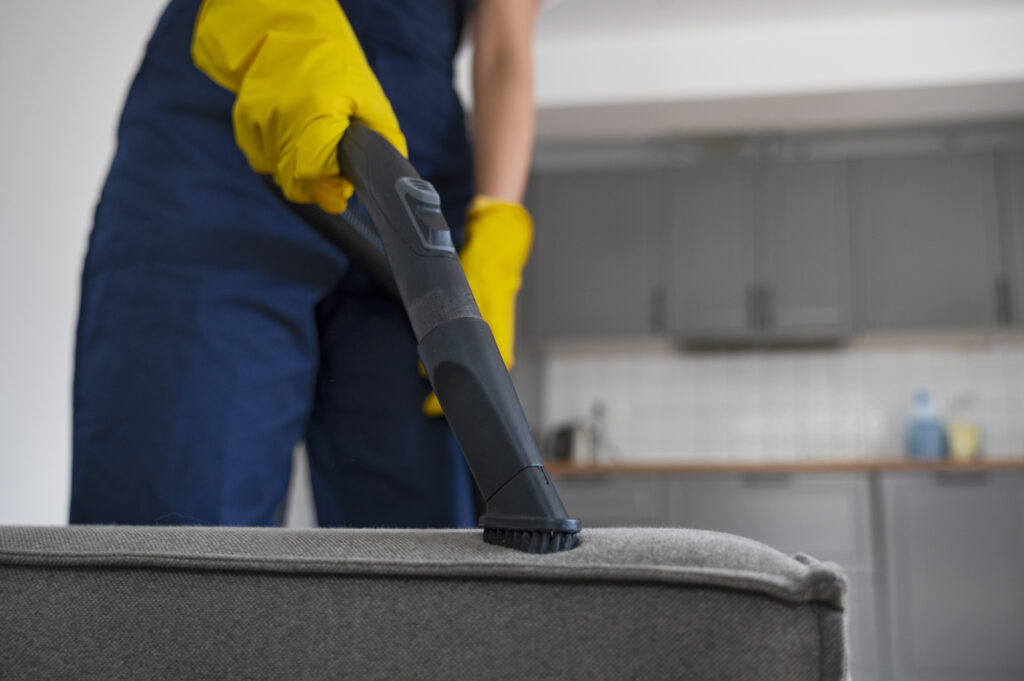
The tight weave of microfiber that resists immediate liquid penetration also traps dry particulate soil at the fiber surface more effectively than looser weave fabrics. Dust, skin cells, and dry soil particles accumulate in the weave and compact over time in ways that are not always visible but affect the fabric feel and eventually contribute to the dull appearance that heavily used microfiber develops. Regular vacuuming with an upholstery attachment removes surface particulate before it compacts into the weave and extends the interval between professional cleanings.
Households with kids and pets typically need professional microfiber upholstery cleaning every twelve months to maintain the fabric in good condition. The volume of contact soil and the frequency of spill events in these households accumulates faster than in adult only households with less intensive furniture use.
Adult households with moderate furniture use and no pets can typically go eighteen months to two years between professional cleanings without the fabric deteriorating noticeably. The key indicator is not a calendar date but the appearance and feel of the fabric. When microfiber starts looking dull, feeling slightly different from when it was clean, or developing an odor that persists after vacuuming it is time for professional cleaning regardless of when the last cleaning was.
Fabric protection applied after professional microfiber upholstery cleaning extends how long the results hold between visits by reinforcing the surface resistance that factory applied treatments provided when the fabric was new. Factory stain resistance wears down with use and cleaning and refreshing it after professional cleaning restores the practical spill resistance that makes microfiber manageable in active households.
If your microfiber furniture has the crusty ring problem, has been damaged by previous cleaning attempts, or is simply overdue for professional attention, Heavenly Maids Cleaning Services handles microfiber upholstery cleaning for homes throughout San Jose and the Bay Area including Evergreen, Almaden, Berryessa, Silver Creek, Cambrian, Blossom Hill, Willow Glen, Rose Garden, and surrounding neighborhoods.