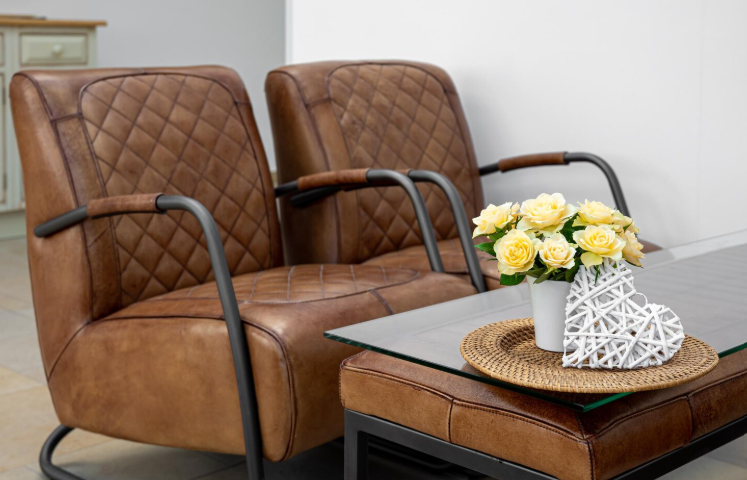
My aunt Carmen has this beautiful dark brown leather sofa she bought about twelve years ago. Thing is a tank. Solid frame, real leather, the kind of furniture people buy once and expect to last a lifetime. For the first few years she wiped it down regularly and conditioned it every few months. Then life got busy and she stopped keeping up with it.
By the time she called us the leather had developed this grayish film on the armrests and seat cushions from years of body oil buildup. There were some light cracks forming on the areas that got the most sun. The color looked uneven and dull compared to the parts that saw less use. She was genuinely worried it was too far gone.
It wasn’t. After we cleaned and conditioned it the leather came back in a way that surprised even us a little. The grayish film lifted completely. The color evened out. The surface felt soft again instead of stiff. The cracks that were starting to form hadn’t gone deep enough to cause permanent damage and the conditioning helped the leather regain enough moisture to stop them from progressing. Carmen called us three weeks later just to say thank you.
Leather is one of those materials that rewards attention and punishes neglect. At Heavenly Maids Cleaning Services we do leather upholstery cleaning across San Jose and the Bay Area and the difference between leather that’s been maintained and leather that hasn’t is pretty dramatic once you see them side by side.
What Actually Happens to Leather Over Time
It Dries Out Way Faster Than People Realize
Leather is skin. Real leather comes from animal hide and like all skin it needs moisture to stay flexible and intact. When leather dries out it loses that flexibility and starts to crack. The cracks start small and surface level and if the leather gets conditioned at that point most of the damage can be reversed. Left alone long enough those cracks go deeper and become permanent.
The drying process is accelerated by a few things that are pretty hard to avoid. Direct sunlight is one of the biggest. UV exposure breaks down the leather fibers and pulls moisture out faster than anything else. Heating vents blowing warm dry air directly onto a leather couch do the same thing over time. Low humidity in the home during winter months speeds up the process. A lot of leather couches in San Jose homes sit in living rooms with big windows and good sun exposure which looks great in a listing photo and does real damage to leather furniture over the years.
Body oils and sweat are a different problem. They build up on the surface of leather over time, especially on armrests and seat cushions where skin contact is constant. That buildup creates a film that looks dull and grayish and if it’s not cleaned off it can actually break down the leather finish and cause discoloration. Families in Evergreen, Almaden Valley, and Willow Glen with leather furniture that sees heavy daily use tend to see this happen faster than people who have a leather couch that’s more for show than for sitting.
Why Leather Needs Different Treatment Than Fabric
The Wrong Product Causes Real Damage
This is where a lot of people get into trouble. They treat leather like fabric and reach for whatever cleaning product is nearby. Baby wipes dry out leather. Household cleaners with harsh chemicals strip the finish. Saddle soap which some people swear by is actually too harsh for most modern finished leather and can cause discoloration. Water used in excess causes leather to stiffen and crack as it dries.
Leather has a finish on top of the hide itself and that finish is what protects the leather and gives it its color and sheen. Aggressive cleaning strips that finish and once it’s gone the leather underneath is exposed and vulnerable. We see couches that have been cleaned with the wrong products and the damage is usually worse than what would have happened if they’d just left it alone.
We use pH balanced leather specific cleaners that lift dirt and oil buildup without touching the finish underneath. After cleaning we apply a leather conditioner that replaces the moisture the leather loses over time and keeps the fibers flexible. The conditioner also adds a layer of protection against future drying and cracking. This two step process, clean then condition, is what actually maintains leather long term.
The Types of Leather We Work With
Not All Leather Is the Same and the Differences Matter
Full grain leather is the highest quality and most durable. It has the natural surface of the hide with minimal processing and it ages well with proper care. Top grain leather has had the surface sanded down to remove imperfections and has a more uniform look. It’s common in mid to high end furniture and responds well to professional cleaning. Bonded leather is made from scraps of leather bonded together with polyurethane and while it looks like real leather it behaves very differently. It’s more prone to peeling and cracking and has a much shorter lifespan even with good maintenance.
Aniline leather is dyed with soluble dye and has no protective coating on the surface. It’s the most natural looking and feeling leather but it’s also the most sensitive to staining and moisture. Semi aniline has a light protective coating. Pigmented leather has a heavier polymer coating on the surface and is the most durable and stain resistant of the types commonly used in furniture.
Knowing which type of leather we’re working with changes the entire approach. We assess this before we start anything. Using a conditioner designed for pigmented leather on aniline leather can darken it permanently. Using a water based cleaner on aniline leather can leave water marks that don’t come out. This is the kind of thing that matters and it’s why the material assessment is not a step we skip.
We work with all leather types across San Jose including homes in Rose Garden, Silver Creek, Cambrian, and Blossom Hill where people have invested in quality furniture and want it to last.
Stains on Leather and What Can Actually Be Done
Some Come Out Completely and Some Can Be Improved
Ink stains on leather are one of the most common things we get called about, usually from a pen that leaked in a pocket or a kid who got hold of a marker. Fresh ink has a better chance of coming out than dried ink but even older ink stains can often be significantly reduced with the right solvent based treatment applied carefully.
Food and drink stains on leather depend a lot on how quickly they were addressed. Leather with a good protective finish repels liquid for a short time before it soaks in. If you blot it up immediately the chance of a stain is low. If it sat for hours or dried completely it’s more involved to treat. Grease stains are tricky because leather absorbs oil and it can darken the area. Cornstarch or talc applied immediately draws oil out before it sets. After it’s dried we can treat what’s left.
Dye transfer is something that happens when dark clothing rubs against lighter leather over time. Jeans are a common culprit on lighter colored leather couches. This is one of the harder stains to fully remove because the dye bonds with the leather surface but we can usually reduce it substantially.
We treat leather stains for homes throughout San Jose and are always upfront about realistic outcomes before we start. Some stains come out completely. Some improve dramatically. Some are permanent but can be minimized. We won’t tell you something will come out fully if we don’t think it will.
How Often Leather Furniture Should Be Cleaned and Conditioned
More Often Than Most People Do It
For leather that gets regular daily use, cleaning every three to four months and conditioning every six months is a reasonable schedule. For leather that sees lighter use, twice a year cleaning and conditioning is usually enough to keep it in good shape.
Most people do it never, which is how twelve year old leather ends up cracked and dull when it should still look great. Leather furniture is an investment and unlike a lot of things in a home it actually holds up remarkably well over decades if it gets basic regular care. We work with homeowners across San Jose who have leather furniture that’s fifteen and twenty years old and still looks excellent because they’ve kept up with maintenance. We also work with people whose five year old leather couch looks twice its age because it was never conditioned once.
If your leather furniture has visible cracking, a dull grayish film on the high use areas, stiffness when you sit down, or a surface that feels dry to the touch, it’s overdue for professional cleaning and conditioning. The sooner you address it the better the outcome.
Heavenly Maids Cleaning Services handles leather upholstery cleaning for homes across San Jose and the Bay Area. If you’re not sure what condition your leather is in or what it needs, reach out and we’ll take a look.