My coworker James over in East San Jose bought a used SUV about two years ago. Good price, solid mileage, ran great. The previous owner had a dog and two young kids based on everything the interior suggested. James knew going in that it needed some work but figured he could handle it himself with a good vacuum and some store bought cleaner.
Two years later he had made peace with the smell. That is what happens when you spend enough time in a car with persistent odor. Your brain adjusts and stops registering it as a problem. His wife refused to ride in it for trips longer than ten minutes. His coworkers who occasionally got rides to lunch started making excuses. James thought the smell was just what the car was now.
His wife finally booked us without telling him. When we finished and James got in for the first time he sat there for a minute and then said he forgot the car could smell like this. Like nothing. Just clean air. He drove it to work the next day and three people asked if he got a new car.
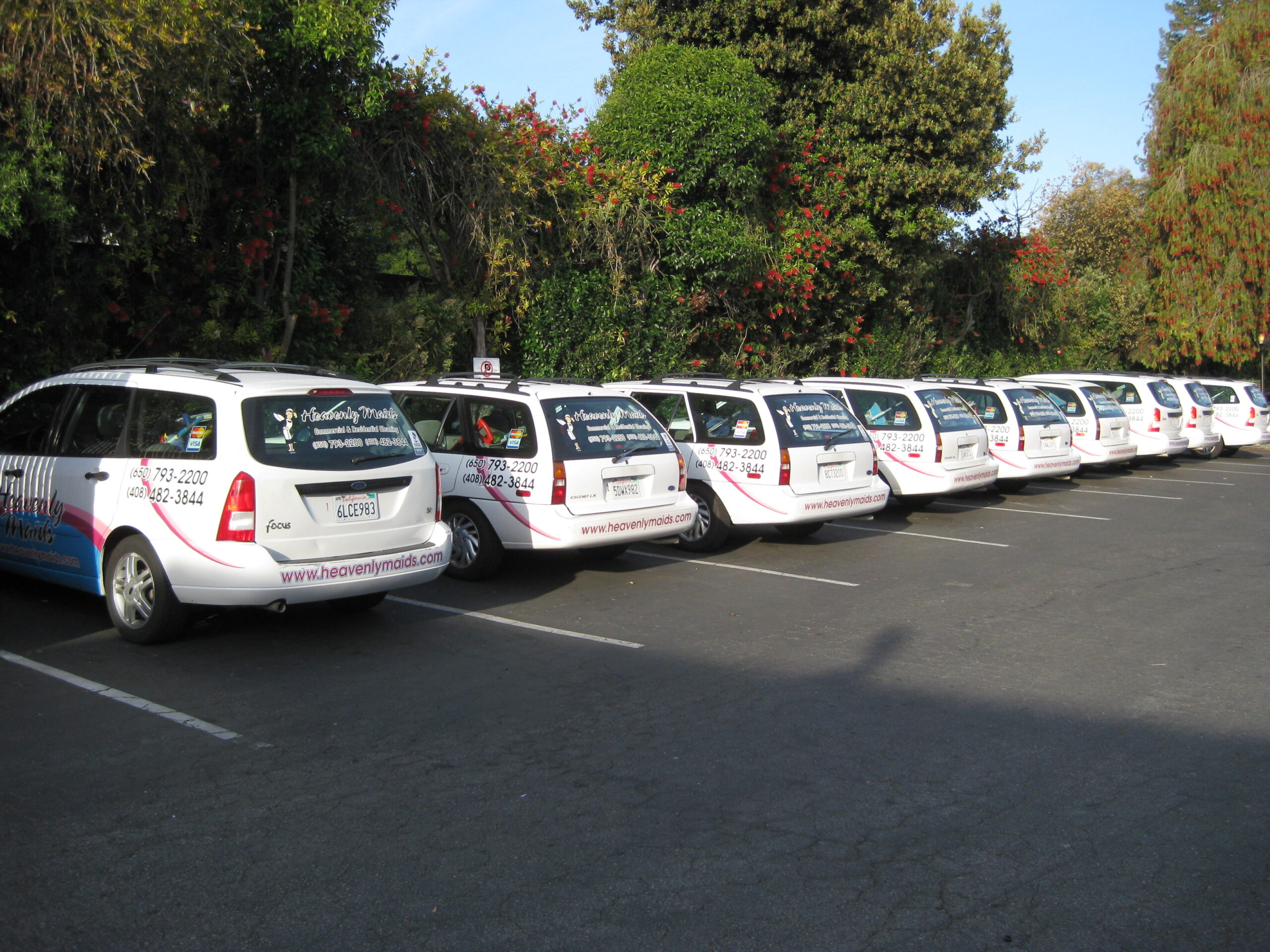
At Heavenly Maids Cleaning Services we do car upholstery cleaning across San Jose and the Bay Area and the transformation on a vehicle interior that has been neglected for a few years is consistently one of the more dramatic results we produce.
What a Car Interior Collects That Most People Never Think About
Every Trip Adds Something and Nothing Ever Leaves on Its Own
A car interior is a closed ecosystem. Whatever gets brought in stays in unless someone specifically removes it. Food particles that fall into seat creases stay there and break down slowly releasing odor. Pet hair works its way into fabric weave and stays until it is mechanically removed. Spilled liquid soaks through the seat surface and into the foam padding underneath where it creates conditions for bacteria and mildew to develop well below where any surface cleaning reaches.
Sweat from daily commuting transfers to seat fabric continuously. The average commuter in San Jose sits in the same seat five days a week for months and years. That consistent contact deposits body oil and sweat into the fabric in a very specific pattern. The driver seat almost always shows the most significant discoloration and odor concentration because it gets the same person in the same position every single day without variation.
San Jose heat makes everything worse. A car sitting in a parking lot in summer reaches temperatures that would be extreme by any measure. Whatever is in the seat fabric gets baked at those temperatures repeatedly over time. Spills that happened in the morning and sat through an afternoon in a hot parking lot are essentially heat set into the fabric by the time the car gets driven again. Heat set stains are measurably harder to remove than stains that dried at room temperature and this is why car upholstery stains are often more stubborn than the equivalent stain on home furniture.
The Seat Fabric Issue Nobody Talks About
What Is in the Foam Matters More Than What Is on the Surface
Seat fabric on car upholstery is typically a tighter weave than most home furniture fabric which gives it some advantage in resisting immediate liquid penetration. The disadvantage is that when liquid does get through the tight weave it tends to penetrate quickly into the foam underneath and the foam holds it effectively. The surface can dry and look relatively normal while the foam underneath remains damp and begins developing bacteria and mildew.
This is the most common source of persistent car odor that home cleaning does not address. The interior gets vacuumed, the seats get wiped or sprayed, the surface smells better for a few days, and then the odor works back up from the foam as temperature and humidity fluctuate. The source was never treated. Only the surface changed.
Getting to the foam requires treatment that penetrates through the fabric and into the padding layer with enough dwell time to actually address what is in there before extraction pulls everything out. This is the part of professional car upholstery cleaning in San Jose that makes the lasting difference versus the temporary improvement of surface treatment.
We work with car owners throughout Berryessa, Almaden Valley, Silver Creek, and Willow Glen who have been dealing with persistent seat odor that surface cleaning repeatedly failed to resolve. The results after proper deep treatment are consistently more significant than what people expect going in.
Pet Hair in Car Seats Is Its Own Problem Entirely
Regular Vacuuming Does Not Get It Out and Here Is Why
Pet hair in car upholstery is one of the most frustrating cleaning challenges we deal with on a regular basis. The reason regular vacuuming fails is physics. Pet hair, particularly short fine hair from breeds like labs, beagles, and most cats, works its way into the individual fibers of seat fabric and interlocks with the weave. The suction from a standard vacuum cannot generate enough force at the fiber level to pull it out. It lifts the surface layer and leaves everything that has worked its way into the weave exactly where it was.
Static electricity in car interiors from synthetic seat fabrics and the friction of getting in and out repeatedly makes the situation worse by actively attracting pet hair to the fabric surface and holding it there. A car seat that gets vacuumed weekly can still carry a significant amount of embedded pet hair that the vacuum is not touching.
The right approach is mechanical removal using specialized rubber tools that generate static in the opposite direction and pull hair out of the weave before any wet cleaning begins. Wet pet hair mats into fabric and becomes dramatically harder to remove which is why dry removal has to happen first. After mechanical removal and vacuuming the remaining hair that was too embedded for tools comes out during extraction.
We do this for pet owners across San Jose who transport dogs and cats regularly and have accepted the pet hair situation in their car as permanent. It is not permanent. It just needs the right approach.
Leather Car Seats and What San Jose Heat Does to Them
Conditioning Is Not Optional It Is What Keeps Leather Intact
Leather car seats in San Jose face conditions that accelerate deterioration faster than leather in most other climates. The combination of intense summer heat inside a parked vehicle and UV exposure through the windows is genuinely hard on leather. Heat pulls moisture out of leather faster than normal ambient conditions and UV breaks down the leather surface at a fiber level over time.
A leather car seat that has never been conditioned in San Jose summers develops cracking faster than people expect. The cracking usually starts in the areas of highest flex, where the seat bends when someone sits down, and in the areas of highest sun exposure which are often the dashboard facing surfaces of the front seats. Once leather cracks deeply the damage cannot be fully reversed by conditioning. It can be improved and stabilized but the cracks remain.
Cleaning leather car seats means removing the body oil film that builds up on the surface from daily contact, which dulls the appearance and over time breaks down the finish, and then conditioning to replace the moisture that the leather loses to heat and low humidity. The cleaning step and the conditioning step are equally important and skipping the conditioning after cleaning actually leaves the leather more vulnerable than before because the cleaning process removes some of the natural oils along with the surface grime.
We clean and condition leather car seats for vehicle owners throughout San Jose including those in Evergreen, Cambrian, Rose Garden, and Downtown San Jose who want to maintain the appearance and integrity of leather interiors over the long term.
Odor Sources That Go Beyond the Seats
The Headliner Carpet and Door Panels Hold Odor Too
Most people think about the seats when they think about car odor treatment. The seats are the largest fabric surface in the interior and they do carry the most odor in most cases. But a car interior has multiple fabric surfaces and odor compounds distribute themselves across all of them. Treating only the seats and leaving the other surfaces untreated produces incomplete results that people find puzzling when the odor does not fully resolve.
The headliner is the fabric on the ceiling of the car and it absorbs odor upward from the interior continuously. Smoke odor in particular concentrates in the headliner because smoke rises. A car where someone smoked regularly will have significant smoke residue in the headliner even after the seats are thoroughly cleaned and the headliner residue continues to off-gas into the interior making the car smell like smoke even after seat treatment.
Carpet in the footwells accumulates foot odor, tracked in dirt, spilled drinks that rolled off seats, and pet contact from animals in the back seat. The carpet padding underneath works the same way car seat foam does, holding moisture and odor below the surface where vacuuming does not reach. Door panel fabric absorbs interior odor over time and in vehicles with significant pet odor the door panels carry more than people would expect.
We treat all fabric surfaces in the interior as part of a thorough car upholstery cleaning job for clients across San Jose. Addressing only the seats and leaving odor sources in the headliner, carpet, and door panels produces results that do not last as long as complete interior treatment.
Stains That Have Been in Car Seats for a While
Time and Heat Make Them Harder But Not Always Impossible
The most common car seat stains we deal with across San Jose are coffee, food, juice, and pet related staining in various states of age and heat exposure. Fresh stains are always easier than old ones. Heat set stains from sitting in a hot car all day are harder than stains that dried at room temperature. But old and heat set does not automatically mean impossible and most stains we encounter respond meaningfully to the right pre-treatment approach even when they have been in the seat for months.
The pre-treatment solution and dwell time are what determine the outcome on difficult car seat stains. The right enzyme based solution for organic staining, or the right degreasing treatment for food and body oil staining, applied and given adequate time to work before extraction is what separates partial improvement from full removal. Rushing the pre-treatment phase to save time produces consistently worse results.
We are always straightforward with clients before we start about what we think we can achieve on particularly old or heat set stains. Some come out completely. Some improve dramatically but leave a faint trace. A small number are genuinely set too deeply by repeated heat exposure to fully remove. Knowing this going in produces better outcomes than discovering it at the end.
If your car interior is carrying the evidence of everything that has ever happened in it, Heavenly Maids Cleaning Services handles car upholstery cleaning throughout San Jose and the Bay Area. We work with daily commuters, families with kids and pets, people buying or selling used vehicles, and anyone who wants their car to feel like a clean space again.